service location
Roofing Contractor in Springfield, IL
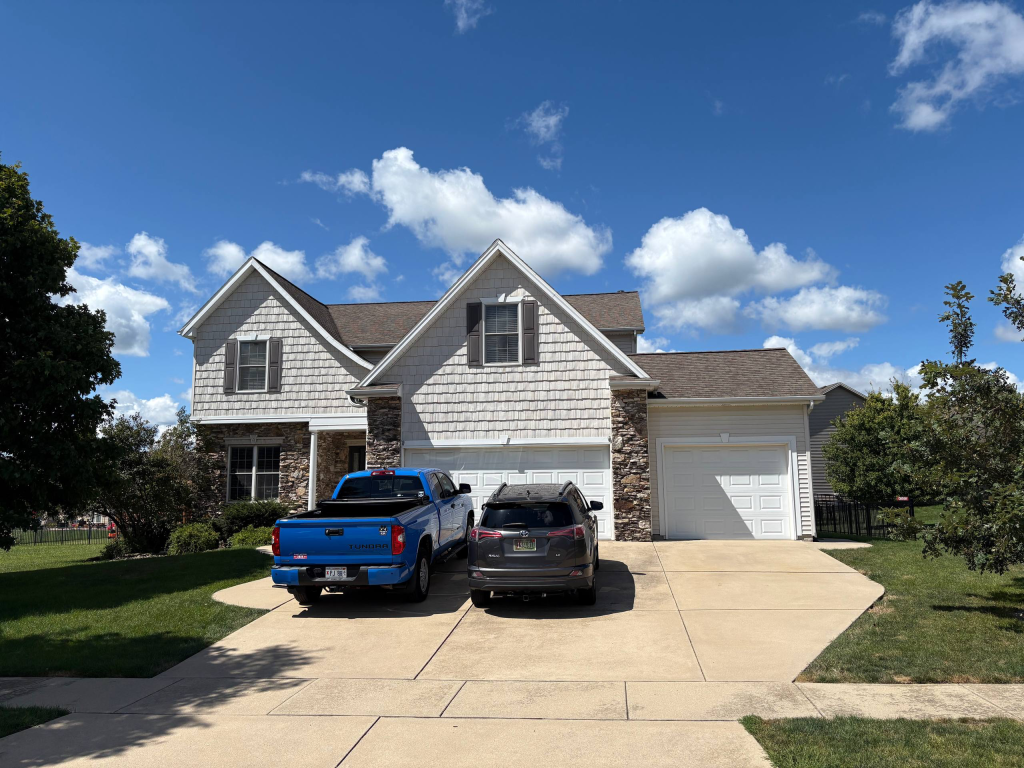
The State Capital Has the Oldest Housing Stock in Central Illinois
Springfield is older than most Illinois cities by a meaningful margin. The state capital was established before the Civil War, became the political and legal center of Illinois during Lincoln’s career, and grew through the late nineteenth century into a city whose residential neighborhoods preserve more pre-1900 housing than any other Tier 1 city in Cupples Construction’s Central Illinois service area.
That history shows up in the roofing work. The neighborhoods immediately surrounding the Lincoln Home National Historic Site, the Aristocracy Hill district, the Enos Park area, and the residential blocks that fan out from downtown all hold significant pre-1900 housing — Italianate Victorians, Greek Revival homes, Queen Annes, foursquares, and the late-nineteenth-century building stock that’s still occupied, still being maintained, and still requiring roof systems that respect what the homes actually are. Newer subdivisions on Springfield’s edges run on the same patterns as any Central Illinois suburb, but the city’s residential identity is anchored in housing that’s older than the asphalt shingle itself.
A roofing contractor in Springfield is working on homes where the original roof was wood shake, where the second roof might have been slate or early asphalt, and where the current roof is the third or fourth installation in the home’s history. That context affects how the work is approached. The main Roofing services page covers the broader scope of what the company handles regionally.
Springfield Roofing Work
The labor breaks down into the categories below. The H2 label for this section is intentionally different from how other city pages frame the same content, because Springfield’s work genuinely centers on different priorities.
Historic-Aware Roof Replacement
The largest category by complexity, though not always by volume. Replacement work on Springfield’s older homes is more involved than equivalent work on a 1990s subdivision home — tear-off may reveal multiple historical roof generations layered on top of each other, decking is often original board rather than modern plywood, original chimneys are common and may need flashing work that goes deeper than standard replacement, and material selection has to respect the home’s architectural character. The conversation between repair and replacement starts with what the home actually is, and the roof repair vs replacement guide covers the framework.
Targeted Repair Work
Older homes generate more repair work than newer construction, simply because there are more potential failure points on a complex Victorian roof than on a simple gable. Flashing replacement around chimneys and dormers, valley repairs on intersecting roof planes, and partial shingle replacement to address localized damage all show up regularly. The signs you need roof repair before it starts leaking guide covers what to watch for.
Roof Leak Diagnostic Work
Older homes are also where leak diagnostics matter most. Water entering at one point on a complex roof and surfacing at another point is the standard pattern, and finding the actual entry point on a hundred-and-thirty-year-old Italianate with three intersecting roof planes takes diagnostic methodology rather than guesswork. The Roof Leak Detection Illinois page covers the broader framework, and the silent roof failures that don’t leak until it’s too late guide is particularly worth reading on the older Springfield housing stock.
Storm Damage and Insurance Claims
Springfield sits in the same Central Illinois weather pattern as the rest of the region, with the same spring hail seasons and summer wind events. Storm damage claims on older homes are more complex to document because existing age-related wear has to be distinguished from storm damage, which makes the pre-storm versus post-storm photo documentation more important here than on newer construction. The storm damage roof inspection checklist is the documentation reference, and the Storm Damage Roof Repair Illinois page is the statewide framework.
Emergency Stabilization
Active leaks need immediate water-intrusion control. Springfield is approximately seventy miles from the Cupples Construction headquarters in Normal, which means emergency response involves longer drive times than the immediate Bloomington-Normal metro, but emergency tarping is part of the standard service offering. The Emergency Roofing Illinois page is the broader framework reference.
GAF Master Elite Installation with Golden Pledge Warranty
The certification that unlocks the Golden Pledge warranty matters most on owner-occupied homes with long ownership horizons, and Springfield’s Aristocracy Hill, Enos Park, and similar central neighborhoods are full of homeowners whose tenure plans align with long warranty terms. The GAF Master Elite Roofing Illinois page covers the certification details.
Historic Preservation Considerations
This is the section that no other city page in the project has, because no other Tier 1 city has Springfield’s concentration of historic-district housing where preservation considerations actually affect roofing decisions. Most of Springfield’s older homes are not in formally designated historic districts that carry binding preservation requirements, but a meaningful number are, and the conversation needs to start with knowing which category a specific home falls into.
For homes within designated districts — including portions of the Aristocracy Hill area, the Lincoln Home neighborhood, and several smaller historic-character zones — material selection and installation methods can be subject to review. The specifics vary by district and by ordinance, but the practical reality is that some homes cannot use just any architectural shingle, that color and profile choices may be constrained, and that the permitting conversation includes a preservation review that homeowners don’t always anticipate.
For homes outside designated districts but in historic-character neighborhoods — which describes a much larger share of Springfield’s older housing — preservation considerations are informal but still real. Homeowners in these neighborhoods often want a roof that looks period-appropriate even when no ordinance requires it, and the material conversation reflects that. Architectural shingle lines that mimic the appearance of slate or wood shake, in shade selections that respect the home’s era, are a common path. Designer-tier materials come up here more than on a standard subdivision project.
For homes that are simply old without being in a historic neighborhood at all — Springfield’s broader pre-1950 housing stock that exists outside the central historic zones — preservation considerations don’t apply, and the conversation is the same as on any other older home in Central Illinois.
The honest reality is that most Springfield homeowners don’t know which of these three categories their home falls into until the conversation happens. We start there. The what homeowners should know about Illinois roofing requirements guide covers the broader regulatory landscape that applies regardless of historic-district status.
Springfield Roofing Conditions
The conditions that affect Springfield roofs are best presented as a single bulleted list rather than as separate sub-sections, because the conditions overlap and apply across the whole city rather than dividing neatly by neighborhood or terrain.
- Spring hail seasons from April through June affect Springfield on the same Central Illinois weather pattern that affects the rest of the region, and the case for Class 4 impact-resistant shingles carries the same weight here as elsewhere in the hail belt.
- Summer wind events create uplift pressure on aging shingles, and older homes with original roof installations that have already weathered decades of wind are more vulnerable to wind-driven damage than newly installed roofs. The how to spot hail damage on your roof guide covers post-event self-inspection, and the what to do after a roof storm in Illinois guide covers immediate-response actions.
- Freeze-thaw winter cycles create ice damming conditions on homes with marginal insulation, which describes a high percentage of Springfield’s pre-1950 housing stock. The winter-proofing your roof for Illinois snow seasons guide covers the ice-and-water-shield and ventilation interventions that prevent the worst outcomes.
- Original chimneys on older homes are a recurring flashing-failure point. Masonry chimneys built in the late nineteenth century have mortar that’s reached its serviceable lifespan, and roof flashing work on these chimneys often requires tuckpointing or other masonry attention as part of the broader scope.
- Decking variation by era means tear-off can reveal original board decking that needs partial replacement before new shingles go on. The contract approach addresses this directly — the base proposal covers assumed decking condition, and the contingency covers what’s actually found.
- Original ventilation systems on older homes are minimal by current standards, and a re-roof that doesn’t address ventilation will fail earlier than warranty math suggests. The how roof ventilation mistakes shorten shingle lifespan guide explains why.
Materials and Warranty
GAF asphalt shingle systems handle most Springfield installations, with material selection scaled heavily toward historic-aware choices on older homes and standard architectural lines on newer construction. The Timberline HDZ line covers the bulk of standard work. Designer-tier and slate-look shingle lines come up more often on Springfield projects than in newer-construction-dominant cities like Normal or the newer subdivisions of Bloomington. Class 4 impact-resistant options handle hail-belt math and may carry insurance discount benefits worth investigating.
The Golden Pledge warranty is available through Master Elite certification, and the workmanship side is backed by the contractor’s labor warranty. The complete guide to roof inspections in Illinois covers what a thorough inspection includes — and the why “good enough” installations fail prematurely guide is worth reading on the case for not cutting corners on older-home installations specifically.
Recent Springfield Projects
Photo placeholder section. Project photos with neighborhood references, project scope, material selection, and historic-character notes will be added as the local project library is built out. Caption template: “[Material/system] installation on a [home era/style] in [Springfield neighborhood]. Project completed [season] [year].”
Springfield Neighborhoods Served
Cupples Construction covers all of Springfield, with workload concentration in the central neighborhoods where the city’s older housing stock is densest. The Aristocracy Hill area, the Enos Park neighborhood, the residential blocks surrounding the Lincoln Home National Historic Site, the Vinegar Hill area, and the older central neighborhoods between downtown and Washington Park all hold substantial pre-1900 housing. The mid-twentieth-century neighborhoods on the city’s middle ring run on standard postwar patterns, and the newer subdivisions on Springfield’s edges follow the same patterns as suburban construction across Central Illinois.
The service area extends out from Springfield to cover the broader Sangamon County and Central Illinois region.
Why Cupples for Springfield Roofing
- Historic-aware approach to material selection, installation, and project planning
- GAF Master Elite certified, with Golden Pledge warranty access
- Family-owned, multi-year Central Illinois presence
- Older-home experience including original chimneys, board decking, and ventilation interventions
- Insurance claim experience for damage assessment on aged-shingle homes where storm damage and pre-existing wear must be distinguished
- Crews that work full-time on Cupples projects rather than subcontracted day labor
- Faith-based business culture that informs how the work happens
- Honest preservation-aware conversation when historic-district considerations apply, and a straightforward conversation when they don’t
Capital city, capital city housing, capital city respect.
Service Area Across Central Illinois
Cupples Construction’s service area extends from the Normal headquarters across the Tier 1 cities of Central Illinois. Springfield sits roughly seventy miles south of headquarters, with several Tier 1 cities in between. The closest Tier 1 neighbors with their own dedicated roofing pages cover different roofing realities — the Decatur roofing page handles a city defined by its agricultural-processing industrial corridor and Sangamon River drainage, the Bloomington roofing page covers a city with deep historic housing concentration similar to Springfield’s though distributed differently across its neighborhoods, and the Peoria roofing page handles a city whose bluff-and-valley topography creates roofing realities that flat-prairie Springfield doesn’t share.
For commercial buildings rather than residential homes, the commercial roofing services page is the right starting point.
Frequently Asked Questions — Springfield Roofing
Does my Springfield home need historic district approval before a re-roof?
It depends on whether the home is in a designated historic district and what that district’s ordinance actually requires. Most Springfield homes are not in districts with binding preservation requirements, but some are, and the answer matters before any material is ordered. We check this as part of the project intake — not after the fact, not during permitting, not after materials are sitting in the driveway. If your home is in a designated district, the conversation includes which materials are approved and what the review process looks like. If it isn’t, the conversation proceeds normally. Either way, the question gets answered up front.
How much does a roof replacement cost in Springfield?
Springfield pricing reflects the housing-stock reality of the city. Older homes carry pricing variability that newer construction doesn’t, because tear-off may reveal decking conditions that need addressing, original chimneys may need flashing or tuckpointing work as part of the scope, and material selection on historic-character homes often runs toward higher-tier options that cost more than basic architectural shingles. Newer subdivision homes on Springfield’s edges price similarly to equivalent homes in Normal or Bloomington. The accurate pricing answer is “after we look at the specific home,” and the housing-stock variability in Springfield makes this more true than in cities with more uniform construction eras.
Do you handle insurance claims on aged-shingle homes where the adjuster may dispute damage?
Yes. This is one of the more challenging claim categories because the insurance adjuster has to distinguish actual storm damage from pre-existing age-related wear, and that conversation can go several different ways depending on the adjuster, the photos, and the documentation. We work with adjusters during inspection, document the damage we observe, and provide the supporting evidence that helps the claim resolve fairly. We don’t promise outcomes — claims are ultimately the insurance company’s decision — but we don’t disappear when claims get complicated, either.
How long does a Springfield re-roof take when older-home conditions are involved?
A standard postwar ranch in newer Springfield neighborhoods completes in one day. A complex Victorian or Italianate with multiple roof planes, original chimneys requiring flashing work, and partial decking replacement typically runs two to three days. The wider variation in Springfield project timelines reflects the wider variation in Springfield homes — we tell homeowners the realistic timeline rather than the marketing timeline.
Can older Springfield homes be repaired without full replacement?
In many cases, yes. Targeted repair work — flashing replacement, chimney work, valley repairs, partial shingle replacement, and ventilation interventions — extends the service life of older homes by years when the underlying roof system is otherwise sound. The repair-versus-replacement decision is project-specific and depends on what the inspection actually reveals. Honest assessment is the standard.
Are you licensed and insured for work in Springfield?
Yes. The Illinois state roofing contractor license covers work statewide, and Cupples Construction carries general liability and workers compensation coverage that applies to all Illinois job sites. Springfield municipal permitting is handled per project as required.
When the Capital City Calls
Springfield homes have stories that newer construction doesn’t have. The roof is part of those stories — the original wood shake gave way to slate or early asphalt, that gave way to the first generation of architectural shingles, and now another roof is due. Each generation of roofers worked on what the previous generation left behind, and the next generation will work on what’s installed now.
Doing this work right means treating the home as what it is — a historic structure if it’s historic, a standard older home if it’s an older home without preservation status, a modern home if it’s modern. We start with that conversation, document what’s there with photos, and work through what the right answer actually is for the specific home. To get the inspection on the calendar, contact us — we’ll schedule a time and come down from Normal to do the work right.
Other Services
Ready to Talk About Your Home?
Give us a call - no pressure, just friendly neighbors ready to help with your home

- 309-826-4377
- brian@cupplesconstruction.com
- Normal, IL
What Makes Us Different
- Faith-Based Family Business
- Licensed & Insured
- GAF Master Elite
- Veteran Family Owned
Tennessee Friends
Some services available - just ask!
Where We Help Families
Central Illinois:
Business Hours
Days Open
Monday - Friday [ 8:00 AM - 5:00 PM ]
Saturday [ 8:00 AM - 4:00 PM ]
Sunday [ Emergency Only ]