service location
Siding Contractor in Bloomington, IL
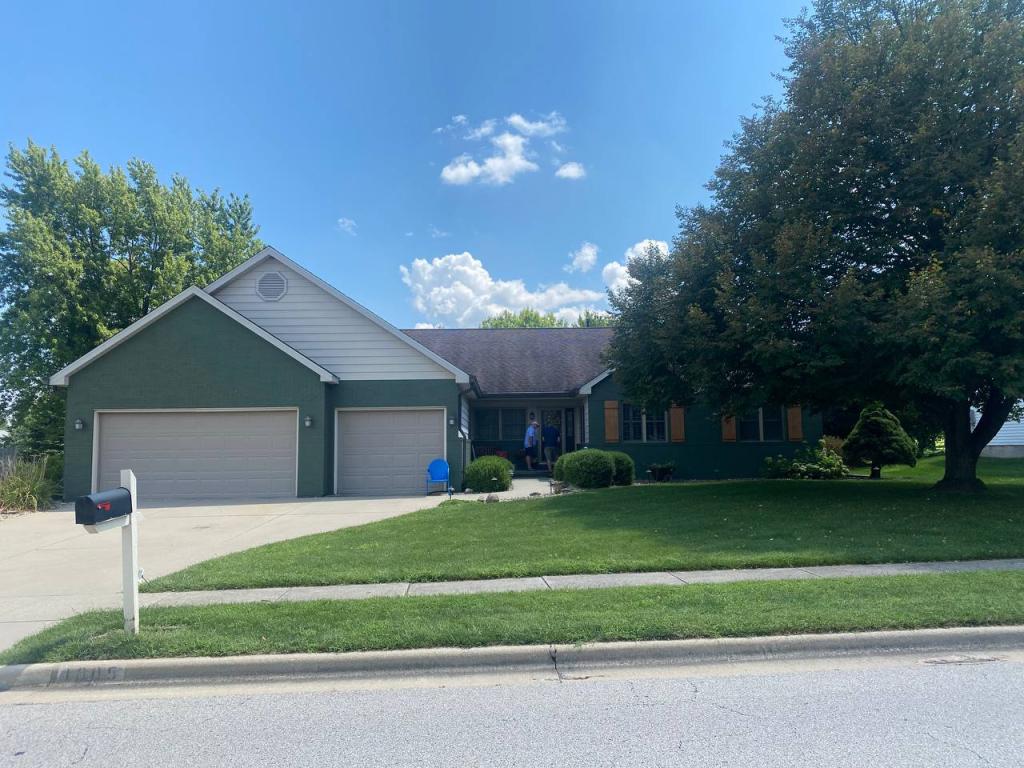
Bloomington homeowners face a siding decision that most central Illinois cities don’t. The downtown core and the streets radiating out from it carry housing stock that runs from the 1880s forward — Queen Anne, Italianate, Foursquare, Craftsman bungalow — much of it originally clad in cedar, painted clapboard, or wood shingle. Drive ten minutes east and the stock shifts to mid-century ranch, then 1980s split-level, then 2000s subdivision lap siding. The right siding answer for a Founders Grove Victorian is not the right answer for a 2008 colonial off Hershey Road. That’s the Bloomington-specific reality this page is built around.
Cupples Construction handles both ends of that spectrum and everything between. We’re a 25-minute drive from anywhere in Bloomington, and we work this market constantly. The companion Bloomington Roofing page covers our roofing work in town — siding gets its own discipline, its own crews, and its own page here.
The Cedar Question on Older Bloomington Homes
If you own a pre-1940 home in Bloomington with original cedar siding still on it, you’re looking at a real decision. Cedar that’s been maintained — meaning paint cycles every 5–8 years, prompt repair of split or cupped boards, intact flashing — can last another 30 years. Cedar that’s been let go past two paint cycles, where the wood is checking and the back side is wet, is usually past the point where another paint job is worth the labor cost.
The choices, in roughly the order we present them to Bloomington owners:
Repair and repaint the existing cedar. Replace the worst boards, prime exposed wood thoroughly, and put a quality acrylic paint system on it. Cheapest up front. Highest maintenance burden going forward.
Re-side in fiber cement with a profile that matches the original cedar exposure. This is the most common choice for owners who plan to stay long-term. Hardie and LP SmartSide both make products that read as a 4-inch or 5-inch lap exposure that’s visually faithful to a cedar clapboard original. The trim detail is where you keep or lose the historic character — done right, you can’t tell from the curb. Done with stock vinyl trim, you can.
Re-side in cedar with new wood. For homes in protected historic districts, or for owners who want the original material back on the house, new cedar is still available. The labor cost is meaningfully higher than fiber cement, and the long-term maintenance commitment continues.
Move to a different material entirely — engineered wood lap, premium insulated vinyl, or in some cases a composite. Each has its case, and we’ll walk through the trade-offs at the estimate. If you’d like to start that conversation in person, reach out to set up a walk-through and we’ll bring product samples to the house.
The east-side and south-side subdivisions present a different decision entirely. Homes built between 1985 and 2005 are coming up on their second siding cycle now — the original vinyl or hardboard from that era is reaching end-of-life on south and west elevations, and replacement is straightforward compared to the historic-district work. Most of those projects are tear-off-and-replace with insulated vinyl or fiber cement.
Repair, Storm Damage, and Upgrade Work
Beyond full replacements, three other categories of siding work come up regularly in Bloomington.
Repair calls — a damaged section after a fallen limb, a loose course after a windstorm, woodpecker holes on cedar or LP, water damage at a deck flashing — get treated as detail work rather than as a stripped-down version of a full install. We don’t pretend a color match on 18-year-old vinyl is going to be perfect, and we’ll show you what to expect before you authorize the work.
Storm damage is its own conversation. Hail bruises and cracks vinyl in ways that aren’t always visible the day after a storm but show up months later as splits in the freeze-thaw. Wind damage concentrates on the west and south elevations and on the corners. Our storm damage inspection checklist and post on what to do after a storm both apply to siding claims, not just roofing claims. We work claims with adjusters in McLean County year-round.
Upgrade work — moving from vinyl to fiber cement for the look, adding insulated sheathing during a re-side to bring up wall R-value, swapping a chalking aluminum gable for board-and-batten — is increasingly common in Bloomington. The post on how design choices impact energy bills is worth reading if you’re weighing the long-term economics of an insulated wall assembly.
Installation quality is what determines whether any of these projects holds up. Our post on why “good enough” installations fail prematurely was written about roofs, but the principles transfer directly — fastener spacing, flashing laps, kickout details where roof meets wall, expansion clearances on long runs of fiber cement. These are the differences between a 30-year wall and a 12-year wall.
Bloomington Conditions That Shape Siding Decisions
Three things separate Bloomington siding work from a generic central Illinois install. First, the housing stock split — historic homes ask different installation questions than 1990s colonials, and a contractor working only on new-construction tract homes is unlikely to handle a Queen Anne well. Second, the trim and detail expectations on older homes — corner boards, frieze boards, window casings, soffit returns — are not interchangeable with modern stock trim, and replacing them with builder-grade extrusions visibly cheapens the house. Third, the wind-driven rain pattern on west-facing elevations is harder on Bloomington’s older walls than on newer ones, because a lot of older walls were built without modern weather-resistant barriers behind the cladding. A re-side is the right time to fix that, not a moment to skip it.
Materials and Warranty Coverage
Modern siding products carry manufacturer warranties in the 25–50 year range on the material and limited lifetime on the finish, depending on the line. Our installation workmanship warranty is separate from those, and we hand both documents over in writing at contract signature. We don’t bury the fine print, and we’ll walk through the exclusions before you sign rather than after. If you want to see sample warranty paperwork before committing, contact us and we’ll bring documentation to the estimate appointment.
Recent Bloomington Siding Projects
Project photos and case studies will be added here as we document recent Bloomington siding installations, historic-home re-sides, and storm damage repairs. Caption format: [Project type] in [Bloomington neighborhood], [year]. [Material]. [Brief technical or historic-character note].
Neighborhoods Across Bloomington
We work siding projects throughout Bloomington — the historic core (Founders Grove, White Place, Franklin Park, the streets around Miller Park), the mid-century neighborhoods south and east of downtown, the 1970s–1990s subdivisions along Hershey Road and Veterans Parkway, and the newer construction east of Towanda Avenue and along Airport Road. The estimating process is house-specific. A wall on Grove Street is not the same project as a wall on Bittersweet Road, and we don’t pretend otherwise.
Why Bloomington Owners Choose Cupples for Siding
- Historic-home siding work is something we actually do, not something we farm out or talk our way around at the estimate.
- Modern subdivision re-sides are equally part of our schedule. We staff for both ends of the Bloomington market.
- Trim and detail work is part of the bid, not an upcharge surprise after the siding goes on.
- Workmanship and manufacturer warranties documented in writing before contract signature.
- Family-owned, faith-rooted, and local. Bloomington is part of our daily service radius from the Normal shop.
Cedar, fiber cement, lap, board-and-batten — the right answer for a Bloomington wall depends on what’s already there and what the house is asking for next.
For broader context on our siding services, see the siding services hub. For property managers and business owners with Bloomington commercial buildings, our commercial services page covers that side of the work.
Siding Work in Nearby Cities
Bloomington sits inside Cupples Construction’s tightest service cluster. Normal is across the city line and shares much of our daily crew flow, though the historic-stock concentration is heavier in Bloomington than in Normal. Peoria is about 40 minutes northwest and presents a different siding exposure environment because of the river bluff geography. Champaign is roughly 50 minutes east and brings rental-portfolio siding work into our calendar that Bloomington has less of. All three are regular service areas, not occasional drives.
Frequently Asked Questions About Bloomington Siding
Can I keep the historic look of my older Bloomington home if I move off cedar?
Mostly yes, if the product line and trim details are chosen carefully. Hardie and LP SmartSide both offer profiles that read as a traditional clapboard exposure from the curb. Where most “modern siding on a historic home” projects fail visually is in the trim — owners save money on stock vinyl corner boards and window casings, and the house reads as cheapened even though the field siding is fine. We bid trim at the right scale for the home rather than at builder-grade.
My Bloomington home was built in 1992. Original vinyl is fading. What are realistic options?
That siding is at the back end of its service life. Three honest options: full vinyl replacement (least expensive, similar product life curve), upgrade to insulated premium vinyl (better thermal performance, modestly higher cost, similar look), or move to fiber cement (highest cost, longest service life, most distinct look change). All three are common Bloomington projects, and the right answer usually depends on how long you plan to stay.
Are siding repairs on cedar harder than on vinyl?
Yes, generally. Vinyl repairs run into color-match limits but the labor is straightforward. Cedar repairs ask harder questions — match the profile, prime the back of the new board, integrate it into a paint system that’s already weathered. We do both regularly; cedar work just takes longer per board.
How does siding work coordinate with a roof project on the same Bloomington home?
Best when both trades are scheduled together, because flashing details where the roof meets the wall are easier to integrate cleanly. We estimate roof and siding separately on the same project — see the Bloomington Roofing page for the roofing side — and sequence the work so the roof-to-wall flashing is in place when the siding crew arrives.
Do you handle siding insurance claims in Bloomington?
Yes. Hail and wind claims on siding follow the same documentation discipline as roofing claims. We meet adjusters on site, walk the elevations together, and make sure damage isn’t undercounted. We don’t write the claim for the carrier, but we make sure scope of loss reflects what’s actually on the walls.
Schedule a Bloomington Siding Estimate
A historic re-side, a 1990s vinyl replacement, a storm-damage repair, and an upgrade-driven curb appeal project all need different conversations. None of them get answered well by a phone quote. We’d rather come look at the house, walk the elevations with you, talk through the realistic options for your specific wall, and put numbers on paper afterward.
When you’re ready, contact us through the form here — tell us roughly what you’re working with, and we’ll set up the estimate visit.
Other Services
Ready to Talk About Your Home?
Give us a call - no pressure, just friendly neighbors ready to help with your home

- 309-826-4377
- brian@cupplesconstruction.com
- Normal, IL
What Makes Us Different
- Faith-Based Family Business
- Licensed & Insured
- GAF Master Elite
- Veteran Family Owned
Tennessee Friends
Some services available - just ask!
Where We Help Families
Central Illinois:
Business Hours
Days Open
Monday - Friday [ 8:00 AM - 5:00 PM ]
Saturday [ 8:00 AM - 4:00 PM ]
Sunday [ Emergency Only ]