service location
Siding Contractor in Champaign, IL
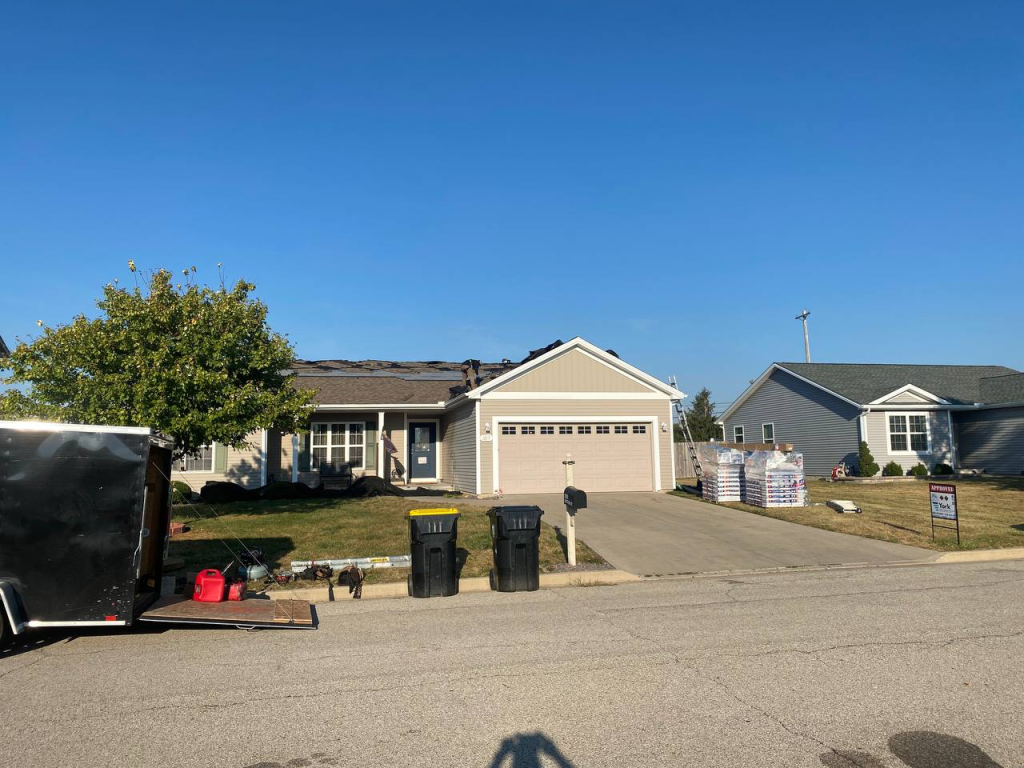
Champaign has two siding markets running at the same time, and they ask different questions of a contractor. The owner-occupied market — single-family homes in the established residential neighborhoods and the 1990s–2000s subdivisions south and southwest of town — is now hitting the back end of its first or second siding cycle, with original vinyl and hardboard reaching end-of-life on a wave that’s roughly synchronized across whole subdivisions. The rental and investment-property market — the rental-grade single-family stock, the smaller multi-family buildings, the houses around the university that have been investment-held for years — needs siding work specced for portfolio economics and durability rather than for resale curb appeal. The right answer for a 2,400 sq ft owner-occupied colonial in Cherry Hills is not the right answer for a four-property rental cluster near campus.
Cupples Construction handles both. We’re about 50 minutes from Champaign on I-74 and we work this market on a regular cadence. The companion Champaign Roofing page covers our roofing work in town — siding has its own crews, its own materials conversation, and its own page here.
Two Champaign Markets, Two Conversations
The owner-occupied side and the investor side of Champaign siding work share materials and crew skills but diverge sharply on documentation, scheduling, and spec priorities. The structure of this page reflects that split.
Siding Work for Owner-Occupied Champaign Homes
For homeowners, the dominant Champaign project right now is replacement of original vinyl or hardboard on homes built between 1985 and 2005. Whole subdivisions in southwest Champaign were built within tight time windows, and the siding installed on them is reaching service-life end on similar curves. South and west elevations are leading the failure pattern — fading, chalking, brittleness, and in the hardboard cases, paint failure exposing the substrate to moisture.
The replacement decision usually runs along three lines:
Direct vinyl-for-vinyl replacement. Cheapest path, similar product life curve, similar look. Reasonable choice when the existing trim, soffit, and fascia are still serviceable and the owner doesn’t plan to stay long enough to see the upgrade pay back.
Upgrade to insulated premium vinyl. Better thermal performance on the wall, modestly higher cost, similar visual outcome. Worth considering on homes where wall R-value is genuinely low — many Champaign 1990s builds qualify.
Move to fiber cement. Highest cost, longest service life, biggest visual change. Hardie and LP SmartSide are the dominant products in the Champaign market right now. We walk through profile, exposure, and trim choices with you in person rather than over the phone.
For the long-term economics side of the decision, the post on how design choices impact energy bills is worth reading on the wall-assembly question. Insulated sheathing during a re-side is a common Champaign upgrade.
Owner-occupied projects also bring repair work — fallen-branch damage, woodpecker holes on cedar or LP, water damage at deck flashings — and storm damage repair after the hail and wind events that move through Champaign County. Our storm damage inspection checklist and post on what to do after a storm both apply to siding claims. We work claims with adjusters in Champaign County year-round.
Siding Work for Champaign Rental Property Portfolios
Investor-owned portfolios bring a different conversation to the estimate. Rental-grade siding work is specced for durability per dollar over a long hold period rather than for resale presentation. The questions an investor asks — what’s the cost per unit on a multi-property bid, what’s the realistic service life, what’s the warranty position if a tenant damages a panel, can the work be sequenced without displacing tenants — are not the questions an owner-occupant asks.
We bid portfolio work as portfolio work. Per-property pricing on a multi-unit bid reflects shared mobilization and material handling. Material recommendations lean toward products that handle impact, ground-level abuse, and tenant churn — premium insulated vinyl with adequate impact resistance is often the right answer for rental SFR; fiber cement makes more sense on properties held for long-term appreciation with higher-end tenant profiles.
Tenant scheduling is part of the bid, not an afterthought. We coordinate work hours with property managers and we sequence elevations to keep at least one entry/egress path clear during work. If you’re an investor or property manager and you’d like to walk through a portfolio bid, contact us to set up the conversation — bring an address list and we’ll plan the site visits.
Portfolio Documentation
Investor and property-manager clients need a documentation package that owner-occupants don’t typically ask for. We provide it as part of the work:
- Per-property scope sheets and pricing breakdowns
- Pre-work elevation photos and post-work elevation photos for each property
- Material specs and warranty registration documents in a format that can be filed by property
- Workmanship warranty terms with explicit service-call response language for tenant-occupied properties
- Insurance and licensing documentation in a form ready for portfolio underwriting files
This level of documentation is built for investor decision-making and tenant-issue tracking, and it’s part of the standard scope on portfolio work — not an upcharge.
Champaign Conditions That Shape Siding Decisions
Three factors shape how Champaign siding ages, and they hit owner-occupied and rental properties in similar ways.
Subdivision-Wave End-of-Life
When whole subdivisions were built within 18-month windows in the late 1990s, their siding now reaches end-of-life on tight curves too. Material lead times can stretch when multiple neighbors decide to replace at the same time. Planning a re-side a season ahead, rather than calling the day after a storm, gives access to the right product without the supply pressure.
South and West Elevation UV
The standard central Illinois UV pattern applies — south and west walls fade and chalk faster than north and east walls. On Champaign rental stock, this often shows up as a partial-wall replacement decision rather than full re-side, because the north and east elevations may have years of life left.
Ground-Level Impact on Rental Properties
Rental properties take more bottom-course abuse than owner-occupied homes — lawn equipment, foot traffic, the occasional dropped grill or moved appliance. Material selection for the lower courses on rental work matters more than it does on owner-occupied work, and we’ll talk through that at the estimate.
Materials and Warranty
Manufacturer warranties on modern siding products run 25–50 years on material and limited lifetime on finish, depending on the line. Our installation workmanship warranty is documented separately. On portfolio work, we structure warranty documentation per-property so it filters cleanly into investor record-keeping. On owner-occupied work, we walk through both warranties in person before contract signature. Installation discipline — fastener spacing, flashing laps, expansion clearances — is what determines whether either warranty actually matters in practice. Our post on why “good enough” installations fail prematurely covers the principle.
Recent Champaign Siding Projects
Project photos and case studies will be added here as we document recent Champaign siding installations, subdivision-wave re-sides, and rental-portfolio projects. Caption format: [Project type] in [Champaign neighborhood], [year]. [Material]. [Brief technical or portfolio note].
Neighborhoods and Property Types We Serve in Champaign
Cupples Construction services siding projects across Champaign — the established residential neighborhoods west and south of campus, the 1990s–2000s subdivisions in southwest Champaign and toward Savoy, the rental and investment-held single-family stock around the university periphery, and the newer construction northwest of town. We work owner-occupied and rental properties on the same schedule and bid each at the appropriate scope.
Why Champaign Owners and Investors Choose Cupples for Siding
- We bid owner-occupied and portfolio work on their actual terms, not as the same project with a different address list.
- Per-property documentation packages are standard scope on rental portfolio work.
- Tenant scheduling is part of the bid, not a coordination problem dropped on the property manager.
- Workmanship and manufacturer warranties documented in writing, with service-call response language explicit for tenant-occupied properties.
- Family-owned, faith-rooted, and working a regular Champaign cadence from our Normal shop.
Whether the wall belongs to the family who lives behind it or to the investor whose name is on the deed, the install has to hold up the same way.
For our broader siding services see the siding services hub. For multi-family, retail, and other non-residential work in Champaign, our commercial services page covers that scope.
Siding Work in Nearby Cities
Champaign sits at the eastern edge of Cupples Construction’s regular service cluster. Urbana is across the city line and shares portions of our service schedule, though Urbana’s housing stock leans more historic and the rental-property mix is different. Bloomington is about 50 minutes west and brings a different kind of historic-stock siding work into our calendar that Champaign’s subdivision-wave market has less of. Decatur is roughly 50 minutes southwest and presents an industrial-corridor exposure environment that doesn’t apply in Champaign.
Frequently Asked Questions About Champaign Siding
My southwest Champaign subdivision has houses going up for siding replacement on every block right now. Should I wait?
If your existing siding is functional and you’re not seeing failure points, waiting is fine. If you’re already seeing chalking, brittleness, or moisture damage at the substrate, planning the project now is better than waiting through another season. The supply-pressure consideration is real — when whole subdivisions hit re-side timing at once, lead times on specific colors and profiles can stretch. We’d rather order material early on a planned project than scramble for a storm-deadline replacement.
Do you take on rental property siding portfolios with multiple addresses?
Yes. We bid multi-property portfolio work as portfolio work, with per-property pricing reflecting shared mobilization, and we provide the documentation package described above as standard scope. Bring an address list and we’ll plan the site visits.
What siding holds up best on rental properties around the university periphery?
Premium insulated vinyl with adequate impact resistance is the most common answer on rental SFR — it handles bottom-course abuse well, repairs are straightforward, and the cost-per-unit math works on portfolio scale. Fiber cement makes sense on long-hold properties with higher-end tenant profiles where the longer service life justifies the higher install cost. We walk through the math on both at the estimate.
How does Champaign storm damage compare to claims in Bloomington or Peoria?
Hail intensity is comparable across the three cities — Champaign County sees hail events on roughly the same cadence as McLean and Peoria Counties. The damage documentation and claim process is the same. We work claims year-round, not just after major events.
Can you coordinate roofing and siding on the same Champaign property?
Yes, and we estimate them separately even when scheduled together. Flashing details where the roof meets the wall integrate cleanly when both trades are sequenced. The Champaign Roofing page covers our roofing work in town.
Schedule a Champaign Siding Estimate
Owner-occupied re-sides, subdivision-wave replacements, rental portfolio bids, and storm damage claims need different conversations and different documentation. None of them get done well by phone quote. We’d rather look at the property — or the address list — before putting numbers on paper.
When you’re ready to start, contact us through the form here — tell us whether you’re working on a single home or a portfolio, and we’ll set up the visit.
Other Services
Ready to Talk About Your Home?
Give us a call - no pressure, just friendly neighbors ready to help with your home

- 309-826-4377
- brian@cupplesconstruction.com
- Normal, IL
What Makes Us Different
- Faith-Based Family Business
- Licensed & Insured
- GAF Master Elite
- Veteran Family Owned
Tennessee Friends
Some services available - just ask!
Where We Help Families
Central Illinois:
Business Hours
Days Open
Monday - Friday [ 8:00 AM - 5:00 PM ]
Saturday [ 8:00 AM - 4:00 PM ]
Sunday [ Emergency Only ]