service location
Siding Contractor in Urbana, IL
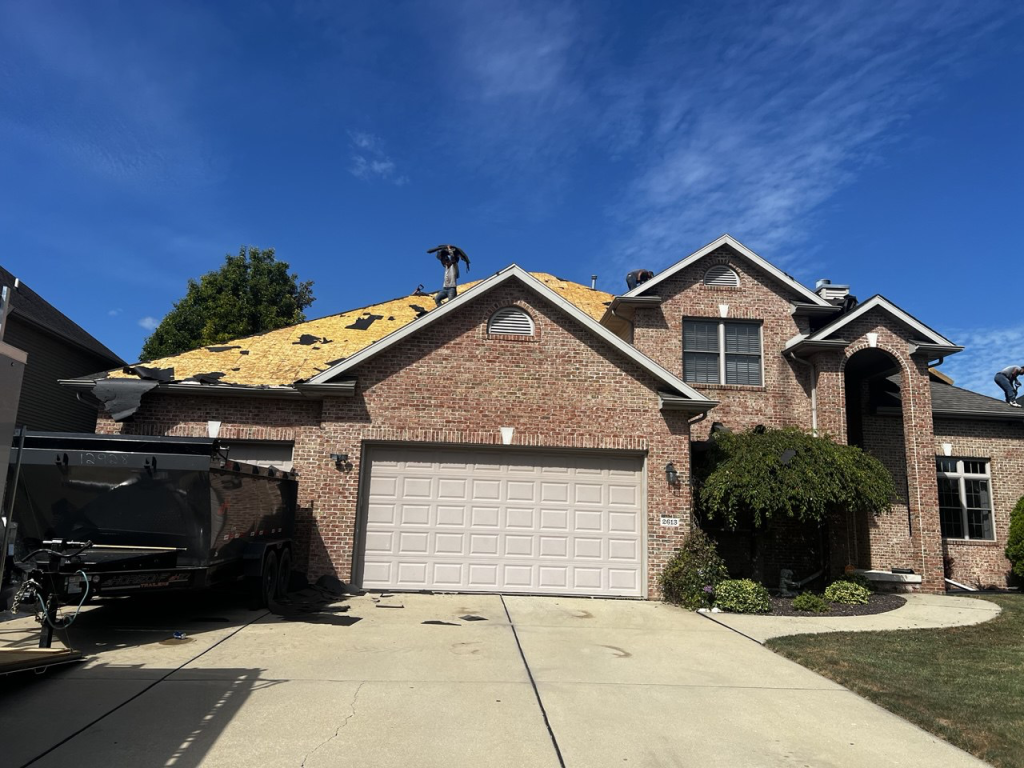
Urbana shares a city line with Champaign but doesn’t share a housing-stock profile. The neighborhoods around downtown Urbana, the streets east of campus toward Crystal Lake Park, and the historic core north of University Avenue carry an older, more architecturally distinct housing inventory than the subdivision-driven southwest side of Champaign. Foursquare, Craftsman bungalow, late-Victorian cottage, mid-century brick ranch — the mix runs older and tighter than the 1990s subdivision wave that defines so much of Champaign’s siding market. That difference shapes how a siding project here actually goes.
Cupples Construction services Urbana on the same schedule we run Champaign. The companion Urbana Roofing page covers our roofing work in town. This page is siding-specific, because the historic-stock concentration in Urbana asks questions that don’t come up the same way next door.
Urbana’s Distinct Siding Stock
Three things separate Urbana siding work from Champaign siding work. First, the age skew — a meaningful share of Urbana homes predate 1940, with original cedar, painted clapboard, or wood shingle still on the walls (or covered up with a 1970s aluminum or vinyl re-side that’s now itself reaching end-of-life). Second, the trim and architectural-detail expectations on those older homes — corner boards, frieze details, window casings, soffit returns — don’t transfer cleanly to builder-grade modern stock trim, and a re-side that swaps to cheap extrusions visibly cheapens the house. Third, the lot patterns and tree cover in the historic neighborhoods create wall microclimates — heavily shaded north walls dry slowly, and that lengthens the wet-cycle exposure on porous siding materials in a way that flat, sun-exposed subdivision walls don’t see.
The siding work that comes out of those three factors falls into a few categories, and we handle each on its own terms rather than running them all through the same template.
Full siding replacement on Urbana homes splits roughly into historic-character re-sides — cedar repaired and repainted, cedar replaced with new cedar, or cedar replaced with fiber cement profiles selected to match the original exposure — and 1970s-era aluminum or vinyl re-side replacements where the prior siding choice was made without much regard for the home’s original character. The latter is often a chance to walk the house back toward its original look. We strip to sheathing, replace damaged substrate, install a proper weather-resistant barrier, and run new siding with the manufacturer’s specified flashing detail. Hardie and LP SmartSide both offer profiles that read faithfully as a traditional clapboard exposure when the trim work is done right.
Repair work on Urbana homes leans toward cedar and older hardboard repair — split or cupped boards, woodpecker damage, water damage at deck flashings, paint failure that’s exposed substrate to moisture. Cedar repairs ask harder questions than vinyl repairs do. We match profile, prime the back of the new board, and integrate it into a paint system that’s already weathered. We’re upfront that color match on aged finishes won’t be perfect.
Storm damage repair is a smaller share of the Urbana siding mix than the historic-character work, but Champaign County hail and wind events affect Urbana homes too. Our storm damage inspection checklist and post on what to do after a storm both apply to siding claims. We work claims with adjusters in Champaign County year-round.
Upgrade and curb-appeal work comes up regularly — owners who want to step their home back toward its original character, or who want to add insulated sheathing during a re-side to improve a thin wall assembly. The post on how design choices impact energy bills is worth reading on the wall-assembly side. Installation discipline is what determines whether any of these projects holds up — our post on why “good enough” installations fail prematurely covers the principle.
If you’re weighing one of these projects on your Urbana home and you’d like to walk through the realistic options in person, contact us to set up an estimate and we’ll bring product samples to the visit.
Materials, Trim, and Warranty on Urbana Homes
The trim and architectural-detail point is the single most common place where Urbana re-sides go wrong visually, even when the field siding install is technically correct. Original Urbana homes have proportions in their corner boards, window casings, frieze boards, and soffit returns that were designed for the architectural style. Replacing those with stock vinyl or thin extruded trim drops the perceived quality of the house from the curb, no matter how well the field siding is hung. We bid trim at the right scale for the home rather than at builder-grade default, and that’s part of the upfront conversation, not an upcharge after the field siding goes on.
Manufacturer warranties on modern siding products run 25–50 years on material and limited lifetime on finish. Our installation workmanship warranty is documented separately. Both get walked through with you before contract signature. If you’d like to see sample warranty paperwork before the conversation goes further, contact us and we’ll bring documentation to the estimate.
Recent Urbana Siding Projects
Project photos and case studies will be added here as we document recent Urbana siding installations and historic-character re-sides. Caption format: [Project type] in [Urbana neighborhood], [year]. [Material]. [Brief technical or historic-character note].
Neighborhoods We Serve in Urbana
Cupples Construction handles Urbana siding work across the historic core north of University Avenue, the older residential neighborhoods east of campus toward Crystal Lake Park and beyond, the mid-century stock south and east of downtown, and the newer construction at the city’s edges. Each part of town brings a different siding starting point, and we bid house-by-house rather than by zone.
Why Urbana Owners Choose Cupples for Siding
- Historic-character siding is something we actually do, not something we work around at the estimate.
- Trim and architectural-detail work is part of the bid, not an upcharge surprise.
- We’ll quote both modern and traditional material options and explain the trade-offs in person.
- Workmanship and manufacturer warranties documented in writing before contract signature.
- Family-owned, faith-rooted, and on a regular Urbana service cadence from our Normal shop.
The character of an Urbana home is in its details. The siding install either keeps that character or quietly takes it away.
For broader siding context see the siding services hub. For commercial and multi-family work in Urbana, our commercial services page covers that scope.
Siding Work in Nearby Cities
Urbana is one half of Cupples Construction’s eastern service area. Champaign is across the city line and brings a different siding market — much more 1990s subdivision replacement work and a larger rental-portfolio mix than Urbana has. Bloomington is about 50 minutes west and shares Urbana’s historic-stock siding considerations on a broader scale. Decatur is roughly an hour southwest and operates in a different exposure environment driven by its industrial corridor.
Frequently Asked Questions About Urbana Siding
I have an older Urbana home with original cedar. Should I keep it or replace it?
Depends on the cedar’s current condition. If the wood is intact, paint cycles have been kept up, and flashing is sound, another 20–30 years is realistic with continued maintenance. If the wood is checking, paint adhesion is failing, or back-side moisture damage is evident, you’re past the point where another paint cycle is worth the labor. Replacement options run from new cedar (highest cost, faithful material) to fiber cement matched to the original profile (lower cost, much longer maintenance interval). We walk through the realistic options at the estimate.
Will modern siding ruin the character of my historic Urbana home?
It can, and it often does — but the failure point is almost always trim, not field siding. Hardie and LP SmartSide both make profiles that read faithfully as traditional clapboard from the curb. The corner boards, window casings, frieze boards, and soffit returns are where character gets preserved or lost. Bid trim at the right scale and the historic look survives. Bid stock vinyl trim and the house cheapens visibly.
Are siding insurance claims handled the same way as roofing claims in Urbana?
The documentation discipline is the same. We meet adjusters on site, walk elevations, and make sure damage isn’t undercounted. The Urbana Roofing page covers our roofing-claim work in town, and the same approach applies to siding claims.
Can you handle a small siding repair, or do you only do full replacements?
Both. Repair work is detail work and we treat it that way. We’ll quote a partial repair honestly — including upfront expectations on color match limits — rather than upselling a full replacement that isn’t justified.
Schedule an Urbana Siding Estimate
A historic-character re-side, a 1970s aluminum replacement, a cedar repair, or a storm-damage claim are four different conversations and they don’t get answered well by phone quote. We’d rather look at the wall, talk through realistic options for the specific house, and put numbers on paper afterward.
When you’re ready, contact us through the form here and we’ll be in touch to set the visit.
Other Services
Ready to Talk About Your Home?
Give us a call - no pressure, just friendly neighbors ready to help with your home

- 309-826-4377
- brian@cupplesconstruction.com
- Normal, IL
What Makes Us Different
- Faith-Based Family Business
- Licensed & Insured
- GAF Master Elite
- Veteran Family Owned
Tennessee Friends
Some services available - just ask!
Where We Help Families
Central Illinois:
Business Hours
Days Open
Monday - Friday [ 8:00 AM - 5:00 PM ]
Saturday [ 8:00 AM - 4:00 PM ]
Sunday [ Emergency Only ]