service location
Siding Contractor in Decatur, IL
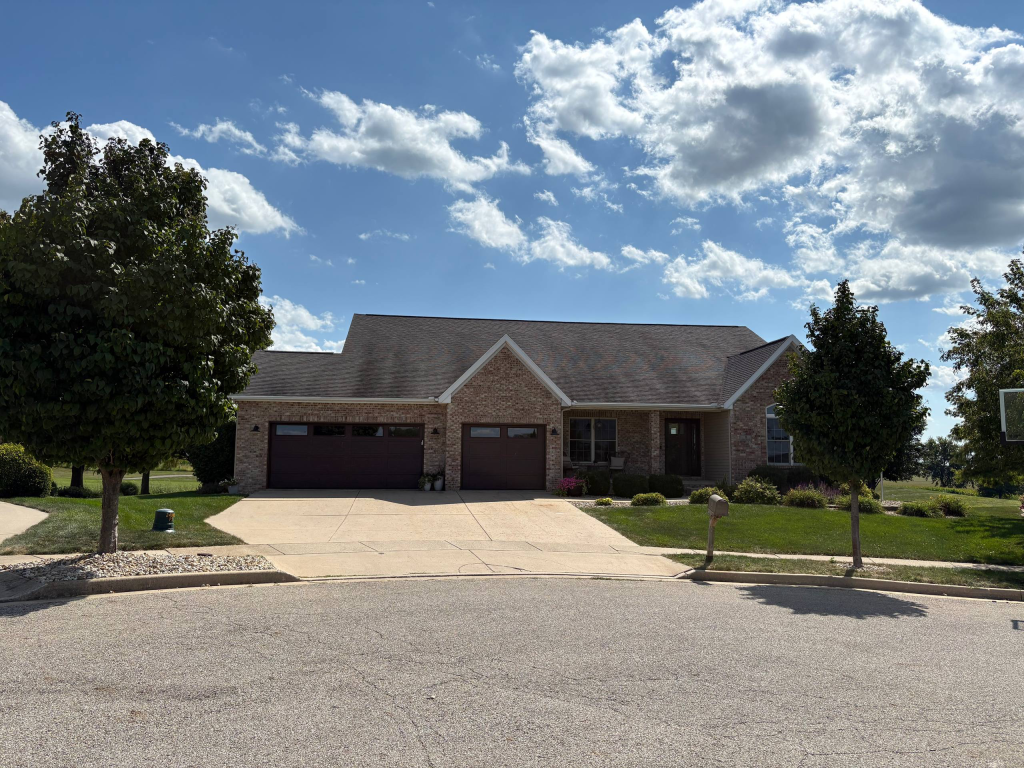
Decatur sits inside an industrial-corridor exposure environment that doesn’t apply to most central Illinois cities. The ADM, Tate & Lyle, and Caterpillar facilities, along with the rail and highway freight infrastructure that supports them, put particulate, agricultural-process emissions, and ambient industrial dust in the air across substantial portions of the city. That airborne load settles on vertical surfaces in a way that flat-ground residential exposure in Bloomington or Champaign doesn’t replicate. Combined with the standard central Illinois weather pattern — UV on south and west walls, freeze-thaw on the wall plane, hail and wind events through Macon County — the result is a siding-aging environment that asks specific maintenance and material questions a generic install playbook doesn’t answer.
Cupples Construction services Decatur on a regular schedule. We’re about 75 minutes south of our Normal shop and we work the city’s residential, near-industrial, and commercial siding mix. The companion Decatur Roofing page covers our roofing work in town. This page is siding-specific, because vertical surfaces interact with industrial-corridor exposure differently than roof surfaces do.
Industrial Corridor Exposure on Decatur Walls
Particulate and agricultural-process emissions don’t damage modern siding products in the way road salt damages steel — fiber cement and quality vinyl will outlast the exposure horizon — but they do change two practical things about how Decatur siding wears.
First, visible accumulation on the wall plane shows up faster and more unevenly than in non-industrial cities. South and southwest elevations near the corridor accumulate visible film and discoloration on lighter-colored siding within years rather than decades. Light-colored vinyl and field-painted finishes show it most. Darker siding hides it longer but doesn’t actually shed it any faster.
Second, the wet-plus-particulate combination accelerates surface degradation on porous and field-painted finishes. Cedar with deferred paint maintenance picks up grime in cracks and texture that’s harder to recover with washing later. Field-painted fiber cement on the south wall sees re-paint cycles compress when corridor exposure is added to standard UV load. Premium factory-finished siding products handle the combination markedly better than field-painted alternatives.
Neither factor changes the structural service life of the siding. They change the maintenance schedule, the material recommendation, and the realistic look of the wall over time. We talk through both factors honestly at the estimate rather than pretending Decatur is a generic central Illinois install.
Decatur Siding Services
We organize Decatur siding work into four categories.
Full Siding Replacement
Most Decatur full replacements are end-of-life vinyl or hardboard projects on homes built between the 1970s and the early 2000s. We strip to sheathing, replace damaged substrate, install proper weather-resistant barrier, and run new siding with manufacturer-spec flashing details. Material recommendations in Decatur lean toward factory-finished products — premium insulated vinyl, factory-finished fiber cement (Hardie’s ColorPlus and LP SmartSide’s pre-finished lines), or engineered wood products with factory finishes that hold up better against corridor exposure than field-painted alternatives. We’ll bid field-painted options if that’s the direction you want, but we’ll be honest about the maintenance horizon you’re signing up for.
Siding Repair
Repair work in Decatur is similar in scope to repair work elsewhere — fallen branches, woodpecker damage, water damage at flashings, partial-section replacement after impact. Color-match limits on weathered finishes are real, and corridor exposure on weathered siding sometimes makes the visual difference between old and new boards more obvious than it would be on a non-corridor wall. We’re upfront about that before quoting partial repairs.
Storm Damage Siding Work
Macon County hail and wind events affect Decatur the same way they affect other central Illinois cities. Hail-cracked vinyl shows up in later freeze-thaw cycles. Wind damage concentrates on west and south elevations. Our storm damage inspection checklist and post on what to do after a storm apply to siding claims, not just roofing. We work claims with adjusters in Macon County year-round.
Cleaning and Maintenance Considerations
Decatur is the city in our service area where siding cleaning matters most as a planned maintenance practice rather than as a one-off curb-appeal project. Pressure washing — done correctly, at appropriate pressures and angles for the specific siding type — extends the visible useful life of the wall and reduces the rate at which corridor accumulation embeds into surface texture. Done incorrectly, pressure washing drives water behind the siding and creates problems that weren’t there before.
We’ll discuss reasonable maintenance intervals at the estimate. For most Decatur homes near the industrial corridor, a thorough wash every 2–3 years on south and west elevations is realistic. Far-from-corridor neighborhoods can stretch that interval. We don’t sell maintenance contracts, but we’re happy to walk through what cleaning looks like done right and when it’s worth contracting versus doing yourself.
If you’d like to walk through any of these categories on your specific Decatur property, contact us to set up an estimate and we’ll plan the visit.
Decatur Conditions That Shape Siding Decisions
Three exposure factors specifically shape Decatur siding aging.
Industrial Particulate Accumulation
Settled airborne particulate from corridor sources is the differentiating factor. It accumulates on lighter-colored siding faster, embeds into porous and field-painted finishes harder, and compresses re-paint cycles on field-painted south walls. Material selection and color choice both interact with this exposure.
Wet-Plus-Particulate Surface Degradation
The combination of moisture cycles and accumulated particulate is harder on field-painted finishes than either factor alone. Deferred-maintenance cedar and aged field-painted hardboard are where this shows up most visibly. Modern factory-finished products are markedly more resistant to the combination.
Standard Central Illinois UV, Freeze-Thaw, and Storm Exposure
Standard regional exposure factors still apply in Decatur — south and west UV fade, freeze-thaw on the wall plane, hail and wind from regional storm cells. The corridor exposure adds to these factors rather than replacing them. The post on why “good enough” installations fail prematurely covers the installation discipline that determines how the wall handles all of these stresses combined.
Materials and Warranty
Modern siding products carry manufacturer warranties of 25–50 years on material and limited lifetime on finish, depending on the product line. Our installation workmanship warranty is documented separately. Both get walked through with you before contract signature. Material warranty registration on factory-finished products is something we file as part of the install rather than leaving to the homeowner. The post on how design choices impact energy bills is worth reading on the wall-assembly side. If you want sample warranty paperwork before the conversation goes further, contact us and we’ll bring it to the estimate.
Recent Decatur Siding Projects
Project photos and case studies will be added here as we document recent Decatur siding installations, near-corridor re-sides, and storm damage repairs. Caption format: [Project type] in [Decatur neighborhood], [year]. [Material]. [Brief technical or exposure note].
Neighborhoods We Serve in Decatur
Cupples Construction handles siding projects across Decatur — the residential neighborhoods near the industrial corridor where exposure factors run highest, the older central residential stock, the mid-century neighborhoods south and east of downtown, the 1980s–2000s subdivisions on the city’s edges, and the commercial-residential transition zones along the major arterials. Estimating is house-specific, with corridor proximity factored into material recommendations.
Why Decatur Owners Choose Cupples for Siding
- We treat industrial corridor exposure as a real material-and-maintenance variable, not a generic install with a different address.
- Factory-finished material recommendations are honest about the long-term economics, not pushed for upcharge.
- Cleaning and maintenance guidance is part of the conversation, not a sales pitch for a contract we don’t actually sell.
- Workmanship and manufacturer warranties documented in writing before contract signature.
- Family-owned, faith-rooted, and on a regular Decatur service cadence from our Normal shop.
A Decatur wall doesn’t just face the weather. It faces the work of the city around it. Material choice should reflect that.
For broader siding context see the siding services hub. For commercial siding work in Decatur — corridor-area office, retail, multi-family, light industrial — our commercial services page covers that scope.
Siding Work in Nearby Cities
Decatur sits in Cupples Construction’s southern service area. Springfield is about 40 minutes west on I-72 and operates in a fundamentally different exposure environment driven by historic-preservation context rather than industrial corridor factors. Bloomington is roughly 50 minutes northeast and has none of the corridor exposure considerations Decatur does — its siding conversation is about historic stock and subdivision-era replacement instead. Champaign is about 50 minutes east and brings rental-portfolio considerations that don’t dominate Decatur’s mix.
Frequently Asked Questions About Decatur Siding
Does industrial corridor exposure actually affect which siding I should choose?
It affects two things: color and finish type. Lighter colors show accumulation faster than darker colors — that’s a curb-appeal trade-off you should make consciously. Factory-finished products (Hardie ColorPlus, LP SmartSide pre-finished, premium insulated vinyl) handle the wet-plus-particulate combination markedly better than field-painted alternatives, which means re-paint cycles stay closer to standard intervals instead of compressing. Neither factor changes the structural service life of the siding — both factors change how the wall looks and how often it needs maintenance attention.
How often should I clean siding on a Decatur home near the corridor?
A thorough wash every 2–3 years on south and west elevations is realistic for most near-corridor homes. Far-from-corridor neighborhoods can stretch that interval. The technique matters more than the frequency — pressure too high or angle wrong drives water behind the siding and creates problems. Done at appropriate pressures and angles, it extends the visible useful life of the wall.
Are siding insurance claims handled differently in Decatur than in other cities?
The claim process is the same. Hail and wind documentation, on-site adjuster meetings, scope-of-loss verification — same discipline as in Bloomington or Champaign. The one Decatur-specific consideration: corridor accumulation can sometimes complicate visual hail-damage assessment because the dirty wall hides damage indicators. We document carefully on dirty walls precisely because the damage is easier to undercount when it’s visually obscured.
What siding holds up best near the Decatur corridor specifically?
Factory-finished fiber cement and premium insulated vinyl are the two strongest options. Both handle the wet-plus-particulate combination well, both clean up effectively with standard washing, and both keep their finish through cleaning cycles in a way field-painted finishes don’t. Cedar is workable but maintenance-heavy in this environment.
Can you coordinate a roof and siding project on the same Decatur property?
Yes, and we estimate them separately even when scheduled together. Roof-to-wall flashing integrates cleanly when both trades are sequenced. The Decatur Roofing page covers our roofing work in town.
Schedule a Decatur Siding Estimate
A near-corridor re-side, a far-corridor subdivision replacement, a hail-damage claim, or a maintenance-and-material consultation are four different conversations. None of them get done well over the phone, and the corridor-exposure variables in particular need an in-person walk-around to assess properly.
When you’re ready, contact us through the form here — tell us roughly where the property sits relative to the corridor and what you’re working with, and we’ll set up the visit.
Other Services
Ready to Talk About Your Home?
Give us a call - no pressure, just friendly neighbors ready to help with your home

- 309-826-4377
- brian@cupplesconstruction.com
- Normal, IL
What Makes Us Different
- Faith-Based Family Business
- Licensed & Insured
- GAF Master Elite
- Veteran Family Owned
Tennessee Friends
Some services available - just ask!
Where We Help Families
Central Illinois:
Business Hours
Days Open
Monday - Friday [ 8:00 AM - 5:00 PM ]
Saturday [ 8:00 AM - 4:00 PM ]
Sunday [ Emergency Only ]