service location
Siding Contractor in Springfield, IL
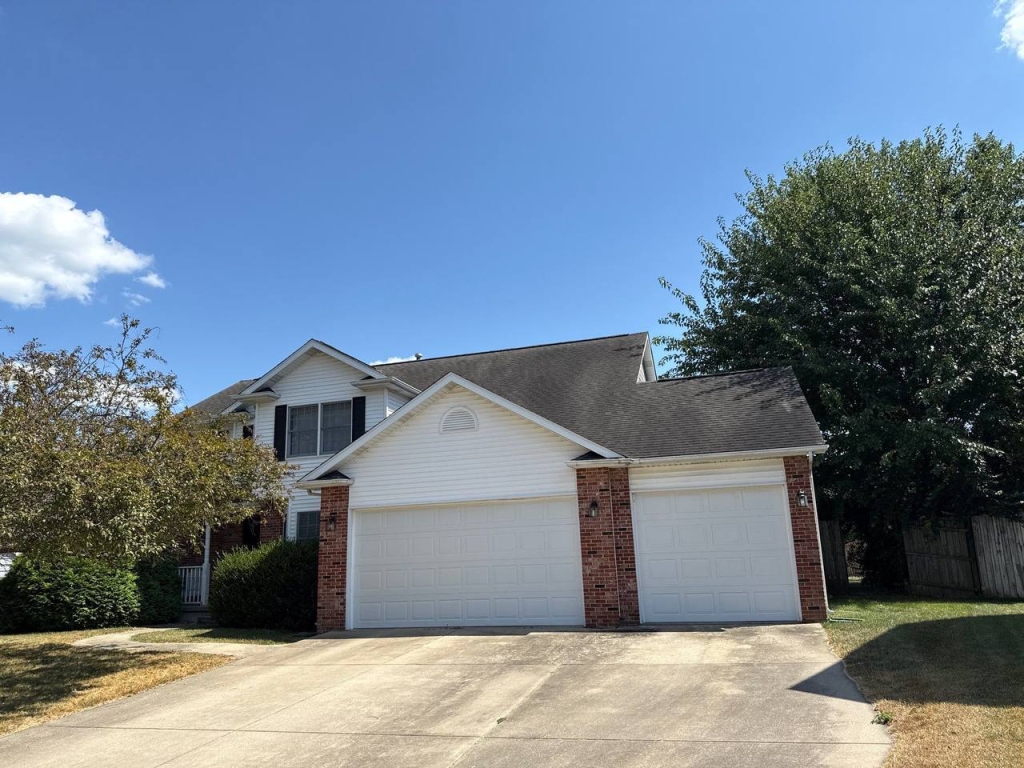
Springfield’s housing stock holds more genuine pre-1900 architecture, per square mile of older neighborhoods, than any other city in Cupples Construction’s regular service area. The Lincoln-era homes around the historic core, the Aristocracy Hill area, the Enos Park neighborhood, and the streets radiating from the capitol district carry siding that wasn’t designed in the catalog era — original cedar, painted clapboard, wood shingle, and decorative trim profiles that don’t have stock-extrusion equivalents. Then, half a mile out, you have mid-century brick ranches, 1980s vinyl-clad subdivisions, and newer construction on the city’s west and southwest edges. A siding contractor working only on tract-home re-sides will not handle a Springfield Lincoln-era home well. The opposite is also true.
This page covers how we approach siding work specifically in Springfield. The companion Springfield Roofing page covers our roofing services in town. Springfield is roughly 75 minutes south of our Normal shop and we work it on a regular schedule, not as occasional travel.
Springfield Historic Preservation and Capital District Considerations
The city’s historic-character siding work isn’t optional craftsmanship — it’s frequently regulated. Properties inside designated historic districts, certified Local Landmarks, and homes participating in state or federal preservation programs face real requirements about what siding material can replace what’s there now, what trim profiles must be retained or matched, and what visible changes need approval before work starts. Even outside formal districts, Springfield’s older neighborhoods have an unwritten standard — owners, neighbors, and the resale market all expect a re-side to honor the home’s period rather than modernize past it.
Two practical realities follow from that. First, material selection on a Springfield Lincoln-era home is not the same conversation as material selection on a 1990s suburban colonial. Original cedar repair, new cedar replacement, and fiber cement profiles selected to faithfully match the original exposure are all on the table; stock vinyl with stock trim is not. Second, scope-of-work documentation matters more on these projects than on standard re-sides — preservation reviews, neighborhood association sign-offs, and contractor certifications can all bear on what’s allowed.
We’re upfront with Springfield owners about which projects do and don’t run into these requirements. If you’re inside a designated district, we’ll discuss what we know about the review process and recommend you confirm specifics with the local preservation office before final material decisions. If you’re outside any district but in a neighborhood where character preservation is the local norm, we bid the work to honor that norm.
Working in Historic Districts
Siding work inside Springfield’s historic districts and on certified historic properties has its own discipline. A few things shape how we run those projects:
We bid the trim and architectural-detail work at the proportions the home was designed for, not at builder-grade default. Corner boards, frieze boards, window casings, soffit returns, water tables, and decorative trim profiles are part of the upfront scope, not an upcharge after the field siding is hung. On Lincoln-era homes especially, the trim is where character is preserved or destroyed.
We document existing conditions before tear-off. Photos of original profiles, exposure dimensions, and trim details give us the reference points to faithfully replicate them in the new install — and they give the owner a record for any preservation review that requires before-and-after documentation.
We sequence work to keep one elevation at a time exposed where possible, rather than stripping the whole house at once. On historic homes with limited weather tolerance for exposed sheathing, that sequencing decision matters.
We’re upfront about what we can and can’t replicate. Some original Springfield siding profiles — particular decorative shingle patterns, specific corner board proportions, certain soffit details — don’t have exact modern equivalents. We’ll tell you what’s available, what’s a close match, and what would require custom millwork. Cost grows with how faithful you want the replication to be.
If you’re considering a historic-property siding project and want to walk through these realities in person before committing, contact us to set up an estimate and we’ll plan the visit around the conversation.
Springfield Siding Work
Springfield siding projects fall into the categories below. Each gets its own conversation rather than a templated bid.
Full Siding Replacement
Includes Lincoln-era and Aristocracy Hill re-sides where the conversation is about cedar repair versus new cedar versus carefully chosen fiber cement; mid-century replacements where the original cedar or aluminum has reached end-of-life; and 1980s–1990s subdivision replacements on the west and southwest sides where the project economics look more like Champaign’s subdivision-wave market. We strip to sheathing, replace damaged substrate, install proper weather-resistant barrier, and run new siding with manufacturer-spec flashing details. Hardie and LP SmartSide are the dominant fiber cement and engineered-wood options; premium insulated vinyl is a legitimate option on later-era homes outside historic context.
Siding Repair
Cedar repair, hardboard repair, woodpecker damage, water damage at deck and porch flashings, storm damage repair, and partial-section replacement after impact damage. Repair work on Lincoln-era homes asks more questions than repair work on modern homes — profile matching, paint integration, flashing reconstruction. We treat it as detail work.
Storm Damage Siding Work
Sangamon County hail and wind events affect Springfield siding the same way they affect roofs. Hail-cracked vinyl shows up in later freeze-thaw cycles. Wind damage concentrates on west and south elevations. Our storm damage inspection checklist and post on what to do after a storm apply to siding claims, not just roofing. We work claims with adjusters in Sangamon County year-round.
Upgrade and Material-Change Work
Owners stepping a 1970s aluminum re-side back toward original cedar or matched fiber cement, owners adding insulated sheathing during a re-side, owners refining trim proportions on a previously-modernized historic home. Installation discipline is what determines whether any of this holds up — our post on why “good enough” installations fail prematurely covers the principle, and the post on how design choices impact energy bills is worth reading on the wall-assembly economics.
Springfield Conditions That Affect Siding
A few exposure and stock factors shape Springfield siding aging:
- Pre-1900 wall assemblies often lack modern weather-resistant barriers behind the cladding. A re-side is the right time to correct that, not a moment to skip it.
- South and west elevations carry the heaviest UV load, with the standard central Illinois fade-and-chalk pattern on vinyl and the standard re-paint cycle pressure on field-painted finishes.
- Lincoln-era homes with original cedar or hardboard are at variable points on their service-life curves depending on how maintenance has been kept up across multiple ownership eras.
- Sangamon County hail and wind events are comparable in intensity to McLean and Champaign Counties, but the historic-character documentation discipline on damaged historic-property siding requires more careful claim work.
- Tree cover in older neighborhoods creates shaded north-wall microclimates that hold moisture longer after rain than open-exposure walls do, particularly on porous material.
Materials and Warranty
Modern siding products carry manufacturer warranties of 25–50 years on material and limited lifetime on finish, depending on the line. Our installation workmanship warranty is documented separately. On historic-property work, we provide additional documentation appropriate to preservation review processes — existing-conditions photos, profile and trim specs, and material-source records. Both warranties get walked through with you before contract signature. If you want sample warranty paperwork in front of you for the conversation, contact us and we’ll bring it to the estimate.
Recent Springfield Siding Projects
Project photos and case studies will be added here as we document recent Springfield siding installations, Lincoln-era re-sides, and historic-character repairs. Caption format: [Project type] in [Springfield neighborhood], [year]. [Material]. [Brief technical or preservation note].
Neighborhoods We Serve in Springfield
Cupples Construction services siding projects throughout Springfield — the historic core and capital district, Aristocracy Hill, Enos Park, the older residential neighborhoods radiating from downtown, the mid-century stock to the east and south, the 1980s–1990s subdivisions on the west and southwest sides, and the newer construction at the city’s west edge. The estimating conversation is genuinely different across those zones, and we bid house-by-house.
Why Springfield Owners Choose Cupples for Siding
- Historic-character and preservation-grade siding work is part of our discipline, not something we route around at the bid.
- Trim and architectural-detail work is bid at the right scale for the home, not at builder-grade default.
- Existing-conditions documentation on historic projects is part of standard scope, not an extra.
- Workmanship and manufacturer warranties documented in writing before contract signature.
- Family-owned, faith-rooted, and on a regular Springfield service cadence from our Normal shop.
A Lincoln-era home wears its siding for generations. The install has to honor what the house already is.
For our broader siding services see the siding services hub. For commercial siding work in Springfield — capital-area office, retail, multi-family — our commercial services page covers that scope.
Siding Work in Nearby Cities
Springfield is the southwestern anchor of Cupples Construction’s regular service area. Decatur is about 40 minutes east on I-72 and brings industrial-corridor exposure considerations that Springfield doesn’t have. Bloomington is roughly 70 minutes north and shares Springfield’s historic-stock concerns at a smaller scale. Peoria is about 75 minutes north and operates in a different geographic exposure environment driven by its bluff-and-valley terrain.
Frequently Asked Questions About Springfield Siding
Can I move off original cedar on a Lincoln-era home and still keep the historic look?
Often yes, but the trim work decides whether it succeeds visually. Hardie and LP SmartSide both make profiles that read faithfully as traditional clapboard from the curb when matched to the original exposure. Where modern siding kills historic character is in the corner boards, window casings, frieze boards, and soffit returns. Bid those at the right proportions for the home and the historic look survives. Inside a designated historic district, you may also need preservation-office sign-off on the material change before work starts — we’ll discuss that early in the conversation.
My Springfield home was modernized with aluminum siding in the 1970s. Can I get back to a more historic look?
Yes — this is actually one of the more rewarding categories of Springfield siding work. The 1970s aluminum often hid original cedar, original trim profiles, or original architectural details that can be reconstructed during the re-side. Sometimes the original siding underneath is salvageable; more often it isn’t, but the original trim proportions can be replicated. We document conditions during tear-off and walk you through what’s recoverable.
How long does a historic-character siding project take?
Longer than a comparable subdivision re-side. The trim work, the existing-conditions documentation, the careful sequencing of exposed elevations, and any preservation-review sign-offs all add time. A 2,400 sq ft Lincoln-era re-side commonly runs 8–14 working days depending on weather and material lead time. We schedule with weather windows in mind on historic projects, since exposed pre-1900 sheathing tolerates rain less well than modern OSB.
Do you handle siding insurance claims on historic Springfield homes?
Yes, and the documentation discipline matters more on historic properties than on modern homes. Adjusters need to understand what was on the wall before the storm and what restoring it actually requires. We meet adjusters on site, walk elevations together, and make sure scope of loss reflects historic-character realities, not generic siding-replacement assumptions.
Can you coordinate a roof and siding project on the same Springfield property?
Yes, and we estimate them separately even when scheduled together. Roof-to-wall flashing details integrate cleanly when both trades are sequenced. The Springfield Roofing page covers our roofing work in town.
Schedule a Springfield Siding Estimate
A Lincoln-era cedar conversation, a 1970s aluminum reversal, a subdivision-era replacement, or a hail-damage claim are four different projects with four different scoping discussions. None of them get done well over the phone. We’d rather come look at the house, walk the elevations, talk through realistic options for the specific property, and put numbers on paper afterward.
When you’re ready to start, contact us through the form here — tell us roughly what you’re working with and whether the property is in or near a historic district, and we’ll set up the estimate visit.
Other Services
Ready to Talk About Your Home?
Give us a call - no pressure, just friendly neighbors ready to help with your home

- 309-826-4377
- brian@cupplesconstruction.com
- Normal, IL
What Makes Us Different
- Faith-Based Family Business
- Licensed & Insured
- GAF Master Elite
- Veteran Family Owned
Tennessee Friends
Some services available - just ask!
Where We Help Families
Central Illinois:
Business Hours
Days Open
Monday - Friday [ 8:00 AM - 5:00 PM ]
Saturday [ 8:00 AM - 4:00 PM ]
Sunday [ Emergency Only ]