service location
Siding Contractor in Peoria, IL
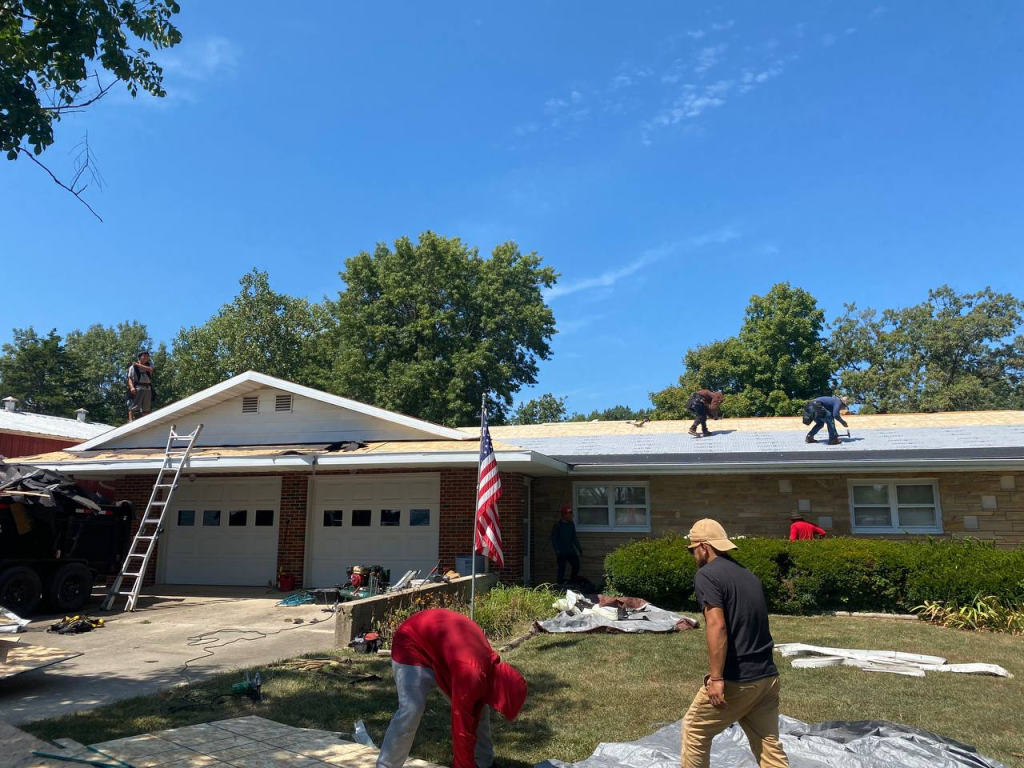
Peoria’s geography puts vertical surfaces under stress that flat-ground central Illinois cities don’t see. Bluff homes catch wind and wind-driven rain at angles that valley homes don’t. Valley homes sit in pockets of higher humidity that hold moisture against north-facing walls long after a rain has cleared the bluffs above. The same siding product, installed the same way, will not age the same on a bluff-top elevation as it does on a Peoria Heights ridge or a riverfront block. That’s the starting point for any honest siding conversation in this city.
Cupples Construction drives Peoria regularly from our Normal shop. We work the bluff neighborhoods, the older inner-city stock, and the newer subdivisions on the north and west sides. The companion Peoria Roofing page covers our roofing work in town — this page is siding-specific, because vertical surfaces and roof surfaces don’t fail the same way and shouldn’t be specced the same way.
Bluff Exposure Versus Valley Humidity
Bluff-top and bluff-side homes — the homes along Grandview Drive, the streets that step down off the bluff in Peoria Heights, the elevated lots in Mount Hawley — take wind loads that the rest of Peoria doesn’t. West and southwest walls on those homes catch wind-driven rain at high horizontal pressures during the storm cells that move up the river corridor. The failure modes that show up first are at corners and at window penetrations, where suction and pressure differentials are highest, and where any imperfection in the housewrap lap or the kickout flashing will eventually let water in.
Valley homes have a different problem. Lower-elevation neighborhoods near the river, in the older parts of the West Bluff, and in the bottoms south of downtown sit in air that holds humidity longer after rain events. North walls that don’t get direct sun take longer to dry, and that lengthens the wet-cycle exposure on cedar, on hardboard, and on cheaper vinyl that wasn’t backed properly. Mildew and back-side rot show up earlier on those walls than they do on equivalent walls in Normal or Champaign.
Mid-elevation neighborhoods — much of the North Side, the streets between the bluff and the river, the Knolls — fall somewhere in between, and the right siding spec depends on which side of the house you’re talking about as much as which neighborhood you’re in.
Siding Work in Peoria
We organize Peoria siding projects into four categories.
Full Siding Replacement
Most full Peoria replacements fall into one of three buckets — historic-stock re-sides on the West Bluff and the older neighborhoods, mid-life replacements on 1970s–1990s vinyl and hardboard installs, and upgrade-driven projects on bluff-top homes whose owners want to step up to fiber cement for both look and durability. Each is a different conversation. We tear off to sheathing, replace damaged substrate, install a proper weather-resistant barrier appropriate to the exposure, and run new siding with manufacturer-spec flashing details.
On bluff-exposure homes, we’ll often spec a more aggressive housewrap detail and a rain-screen drainage plane on premium installs, because the wind-driven rain loads on those walls justify it. On valley-humidity homes, we pay extra attention to flashing and venting at the lower courses where ground-level moisture hangs longer.
Siding Repair
Repair work in Peoria is geography-dependent in a way that other cities aren’t. A repair on a bluff-side west wall after a wind event is a different conversation from a repair on a valley-side north wall where moisture has been working at the bottom courses for years. We treat each as detail work and quote it accordingly.
Storm Damage
Hail in Peoria County hits siding hard, and the river-corridor wind events do equally serious work on west elevations. Hail damage on vinyl shows up later than hail damage on roofs — what looks like a clean panel the day after a storm can split open in the next freeze-thaw cycle. Our storm damage inspection checklist and post on what to do after a storm apply to siding claims, not just roofing. We work claims with adjusters in Peoria County year-round.
Materials and Upgrade Work
Upgrade-driven projects — vinyl to fiber cement, adding insulated sheathing during a re-side, transitioning to board-and-batten on gables — are increasingly common on Peoria bluff homes where owners are settled long-term and want a wall that matches the view. The post on how design choices impact energy bills is worth a read for the wall-assembly side of that decision.
Installation discipline is what holds any of this together over time. The post on why “good enough” installations fail prematurely was framed for roofing but the principles transfer cleanly — fastener spacing, flashing laps, expansion clearances, kickout flashings where roofs meet walls. The bluff exposure in Peoria is unforgiving of corners cut on those details. If you’d like to walk through the spec on your specific wall, contact us to set up an estimate and we’ll come look at the house.
Peoria Siding Conditions Worth Understanding
Four exposure factors shape how Peoria siding ages. Each shows up differently across the city.
Wind-Driven Rain on Bluff-Exposed Walls
Bluff-top and bluff-side west and southwest walls take horizontal water at higher pressures than equivalent walls elsewhere in central Illinois. Housewrap lap quality and kickout flashing presence become non-negotiable on those elevations.
Humidity Retention on Valley-Side North Walls
Lower-elevation neighborhoods hold humidity longer after rain. North walls with limited sun exposure dry slowly. Material selection matters more here — cedar and hardboard are higher-risk in those microclimates than fiber cement is.
UV Load on South and West Elevations
The standard central Illinois UV pattern still applies in Peoria — south and west walls fade and chalk faster than north and east walls, and field-painted finishes need re-paint cycles every 5–8 years on those exposures.
Freeze-Thaw on the Wall Plane
Vertical surfaces don’t drain like roofs. Water that gets behind the cladding can sit, freeze, and expand. Bluff exposure increases the volume of water that hits the wall in the first place; valley humidity extends the time it takes that water to dry. Both ends of the geography push installation discipline harder than a flat-ground location does.
Peoria Siding by Neighborhood Type
We bid Peoria projects house-by-house, not by zone, but the patterns roughly follow geography:
Bluff-top neighborhoods (Grandview, parts of Mount Hawley, the upper Heights) — wind-driven rain protocols, premium housewrap and flashing detail, frequent fiber cement upgrades on long-term-owner homes.
Older inner-city and West Bluff stock — historic-character considerations, cedar-versus-modern decisions similar to what Bloomington owners face, careful trim work to keep the period look.
1970s–1990s subdivisions on the north and west sides — most projects are replacement of original vinyl or hardboard reaching end-of-life, often straightforward tear-off and re-side with insulated vinyl or fiber cement.
Valley-side and lower-elevation neighborhoods — more attention to humidity-related material decisions and to bottom-course detailing, since ground-level moisture exposure runs higher.
Materials and Warranty
Modern siding products carry manufacturer warranties in the 25–50 year range on material and limited lifetime on finish, depending on the line. Our installation workmanship warranty is separate and documented in writing. Both get walked through with you before you sign anything. If you want sample warranty paperwork in front of you for the conversation, contact us and we’ll bring it to the estimate.
Recent Peoria Siding Projects
Project photos and case studies will be added here as we document recent Peoria siding installations, bluff-exposure re-sides, and storm damage repairs. Caption format: [Project type] in [Peoria neighborhood], [year]. [Material]. [Brief technical or exposure note].
Neighborhoods We Serve in Peoria
Cupples Construction services siding projects across Peoria — the bluff neighborhoods (Grandview, Mount Hawley, Peoria Heights), the older inner-city and West Bluff stock, the North Side and Sheridan corridor, the 1970s–1990s subdivisions on the north and northwest sides, and the newer construction in Edwards and toward Dunlap. The geography means our spec conversation is always tied to which side of the house you’re on, not just which neighborhood the house is in.
Why Peoria Owners Choose Cupples for Siding
- We treat bluff exposure as a distinct spec conversation, not a generic siding install with a different address.
- Valley-humidity and ground-moisture details get attention at the bottom course, where most cheap installs cut corners.
- Trim and flashing work is part of the bid, not an upcharge after the field siding goes on.
- Both warranties — manufacturer and workmanship — documented in writing and explained before contract signature.
- Storm response without storm-chaser tactics. We work claims in Peoria County year-round.
Vertical surfaces ask different questions than roofs do. The answer depends on which side of the bluff your wall faces.
For our broader siding services see the siding services hub. For commercial siding work — multi-family, retail, light industrial — our commercial services page covers that scope.
Siding Work in Nearby Cities
Peoria is the western anchor of Cupples Construction’s regular service cluster. Normal is about 40 minutes east on I-74 and is our home shop — the bluff and valley exposure variations Peoria has are not factors in Normal, so the spec conversations are genuinely different. Bloomington sits next to Normal and has more historic-stock siding work than Peoria’s bluff-driven mix. Springfield is roughly 75 minutes south and has its own historic-preservation siding considerations that don’t apply here.
Frequently Asked Questions About Peoria Siding
Does bluff exposure actually change which siding I should pick?
It changes the installation spec more than it changes the product. Most quality fiber cement and premium insulated vinyl products will perform on a bluff-top wall — the question is whether the housewrap, flashing, and fastener detail are matched to the wind-driven rain pressures the wall actually sees. A standard install on a bluff-top west wall is more likely to develop water-intrusion problems than the same install on a sheltered valley-side wall.
Why do you mention humidity for Peoria specifically?
Lower-elevation neighborhoods near the river and in the older valley-side parts of the city sit in pockets where humidity stays elevated longer after rain than it does on the bluff or out in the flat country east of town. North walls in those microclimates dry slowly, which lengthens the wet exposure on porous siding materials. It’s not a dealbreaker for any product — it just means cedar and hardboard repair work tends to come up earlier on those walls than elsewhere.
Is fiber cement the right answer for every Peoria bluff home?
Not automatically. Premium insulated vinyl performs well on bluff exposure when installed with the right housewrap and flashing detail, and it costs less. Fiber cement has a longer service life and a different look. Both are legitimate Peoria bluff answers. We walk through the trade-offs at the estimate rather than steering you toward one product line by default.
How does Peoria storm damage compare to other central Illinois cities?
Hail intensity in Peoria County is comparable to McLean or Champaign. The wind-event differences are where Peoria stands apart — the river-corridor cells that move through can deliver higher straight-line wind on bluff-exposed elevations than equivalent storms produce on flat ground. Damage assessment on bluff homes after a wind event is a different walk-around than on flat-ground homes.
Do you handle siding insurance claims in Peoria?
Yes. We document hail and wind damage, meet with the adjuster on site, and work the claim through. We’re particular about getting bluff-exposure damage counted accurately, because it’s the kind of damage that gets undercounted in a fast walk-around.
Schedule a Peoria Siding Estimate
A bluff-top re-side, a valley-side repair, a 1990s subdivision replacement, and a storm-damage claim are four genuinely different projects. We’d rather look at the wall before quoting any of them. Estimates in Peoria run on a regular schedule — we’re in town often enough that getting a visit set up is usually quick.
When you’re ready to start the conversation, contact us through the form here and we’ll be in touch to set the visit.
Other Services
Ready to Talk About Your Home?
Give us a call - no pressure, just friendly neighbors ready to help with your home

- 309-826-4377
- brian@cupplesconstruction.com
- Normal, IL
What Makes Us Different
- Faith-Based Family Business
- Licensed & Insured
- GAF Master Elite
- Veteran Family Owned
Tennessee Friends
Some services available - just ask!
Where We Help Families
Central Illinois:
Business Hours
Days Open
Monday - Friday [ 8:00 AM - 5:00 PM ]
Saturday [ 8:00 AM - 4:00 PM ]
Sunday [ Emergency Only ]