service location
Gutter Contractor in Normal, IL
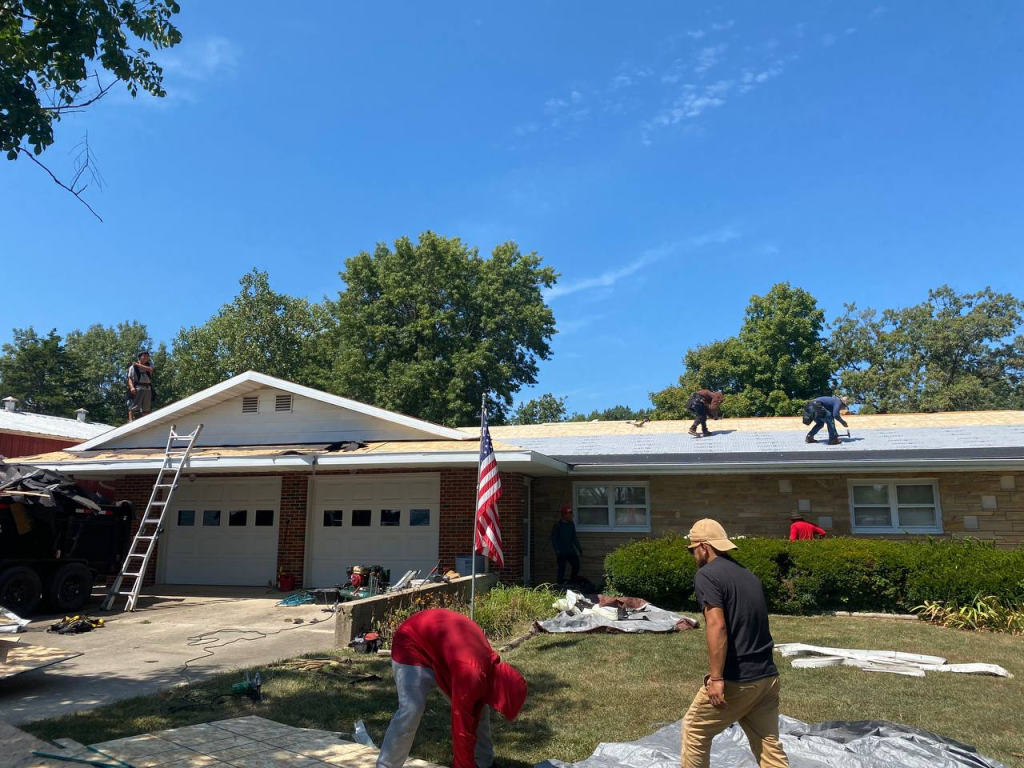
Cupples Construction is headquartered in Normal, which means our shop, our trucks, and our crews all start their day inside the city we install gutters in. Roofing and siding get most of the visible attention on a home, but gutters are what decide whether that roof and siding actually last. A roof can be flawless and siding can be brand new, and water that isn’t moved away from the house properly will still find a way to damage both of them. That’s why we treat gutter work with the same seriousness as the rest of what we build.
We’re a family-owned roofing, siding, and gutter contractor, and our gutter division operates as its own discipline — not as an afterthought to a roofing job. Sizing math, slope calculations, downspout placement, and outlet capacity all follow rules that have nothing to do with shingle work. When you hire us for gutters in Normal, you’re hiring people who know the difference.
Headquartered Gutter Installation in Normal
Being headquartered here changes how we schedule. A Normal gutter job doesn’t compete with a long drive for crew availability. If a section of fascia needs replacement before we can hang gutter, we can run back to the shop for materials without losing a half-day. If a downspout extension needs to be reworked after the first rain, we’re a short drive from the homeowner. Proximity isn’t a marketing line — it’s a scheduling reality that affects how cleanly the project closes.
Normal’s housing stock spans a wide age range. ISU-adjacent rentals, established neighborhoods near Constitution Trail, mid-century homes near Fairview Park, and newer subdivisions on the north and east sides all have different gutter requirements. A 1950s ranch with a low-pitch roof needs different downspout sizing than a two-story new build with steep pitch and longer runs. We size for the actual roof, not by default.
Gutter Services in Normal
Seamless Gutter Installation
Seamless aluminum K-style gutters are what most Normal homes get. We run them on-site from a coil so the only seams are at corners and outlets. Standard 5-inch is fine for many roofs, but homes with steep pitch, long valleys, or large roof surface area often need 6-inch to handle peak rainfall without overshooting. We make that call based on roof slope, square footage feeding each run, and downspout placement — not by defaulting to whatever is on the truck. Color is matched to fascia and trim, and end caps, hangers, and outlets are all installed the way the manufacturer specifies, which sounds basic until you see how often it isn’t done.
Repair and Cleaning
Existing gutters often fail before they need replacement. Loose hangers, separated seams at corners, sagging mid-runs, and clogged downspouts can all be addressed without a full tear-off. We diagnose the actual problem rather than upselling a replacement that isn’t needed. Cleaning service is straightforward — we clear the gutter, flush the downspouts, and check that water actually runs to grade and away from the foundation. If we find rotted fascia or soffit damage during cleaning, we tell you. We don’t quietly bury it.
Gutter Guards
Gutter guards reduce cleaning frequency, but they don’t eliminate it, and the wrong guard system can make problems worse. Mesh guards work for most leaf and twig debris. Solid covers can shed water in heavy rain if pitched wrong. We talk through the trade-offs before installing anything. Homes near mature trees on the west side of Normal benefit from guards more than homes in newer subdivisions with younger plantings, and that’s part of the conversation.
For more on what gutters fit into across our service area, see our main gutter services page.
Gutter Conditions Worth Understanding in Normal
Rainfall Intensity
Central Illinois rainfall isn’t just about annual totals — it’s about how much falls in a single hour during summer storms. Undersized gutters that handle steady rain fine will overshoot during a 1.5-inch-per-hour downpour. Sizing has to account for peak intensity, not just averages. Homes that have always had 5-inch gutters can sometimes benefit from 6-inch when the roof has been replaced with a steeper pitch or when additions have increased the roof footprint feeding a single run.
Tree Coverage
Older Normal neighborhoods with mature canopy generate significantly more debris than newer developments. Maple seeds, oak leaves, and pine needles all clog gutters differently. Pine needles in particular slip through some mesh guards and pack into corners. Tree-heavy lots typically need cleaning twice a year minimum and benefit most from upgraded guards. Newer subdivisions can often go to annual cleaning with basic mesh.
Ice Damming Connection
Gutters and ice damming are connected. When a roof has poor attic ventilation or insulation, snowmelt refreezes at the eaves and backs up into the gutter, where it freezes solid and lifts the gutter away from the fascia. The gutter often gets blamed when the actual problem is upstream. We coordinate with our roofing side when ice damming is recurring. Our winter-proofing your roof guide walks through how this all connects.
Materials and Sizing
Aluminum is the standard for residential seamless gutters. It doesn’t rust, takes paint well, and handles the freeze-thaw cycles common in central Illinois. Copper is a premium option for historic or architectural homes — beautiful, long-lived, and significantly more expensive. Steel is occasionally used for commercial applications. Most Normal residential jobs are .027-gauge or .032-gauge aluminum, with .032 being the sturdier choice for longer runs.
Downspout sizing follows the gutter. A 6-inch gutter pairs with 3×4 downspouts, not 2×3, and the difference matters in a heavy rain. Outlet placement should match the slope of the gutter run, with proper end caps sealed at the closed end. Skipping these basics is exactly what our blog on why “good enough” installations fail prematurely covers — gutters fail the same way roofs do when shortcuts get taken at the install stage.
Recent Projects in Normal
Project photo placeholder. Caption template for when photos are added: “Seamless aluminum gutter replacement on a [neighborhood] Normal home — [size] gutter with [number] downspouts, color-matched to existing fascia.”
Neighborhoods We Serve in Normal
We install and service gutters across all of Normal — from the ISU campus area and older neighborhoods near Constitution Trail to the newer developments north of Raab Road and east toward Towanda Avenue. Fairview, Northbrook, Hillcrest, Vineyard, and the corridors along Veterans Parkway are all regular service areas. We also serve unincorporated areas of McLean County north and east of Normal where address technically reads outside the city but the home is part of the same housing market.
Why Cupples for Gutters in Normal
- Headquartered in Normal — same shop, same crew, no long drives
- Gutter division treated as its own discipline, not a roofing add-on
- Sizing calculated for your actual roof, not defaulted
- Repair-first approach when full replacement isn’t needed
- Color-matched seamless aluminum run on-site
- Coordination with roofing side when ice damming or roof drainage is the actual problem
- Family-owned and based here for decades
Gutters are how a roof actually does its job. We size them, hang them, and stand behind them like the rest of the house depends on them — because it does.
FAQs
How much do new gutters cost in Normal?
Gutter pricing depends on linear footage, gutter size, downspout count, and whether fascia or soffit repair is needed before installation. A typical Normal single-family home runs in the lower-to-mid four figures for a complete seamless aluminum replacement. Because we’re headquartered here, we can usually get out for a measurement within a few days and have a written estimate to you the same day or next.
Should I get 5-inch or 6-inch gutters?
It depends on roof pitch, square footage feeding each run, and how much rain your area can dump in a single hour. Many Normal homes do fine with 5-inch. Larger homes, steep roofs, and additions that funnel a lot of water to one corner often need 6-inch to keep up with peak intensity. We look at the actual roof before recommending.
Do gutter guards really work?
The right guard for your specific tree exposure works well. The wrong one wastes money and can shed water in heavy rain. Tree-heavy lots near mature canopy benefit most. Newer subdivisions with smaller trees often don’t need them yet.
Can you replace gutters when you replace my roof?
Yes — and we recommend it when the existing gutters are aging or when the new roof has different pitch or drip-edge specs. Coordinating both at once is cleaner than coming back six months later. See our Normal roofing page for how that side coordinates with gutter work.
Do you handle commercial gutters?
We do — commercial gutter and downspout work is part of our commercial services, including larger-capacity systems and box gutter repair on older commercial buildings.
Beyond Normal
We work the same gutter discipline across central Illinois. Bloomington gutter work is a short drive south and shares Normal’s housing-age range, though Bloomington’s older core has more historic gutter integration questions. Peoria gutter installations deal with bluff-versus-valley drainage that Normal’s flatter terrain doesn’t produce. Champaign gutter service leans heavier into rental property maintenance because of the university footprint. Different cities, different drainage realities, same crew standards.
If your siding and gutters need to integrate cleanly — drip-edge tucking, fascia replacement, J-channel coordination — see our Normal siding page for how that side of the work runs.
Ready to Talk Gutters?
Send us the rough age of the house, what your gutters are doing now (overflowing, leaking at corners, pulling away from fascia, just old), and any photos that show the problem areas. We’ll schedule a measurement, work through sizing and material options with you, and give you a written estimate you can actually compare against other quotes. No high-pressure sales call, no scope creep mid-project. Just gutters that handle the next storm the way they’re supposed to. Contact us when you’re ready to get on the schedule.
Other Services
Ready to Talk About Your Home?
Give us a call - no pressure, just friendly neighbors ready to help with your home

- 309-826-4377
- brian@cupplesconstruction.com
- Normal, IL
What Makes Us Different
- Faith-Based Family Business
- Licensed & Insured
- GAF Master Elite
- Veteran Family Owned
Tennessee Friends
Some services available - just ask!
Where We Help Families
Central Illinois:
Business Hours
Days Open
Monday - Friday [ 8:00 AM - 5:00 PM ]
Saturday [ 8:00 AM - 4:00 PM ]
Sunday [ Emergency Only ]