service location
Commercial Roofing Contractor in Champaign, IL
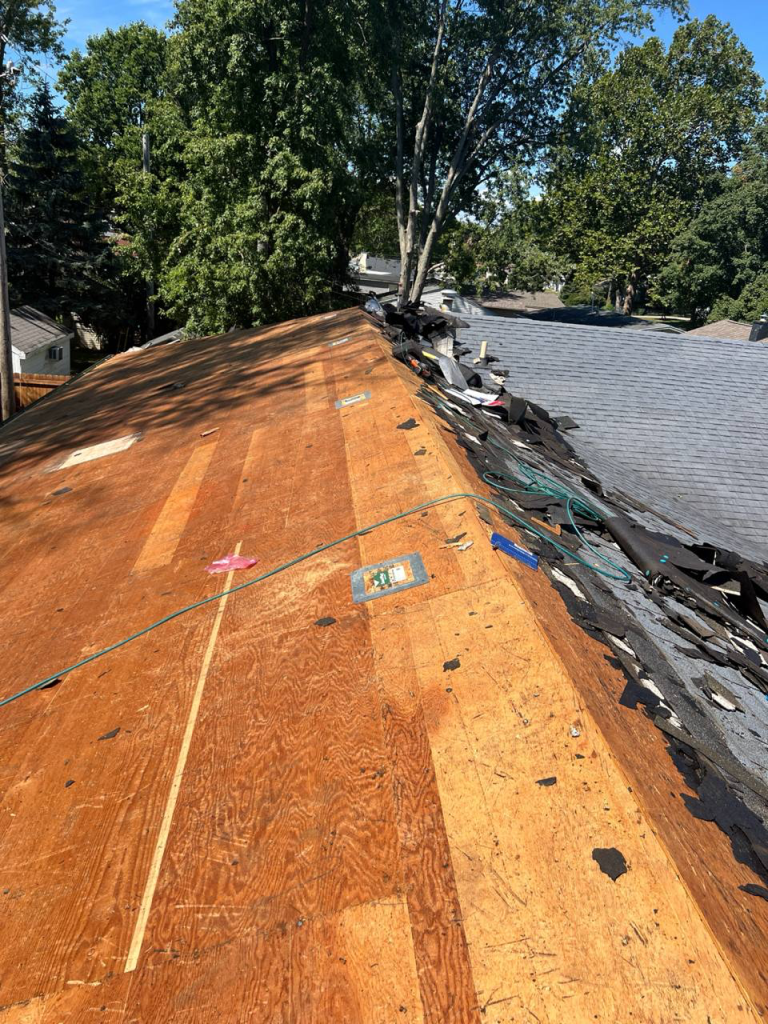
Most cities have a commercial property market and a residential property market that operate as separate categories. Champaign is different. The University of Illinois generates a tier of commercial property that doesn’t exist in cities without a major university presence — student-housing-adjacent retail, university-adjacent professional and medical office, and a multi-family commercial property base that runs into the hundreds of buildings managed across dozens of property management firms. Multi-family commercial — buildings that are residential in occupancy but commercial in ownership, scale, and procurement — is the defining commercial property category in Champaign in a way that isn’t true of any other Central Illinois city.
That changes how a commercial contractor has to work in this market. A property manager handling a portfolio of student housing buildings doesn’t think about roof projects the way a downtown office building owner does. The procurement model is different, the scheduling reality is different (academic calendar drives access windows), and the scope often involves coordinating work across multiple buildings under one engagement rather than scoping a single property at a time. Cupples Construction scopes commercial work in Champaign with that portfolio reality built into how the engagement is structured.
This page sits under our main commercial services page, which covers the broader Central Illinois scope.
Commercial Services in Champaign
Champaign commercial work splits cleanly into two procurement tracks, and we scope them separately because the buyer and the timeline are genuinely different.
For Multi-Family and Rental Commercial
Multi-family commercial in Champaign covers student housing properties (many of which are owned by national or regional student-housing investment firms), conventional multi-family rental property, mixed-use buildings with rental residential above retail, and the broader rental commercial property base that surrounds the University of Illinois campus.
Roof systems on multi-family commercial vary by property age and original construction. Older properties — particularly the converted single-family and small-multi-family buildings in the campus-adjacent neighborhoods — typically have steep-slope shingle roofs. Mid-rise and purpose-built student housing built in the last 25 years typically has flat or low-slope sections (TPO or EPDM single-ply) combined with steep-slope shingle on architectural elements. Larger purpose-built student housing constructed in the last 15 years is often fully flat-roof TPO single-ply.
The defining scope consideration on multi-family commercial is portfolio coordination. A property management firm handling 30 buildings across Champaign-Urbana doesn’t want to scope each building as a separate engagement. We scope multi-family commercial work as portfolio-wide where that fits the procurement model — single contract, consistent documentation across buildings, coordinated scheduling against the academic calendar, and a single point of contact for the property management firm rather than a separate point of contact per building.
Academic calendar matters here. Roof work that disrupts student-occupied buildings during the academic year creates lease and tenant relations problems that property managers don’t want. Most multi-family commercial work clusters into May-through-August windows, with smaller maintenance and repair work scheduled during winter and spring break periods. Proposal timing on multi-family commercial work is calibrated against that calendar.
The blog post on silent roof failures that don’t leak until it’s too late is particularly relevant for multi-family property managers — multi-family roof failures often progress invisibly until interior unit damage forces an emergency response that disrupts tenancy. Proactive maintenance contract coverage on multi-family portfolios catches the problems before they become tenant-impact problems.
For Single-Property Commercial
Single-property commercial in Champaign covers university-adjacent professional and medical office, downtown Champaign commercial, retail and corridor commercial on the north and west sides of the city, and the smaller-scale single-tenant and small multi-tenant commercial across the broader Champaign commercial map.
The procurement model on single-property commercial runs more like conventional commercial work — owner-operators or single-property facilities managers, shorter procurement timelines, and proposal scoping focused on the specific building rather than on portfolio coordination. System mix is broader: TPO and EPDM on flat sections, modified bitumen on older commercial, metal roofing on some retail and industrial property, and steep-slope shingle on smaller commercial buildings. We handle full system replacements, recoveries, partial replacements, and repair work across that range.
The article on why “good enough” installations fail prematurely applies particularly to single-property commercial owners weighing replacement bids — installation discipline is harder to verify after the fact than during the work, and the lifecycle cost difference between adequate and excellent shows up in years 12 through 25, not year one.
For property owners with both commercial and residential roofing needs in the Champaign market, our Champaign roofing page covers the residential side.
Multi-Property Portfolio Coordination
Portfolio coordination is the differentiated capability that defines commercial work in Champaign. Most commercial contractors scope buildings one at a time. That’s fine for a property manager handling three buildings; it stops working at thirty. Portfolio coordination changes how the engagement is structured.
A portfolio engagement looks like this. One contract covers the property management firm’s portfolio rather than a contract per building. Documentation is consistent across buildings — same insurance certificate format, same lien waiver structure, same warranty registration approach, same condition reporting template. Scheduling is coordinated against the academic calendar across the entire portfolio at once, not building-by-building. Maintenance contract coverage is portfolio-wide, with biannual inspections scheduled in batches and condition reporting consolidated into a single property-management-firm-level report rather than fragmented across thirty individual reports. Emergency response priority covers the portfolio.
We handle portfolio coordination on multi-family commercial, student housing portfolios, and mixed-property portfolios that include some Champaign-Urbana commercial alongside properties in adjacent markets — including portfolios that may extend to Urbana, Bloomington, or Decatur. Portfolio structure is one of the first conversations we have with property management firms — not the last.
Champaign Commercial Market Context
A few specific points about Champaign commercial work that shape scoping and timing:
The student-housing investment market in Champaign is heavily institutional. Many student housing buildings are owned by regional or national investment firms, with on-the-ground property management handled by firms operating under those owners. Procurement runs through a structured process with documentation expectations that exceed what conventional small commercial property requires. Insurance certificates current, lien waivers correctly executed, warranty registration documented, and project documentation delivered as part of the engagement.
University-adjacent professional and medical office commercial is a tier of single-property commercial that brings its own documentation expectations — University of Illinois faculty practice groups, university-affiliated medical and dental practices, and professional services firms that serve the university community. Procurement runs longer than conventional commercial decision-making.
The academic calendar is the most defining scheduling reality in this market. May through August is the multi-family commercial peak work window. Winter and spring break periods carry smaller secondary work windows. Work scheduled outside those windows on student-occupied property requires more careful coordination on tenant communication, access logistics, and disruption mitigation.
Maintenance Contracts for Champaign Commercial Properties
Maintenance contracts on multi-family commercial in Champaign work differently than on single-property commercial. A typical multi-family portfolio maintenance contract covers biannual inspections scheduled in batches across the portfolio, drainage clearing on internal drains and gutter systems, membrane and seam evaluation on flat sections, condition reporting consolidated at the portfolio level rather than per-building, and priority emergency response for the entire portfolio.
The condition reporting matters more on multi-family than on single-property commercial because the property management firm is using the report for capital planning across thirty or forty buildings, not for one building’s budget cycle. Reporting that’s structurally consistent across buildings is more useful than reporting that varies in format from contractor to contractor across the portfolio.
Maintenance contracts on single-property commercial in Champaign run more conventionally — biannual inspections, drainage clearing, condition reporting at the building level, priority emergency response.
Recent Commercial Projects in Champaign
Project photo placeholder. Caption template for actual project photos: “Commercial [system type] project at [property type] in Champaign, Illinois. Cupples Construction crew completed [scope summary] in [duration].”
Why Cupples for Commercial Work in Champaign
Portfolio coordination capability — the operational structure to scope multi-family and student housing portfolios as unified engagements rather than building-by-building. Academic calendar discipline — proposal timing and scheduling that respect the May-through-August peak work window and the smaller break-period windows. Documentation standards that meet institutional student-housing investor and university-adjacent procurement expectations. Full-envelope commercial capability — roofing, siding, drainage, and flat roof systems handled by the same contractor under one engagement. GAF Master Elite certification, which carries weight on institutional procurement; our GAF Master Elite roofing page covers the certification standard. Storm damage response capability for portfolios where storm exposure can affect multiple buildings simultaneously — see our storm damage roof repair page. Cupples Construction is family-owned, financially stable, and around long enough to honor multi-year warranty terms across portfolio-wide engagements.
Portfolio scope, building-by-building discipline.
Frequently Asked Questions
Do you scope commercial work as portfolio-wide engagements for Champaign property management firms?
Yes. Multi-family and student housing portfolio coordination is one of the differentiated capabilities we bring to this market. Single-contract structure, consistent documentation across buildings, coordinated scheduling against the academic calendar, and consolidated condition reporting are part of how the engagement is set up. Portfolio structure is part of the initial scoping conversation.
How do you schedule multi-family commercial roofing without disrupting student tenants?
Multi-family roofing on student-occupied property is scheduled around the academic calendar — May through August for major work, with break-period windows used for smaller work. Tenant communication, access logistics, and noise and disruption mitigation are part of project planning, not afterthoughts. Property managers should expect a contractor’s proposal to address tenant impact directly. If the proposal doesn’t, the bid is incomplete.
What roofing systems are most common on Champaign student housing?
Larger purpose-built student housing constructed in the last 15 years typically has TPO single-ply membrane on flat sections. Mid-rise and earlier purpose-built student housing typically has a mix of TPO or EPDM single-ply on flat sections combined with architectural-shingle steep-slope on visible architectural elements. Older converted multi-family in the campus-adjacent neighborhoods typically has steep-slope shingle. System selection on replacement work depends on the existing structure, deck and insulation condition, and lifecycle cost preferences.
Can you handle the documentation expectations of institutional student housing investors?
Yes. Insurance certificates, lien waivers, warranty registration, project safety plans, and consolidated portfolio condition reporting are part of how we engage on institutional portfolios. Procurement reviews from regional and national student-housing investment firms expect that documentation standard, and we deliver it as part of the engagement.
Do you offer maintenance contracts on multi-family commercial portfolios?
Yes, structured at the portfolio level rather than per-building. Biannual inspections scheduled in batches, consolidated condition reporting at the property-management-firm level, drainage clearing across the portfolio, and priority emergency response covering all buildings under the contract. Contract structure depends on portfolio size, system mix across the buildings, and the level of documentation the property management firm wants.
What’s the typical proposal turnaround on Champaign commercial work?
Several days for single-property commercial. Longer on portfolio engagements where the property walk covers multiple buildings and the proposal has to cover scope and documentation across the whole portfolio. We don’t issue commercial proposals from phone descriptions on either single-property or portfolio work — accurate scoping requires walking the buildings.
Open the Portfolio or Single-Property Conversation
Commercial scoping in Champaign starts with one of two conversations. For single-property commercial — university-adjacent office, downtown commercial, retail and corridor commercial — the first step is a property walk and a conversation about scope and timing on that building. For multi-family and student housing portfolios, the first step is a conversation about portfolio structure, academic calendar planning, and how the property management firm wants the engagement coordinated across buildings.
Property managers, facility directors, business owners, and student-housing investment firms can reach us through the main commercial services page or by direct call. To open a single-property or portfolio scoping conversation in Champaign, send building details, portfolio information if applicable, and the procurement timeline you’re working against through our contact form. From there, we’ll set up the property walks and the portfolio scoping conversation that puts together a proposal fitting the actual buildings and the actual procurement context.
Ready to Talk About Your Home?
Give us a call - no pressure, just friendly neighbors ready to help with your home

- 309-826-4377
- brian@cupplesconstruction.com
- Normal, IL
What Makes Us Different
- Faith-Based Family Business
- Licensed & Insured
- GAF Master Elite
- Veteran Family Owned
Tennessee Friends
Some services available - just ask!
Where We Help Families
Central Illinois:
Business Hours
Days Open
Monday - Friday [ 8:00 AM - 5:00 PM ]
Saturday [ 8:00 AM - 4:00 PM ]
Sunday [ Emergency Only ]