service location
Roofing Contractor in Peoria, IL
Peoria Is Not Flat
Most Central Illinois cities are flat. Normal is flat. Bloomington is flat. Champaign and Urbana are flat. Decatur is flat. The roofing conversation in those cities is shaped by weather, by housing era, and by exposure — but not by topography, because there isn’t much.
Peoria is the exception. The Illinois River cuts the city into distinct zones, and the elevation changes between them are real. Bluff homes sitting hundreds of feet above the river face wind exposure that valley homes don’t. Valley homes face drainage and runoff considerations that bluff homes don’t. The flats north of the city, the hills above Grandview Drive, the older neighborhoods cut into the bluff face, the riverside lots near downtown — these are not the same roofing environment, and a contractor that quotes them all the same way is missing something the geography is making obvious.
A roofing job in Peoria starts with knowing where the home sits in that geography, because the answer changes what matters most. Cupples Construction handles all of these zones, but the conversation about wind, water, and exposure is different on a Grandview Drive bluff home than it is on a north-side ranch. The main Roofing services page is the parent reference for the broader scope.
How Bluff, Valley, and Flats Each Change the Job
The most useful way to think about Peoria roofing is by terrain zone. The work looks different in each.
Bluff homes — the West Peoria bluff, Grandview, the East Bluff above the river, and the higher-elevation neighborhoods that look down at the city — face the highest wind exposure in the metro area. Open ridgelines and elevated positions catch wind that flat-prairie homes don’t. Shingle uplift, ridge cap displacement, and edge metal failures show up earlier on bluff homes. Wind-rated installation is not optional on these — it’s the baseline. Six-nail fastening patterns rather than four-nail. Starter strip on rakes as well as eaves. The conversation about Class 4 impact-resistant shingles on bluff homes is also a wind-resistance conversation, not just a hail conversation.
Valley homes — the lower elevations along the river, the older Averyville neighborhoods, and the flat zones near Bartonville — face a different problem. Drainage. Runoff from higher-elevation neighborhoods affects valley-zone soil, foundation drainage, and indirectly the overall water-management picture around a home. Valley roofs themselves don’t behave dramatically differently from flat-prairie roofs in terms of wind, but the gutter sizing, downspout extension, and roof-edge water management decisions matter more in valley installations. Ice damming during freeze-thaw cycles is also more common in valley microclimates that hold cold air longer.
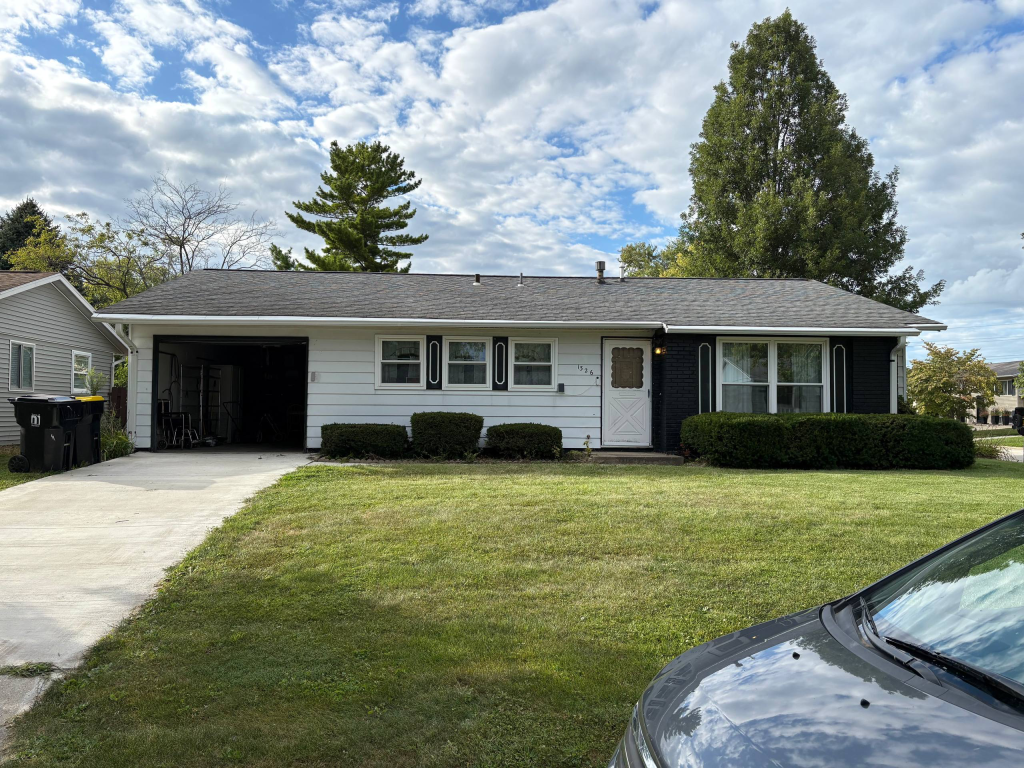
The flats north of Peoria — the newer subdivisions in north Peoria and the established ranches in north-central neighborhoods — behave more like Bloomington and Normal in terms of terrain, but with their own quirks. Wind exposure on the open north side is moderate to high. The newer subdivisions tend toward steeper-pitched two-story homes with engineered trusses, while the older sections are mostly postwar ranches and split-levels. Roof replacement in this zone is the largest single category of north-side work, and most of it is straightforward installation with the standard considerations.
Riverside lots near downtown — the limited residential stock that sits close to river level — are their own micro-category. Older homes, original chimneys, complex flashing, and a microclimate that’s wetter than the surrounding metro. Repair work dominates here over replacement, because many of these homes are at a stage where targeted intervention makes more sense than full re-roofing.
Roofing Services in Peoria
Six service categories cover the bulk of Peoria work. The list compresses some related services because they tend to come up together on Peoria jobs.
Roof Replacement and Re-Roofing
The largest workload category. Tear-off, deck inspection, underlayment, ice and water shield, shingle installation, ventilation, and final cleanup as a continuous workflow. The bluff-versus-valley distinction shows up most clearly here — wind-rated installation specs on bluff homes, drainage and edge-metal attention on valley homes. The decision framework between repair and replacement is covered in the roof repair vs replacement guide.
Storm Damage Response and Insurance Claims
Peoria sits in the same Central Illinois hail and wind belt as the rest of the metro region, with active storm seasons every spring and summer. The how to spot hail damage guide covers what to check after a storm event, and the storm damage roof inspection checklist is the documentation reference. The Storm Damage Roof Repair Illinois page is the statewide framework.
Repair and Targeted Intervention
Not every Peoria roof issue calls for replacement. Repair work covers wind-lifted shingles, flashing replacement, chimney work, valley repairs, and the targeted interventions that keep a roof in service for additional years. The signs you need roof repair before it starts leaking guide is the early-detection reference.
Leak Detection and Diagnostic Work
Peoria’s mix of older homes — particularly in the bluff and riverside zones — means leak diagnostics show up frequently. Water entering at one point on a complex roof and surfacing at another is the standard pattern, and finding the actual entry point takes diagnostic methodology rather than guesswork. The Roof Leak Detection Illinois page covers the broader framework. The silent roof failures that don’t leak until it’s too late guide is worth reading on older Peoria homes specifically.
Emergency Stabilization and Tarping
Active leaks need immediate water-intrusion control before any larger repair or replacement scope is discussed. Emergency tarping in Peoria runs longer drive times than in the Normal-Bloomington metro since Peoria sits forty miles west of headquarters, but the response is part of the standard service offering. The Emergency Roofing Illinois page is the framework reference, and the what to do after a roof storm in Illinois guide covers what homeowners should do in the first hours.
GAF Master Elite Installation with Golden Pledge Warranty
Cupples Construction is GAF Master Elite certified, which is the certification level required for Golden Pledge warranty access. The Golden Pledge is the longest factory-backed warranty in the GAF lineup, and the certification details are on the GAF Master Elite Roofing Illinois page.
Peoria Roofing Conditions Worth Understanding
Peoria’s geography earns five sub-sections rather than the four that fit flat-prairie cities. The terrain genuinely creates more distinct conditions.
Wind Exposure on Bluff Homes
Higher elevations face higher wind speeds. Peoria’s bluff neighborhoods regularly experience wind events that flat-prairie cities don’t measure as often. Shingle uplift, ridge cap displacement, and starter-strip failures show up earlier here. Six-nail fastening and proper starter on rakes is the baseline, not an upgrade.
Drainage and Runoff in Valley Zones
Valley-zone Peoria homes deal with the runoff that bluff-zone homes shed. Gutter sizing, downspout extension, and roof-edge water management matter more in the valley than they do in flat-prairie cities. The roof itself is part of a water-management system that extends into the foundation and yard, and the gutter conversation is more involved here.
Older-Home Concentration in River-Adjacent Neighborhoods
Pre-1950 housing stock is concentrated in the Averyville and downtown-adjacent zones. Original chimneys, original flashing details, and decking that may not be modern plywood are all common. The conversation about decking replacement during tear-off comes up more often on these homes.
Spring Hail and Severe Weather
April through June is the active hail window across Central Illinois, and Peoria gets the same exposure as the rest of the region. Class 4 impact-resistant shingles carry the same justification here as elsewhere in the hail belt, with the added wind-resistance benefit on bluff installations.
Freeze-Thaw and Microclimate Effects
The river and the valley topography create microclimate effects that flat-prairie cities don’t experience the same way. Cold air pools in valley zones longer than in elevated areas. Ice dam patterns vary across Peoria more than they do in cities with uniform topography. Winter-proofing your roof for Illinois snow seasons covers the ice-and-water-shield and ventilation interventions that prevent the worst outcomes — the conversation matters more in the valley than on the bluff.
Peoria Neighborhoods by Terrain Type
A neighborhood list grouped by where the homes actually sit makes more sense in Peoria than the standard alphabetical neighborhood list works.
Bluff and High-Elevation Neighborhoods
The West Peoria bluff district. Grandview Drive and the streets above it. The East Bluff neighborhoods that look down at the river from the opposite side. The higher-elevation pockets in north Peoria that have meaningful wind exposure. These are where wind-rated installation specs matter most.
Valley and River-Adjacent Neighborhoods
The downtown-adjacent residential blocks. Averyville. The lower-elevation streets that follow the river or sit in drainage paths from higher ground. The Bartonville-area neighborhoods. Drainage and water management conversations are most relevant here.
North Peoria Flats and Newer Subdivisions
The flat zones north of the bluff line. Established postwar neighborhoods. Newer subdivisions with engineered-truss two-story construction. The largest single zone by housing count, and the most straightforward in terrain terms.
South Peoria and Bartonville Edge
Mixed terrain that transitions from the urban core into more suburban density. A combination of older housing stock and newer construction.
Materials and Warranty
GAF asphalt shingle systems handle most Peoria installations, with material specifications adjusted for terrain zone. Bluff homes typically get higher-wind-rated installations as a baseline. Valley homes get standard wind ratings with attention to drainage and edge-metal details. Class 4 impact-resistant options handle hail-belt math across all zones, with the additional wind-resistance benefit on elevated homes.
The Golden Pledge warranty is available through Master Elite certification, and the workmanship side is backed by Cupples Construction’s own labor warranty. The complete guide to roof inspections in Illinois covers what a thorough inspection looks like on installations of any era and terrain.
Recent Peoria Projects
Photo placeholder section. Project photos with terrain-zone references, project scope, and material selection will be added as the local project library is built out. Caption template: “[Material/system] installation on a [home era/style] in [Peoria neighborhood/terrain zone]. Project completed [season] [year].”
Why Cupples for Peoria Roofing
- Terrain-aware installation specs that adjust for bluff, valley, and flats positioning
- GAF Master Elite certified, with Golden Pledge warranty access
- Family-owned, multi-year Central Illinois presence
- Insurance claim experience for the wind and hail events that affect Peoria
- Wind-rated installation as the baseline on bluff homes, not an upcharge
- Crews that work full-time on Cupples projects
- Faith-based business culture that informs how the work happens
- Forty-mile drive from the Normal headquarters, with established workflow for the Peoria service area
Where the roof sits changes how the roof gets built.
Service Area Across Central Illinois
Peoria is forty miles west of Cupples Construction’s Normal headquarters, which makes the metro region the company’s western service zone. The closest Tier 1 cities each handle different roofing realities. The Normal roofing page covers the headquarters city — flat prairie, no terrain complications, and the home base. The Bloomington roofing page shares Normal’s geography and adds significant pre-1900 housing stock that Peoria has in smaller volume. South of Peoria, the Springfield roofing page covers the state capital — a city with its own historic-architecture considerations and a different geography from Peoria’s bluff-and-valley setup.
For commercial buildings rather than residential homes, the commercial roofing services page is the right starting point.
Frequently Asked Questions — Peoria Roofing
Does the bluff or valley location actually change the price of my roof?
It can. Wind-rated installation on bluff homes uses tighter fastener patterns and additional starter material on rakes, which is more labor and slightly more material. It’s not a dramatic price difference on the typical job — the installation method is the bigger factor than the materials cost — but it’s a real factor. Valley homes don’t usually have a terrain-specific cost addition for the roof itself, though the gutter and water-management conversation can add scope. The accurate pricing answer for Peoria is “after we look at where the home sits,” because the terrain zone affects what the right installation actually is.
Are bluff homes more likely to have wind damage claims than valley homes?
In our experience, yes. Higher elevation means higher wind exposure means earlier failures of wind-vulnerable installation details — ridge caps, edge metal, starter strip on rakes. Bluff-home roofing claims for wind damage tend to come up more often than valley-home claims for the same wind events. That said, both zones get hail damage at similar rates since hail comes straight down regardless of elevation. The storm damage roof repair Illinois reference is the broader framework.
How long does a Peoria job take given the drive from your headquarters?
The drive from Normal to Peoria is forty miles, which adds about an hour of round-trip transit per day to the schedule. For most Peoria residential jobs, this means crews leave Normal early and return late on installation days, but it doesn’t extend the actual on-site work timeline. Single-day completion is standard for ranches and simpler two-stories. Two-day completion is standard for complex roofs, large homes, or installations with significant decking-replacement scope. Weather is a bigger schedule variable than the drive.
What’s special about installing on a Grandview Drive home or another bluff property?
The wind. Bluff homes face higher sustained wind speeds and more frequent gusts than flat-prairie homes, and shingle installation has to account for that. We use tighter fastener patterns, double-check ridge cap installation, and pay particular attention to starter strip on rakes — the rake edge is where wind-driven uplift starts, and the standard four-nail fastening pattern that works on flat-prairie homes is not the right specification for bluff installations. The conversation about installation specs on a bluff home is longer than on a north-side ranch.
Can older Peoria homes near the river be repaired without full replacement?
Often, yes. Targeted repair work — flashing replacement, chimney work, valley repairs, partial shingle replacement — extends the service life of older homes considerably. Full replacement isn’t always the right answer. The repair-versus-replacement decision is project-specific, and we’d rather tell a homeowner their roof has another five years of service life than push a replacement that isn’t needed. The honest assessment is what we do.
How does ice damming differ across Peoria’s terrain zones?
Valley-zone homes hold cold air longer than elevated homes, which means freeze-thaw cycles persist longer in the valley. Ice damming risk is higher there. Bluff and elevated homes warm faster in spring and don’t hold ice as persistently. The ice-and-water-shield specifications and ventilation considerations change accordingly — valley homes benefit from more aggressive ice-and-water-shield coverage, while bluff homes get more attention to ventilation that handles wind-driven snow infiltration. Both zones need proper ventilation, but the specific failure modes differ.
Are you licensed and insured for work in Peoria specifically?
Yes. The Illinois state roofing contractor license covers work statewide, and Cupples Construction carries general liability and workers compensation coverage that applies to all Illinois job sites. Peoria municipal permitting is handled per project as required. The what homeowners should know about Illinois roofing requirements guide covers what homeowners should verify before signing any contract with any contractor.
When the Terrain Is Part of the Job
Peoria roofing is not a flat-prairie job, and treating it like one is how installations fail early. The bluff homes need wind-rated specifications. The valley homes need water-management attention. The river-adjacent older homes need diagnostic patience and repair-not-replacement honesty. The north-side flats need straightforward installation done correctly.
What the job actually requires depends on where the home sits, and that conversation starts with a no-pressure inspection that we document with photos. If you want that conversation, contact us — we’ll come out, look at where your home is in the Peoria geography, and tell you what we see.
Other Services
Ready to Talk About Your Home?
Give us a call - no pressure, just friendly neighbors ready to help with your home

- 309-826-4377
- brian@cupplesconstruction.com
- Normal, IL
What Makes Us Different
- Faith-Based Family Business
- Licensed & Insured
- GAF Master Elite
- Veteran Family Owned
Tennessee Friends
Some services available - just ask!
Where We Help Families
Central Illinois:
Business Hours
Days Open
Monday - Friday [ 8:00 AM - 5:00 PM ]
Saturday [ 8:00 AM - 4:00 PM ]
Sunday [ Emergency Only ]