service location
Roofing Contractor in Normal, IL
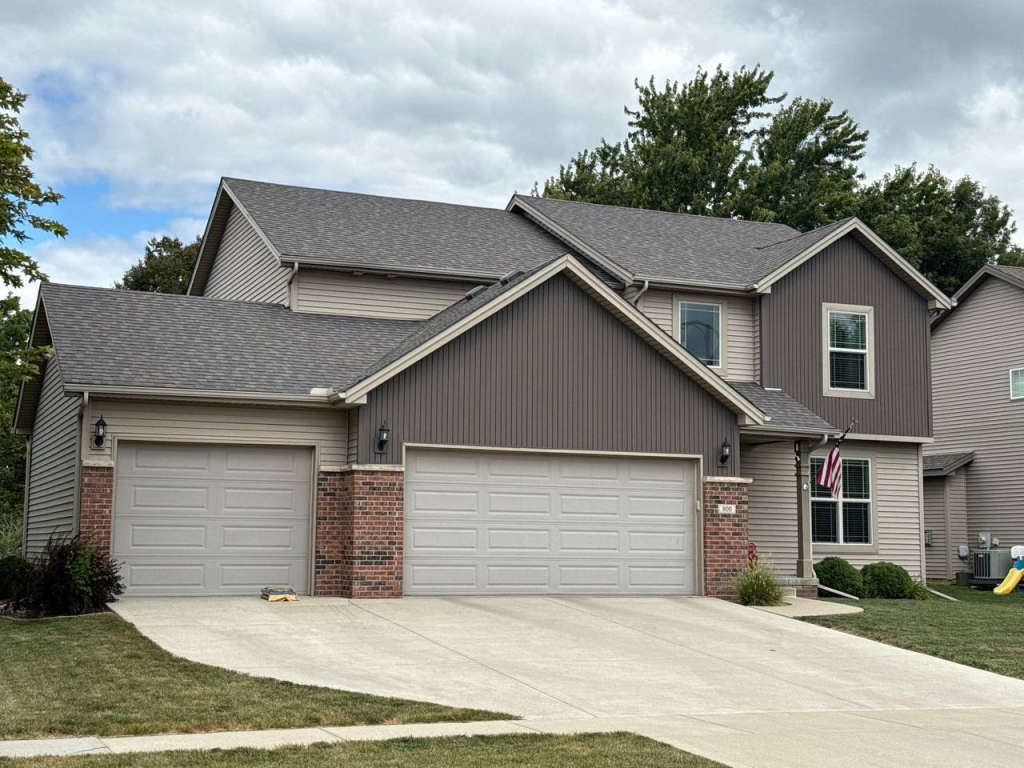
Normal Is Home
Cupples Construction is based in Normal, Illinois. Not headquartered in Chicago with a satellite office. Not a national brand running a local franchise. The shop, the trucks, the materials yard, and the people who answer the phone all sit inside Normal city limits. When a homeowner on Towanda Avenue calls about a roof leak after a Tuesday night storm, the response comes from a crew that started its morning a few miles away — not from a dispatcher routing a contractor in from another county.
That proximity matters in ways that extend beyond response time. A roofing contractor working in its own hometown carries reputation risk that out-of-area contractors do not. The crew that installs a roof on Hovey Avenue this week is the same crew that will see that homeowner at the grocery store, at the high school football game, at church. That accountability is structural, not marketing language.
For a complete overview of our roofing services across Central Illinois, the main Roofing services page outlines the full scope of installation, repair, storm response, and warranty work the company handles.
What Working in Your Own Hometown Looks Like
Most roofing contractors operating in Normal drive in from somewhere else. That isn’t a criticism of those companies — many do solid work. But there’s a practical difference between a contractor who treats Normal as one of many service zones and a contractor whose only office is in Normal.
Local-headquarters work means short drive times for return visits, easy access to the materials yard if a job needs additional supply mid-installation, and a crew that doesn’t view Normal jobs as overflow when work in another market gets busy. It also means the warranty conversation in year seven looks different. A contractor with a Normal address and a Normal phone number is reachable. A contractor whose Normal presence was a mileage zone on a service-area map may not be.
This matters because roofing warranties are only as good as the contractor’s willingness to honor them years later. The GAF Master Elite warranty path provides factory backing, but the day-to-day warranty service still depends on whether the installer is still in business and still picking up the phone. Cupples has been in business in Normal for years and intends to be here for years more.
Roofing Services in Normal
The work below is what Normal homeowners most commonly call about. The list isn’t exhaustive — if a roofing situation isn’t represented here, the right answer is a phone call.
Roof Replacement
Tear-off and full system replacement is the largest category of Normal work. Most replacements happen because the existing roof has reached the end of its service life, sustained storm damage that can’t be economically repaired, or developed multiple failure points across enough of the deck that targeted repair stops making sense. The decision between repair and replacement isn’t always obvious — the roof repair vs replacement guide walks through how the math actually works.
Normal replacements typically run a single day for a standard ranch and one to two days for a larger two-story with multiple roof planes. Tear-off, deck inspection, underlayment, ice and water shield in the eave and valley areas, shingle installation, and final cleanup all happen as a continuous workflow.
Roof Repair
Targeted repair work covers everything from a few wind-lifted shingles to flashing replacement around chimneys and skylights. Not every roof issue requires replacement, and a contractor who pushes replacement when repair is appropriate is a contractor to be cautious of. Homeowners who suspect roof issues but aren’t sure should review the signs you need roof repair before it starts leaking — early signs of trouble are often visible before any water reaches a ceiling.
Storm Damage Response
Hail and high-wind events are a regular feature of Central Illinois spring and summer weather. After a storm passes through Normal, the homes that took the worst hits are not always the ones that look obviously damaged from the ground. Hail bruising and granule loss can be invisible from a driveway view but visible during a roof-level inspection. The how to spot hail damage guide covers what homeowners can check from the ground and what requires a trained eye. For deeper Illinois-specific storm response context, the Storm Damage Roof Repair Illinois page is the statewide reference.
Emergency Tarping and Active-Leak Stabilization
When water is actively coming through a ceiling, the immediate need is to stop more water from getting in — full repair or replacement comes after the immediate threat is contained. Cupples handles emergency tarp work for Normal homeowners, with response times that benefit from the home-base location. The Emergency Roofing Illinois page covers the broader response framework.
Roof Leak Detection
Some leaks are obvious. Many are not. Water can enter a roof system at one location and surface at another location entirely, which is why a stain on a hallway ceiling rarely indicates the actual entry point. Diagnostic leak detection — finding where water is actually getting in, not just where it’s showing up — is its own service category. The Roof Leak Detection Illinois page covers the methodology.
For homeowners reading about leaks for the first time, the silent roof failures that don’t leak until it’s too late is worth reviewing — by the time a roof is visibly leaking, the underlying problem has typically been developing for a while.
GAF Master Elite Installation
Cupples is a GAF Master Elite contractor, which is a certification held by a small percentage of roofing contractors nationwide. The certification matters primarily because it unlocks the GAF Golden Pledge warranty — the longest, deepest factory-backed warranty GAF offers. The certification details are covered on the GAF Master Elite Roofing Illinois page.
Roof Inspections
Annual or post-storm inspections are how problems get caught before they become claims, replacements, or interior damage. The complete guide to roof inspections in Illinois explains what a thorough inspection actually covers — visual roof-walk inspection is only part of it.
Normal Roofing Conditions Worth Understanding
Normal sits in McLean County in the heart of Central Illinois, and the local roofing environment is shaped by four factors worth understanding before any roof project.
Open Prairie Wind Exposure
McLean County is open prairie. Many Normal subdivisions — particularly newer construction on the north and east sides of town — sit in terrain with limited tree canopy and limited wind break from neighboring structures. Open-exposure homes face different wind pressures than homes in heavily wooded older neighborhoods. Wind-driven shingle lift and granule erosion show up earlier on open-exposure roofs.
Spring Hail Season
April through June is the active hail window for Central Illinois. Not every spring brings a major hail event to Normal specifically, but the multi-year average is enough that any roof installed in Normal should be considered with hail in mind. The case for Class 4 impact-resistant shingles is stronger here than in regions outside the hail belt, and the insurance discount in many Illinois policies for Class 4 installation is worth asking about.
Freeze-Thaw Cycles and Ice Dams
Central Illinois winters bring repeated freeze-thaw cycles, and Normal’s mix of mature neighborhoods with insulation that varies by home age makes ice damming a recurring issue. Winter-proofing your roof for Illinois snow seasons covers the ventilation and ice-and-water-shield considerations that prevent the worst of it.
Mixed Housing Stock
Normal contains everything from postwar ranches in the older central neighborhoods to large new builds on the north and east edges. Different eras of construction came with different roof framing approaches, different deck materials, and different ventilation philosophies. A 1955 ranch and a 2018 two-story do not get the same roof system, and a contractor who treats them the same is a contractor who hasn’t done enough Normal-specific work to know better. How roof ventilation mistakes shorten shingle lifespan covers why this matters more than most homeowners realize.
Materials and Warranty
Cupples installs primarily GAF asphalt shingle systems, with material selection scaled to the homeowner’s budget, the home’s design, and the long-term value calculation. The Timberline HDZ line covers most standard installations. Architectural and designer lines handle homes where curb appeal is part of the project goal. Class 4 impact-resistant options are available for hail-belt considerations.
The warranty conversation has two parts. The factory warranty comes from GAF and is tied to the materials. The workmanship warranty comes from the installing contractor and is tied to the labor. Both matter. A factory warranty doesn’t help if the failure was an installation issue, and a workmanship warranty doesn’t help if the contractor isn’t around to honor it. Cupples’ GAF Master Elite status connects both — the Golden Pledge warranty is backed by GAF and only available through Master Elite contractors.
For a primer on why low-cost installations often fail before warranty math suggests they should, why “good enough” roofing installations fail prematurely walks through the specific failure modes.
Recent Normal Projects
Photo placeholder section. Project photos with specific neighborhood references, project scope, and material selection will be added as the local project library is built out. Caption template: “[Material/system] installation on a [home era/style] in [Normal neighborhood]. Project completed [season] [year].”
Normal Neighborhoods Served
Cupples covers all of Normal, including but not limited to:
- Central Normal and the older neighborhoods near Illinois State University
- North Normal subdivisions including the Hershey Road corridor
- East Normal and the Veterans Parkway commercial-adjacent residential areas
- The Vernon Avenue and Linden Street historic stretches
- Newer construction on the north and east edges of town
Service area extends seamlessly into Bloomington — the two cities effectively share roof contractors, and most jobs that originate in Normal end up touching neighborhood lines in Bloomington and vice versa. For Bloomington-specific information, the Bloomington roofing contractor page is the dedicated reference.
Why Cupples for Normal Roofing
- Headquartered in Normal — not a satellite office, not a service zone
- GAF Master Elite certified, which unlocks the Golden Pledge warranty
- Family-owned and operated, with multi-year local presence
- Insurance claim experience for hail and wind events common to McLean County
- Crews that work full-time on Cupples projects, not subcontracted day labor
- Faith-based business culture that informs how the company communicates and operates
- Workmanship warranty backed by a contractor that’s still answering the phone in year ten
Hometown contractor, hometown accountability.
Cupples Service Area Beyond Normal
Cupples serves Normal and the surrounding Tier 1 cities in Central Illinois. Bloomington is the immediate sister-city — the two municipalities effectively share a metropolitan footprint, and the Bloomington roofing page covers that work in depth. Forty miles west, Peoria has its own distinct geography that makes the Peoria roofing page worth its own dedicated reference. East along the I-74 corridor, the Champaign roofing page handles the university-town context that’s genuinely different from Normal’s.
For commercial buildings rather than residential homes, the commercial roofing services page is the right starting point.
Frequently Asked Questions — Normal Roofing
How much does a roof replacement cost in Normal?
Normal roof replacement pricing reflects an efficiency advantage that doesn’t apply to every market. Because Cupples is headquartered in Normal, drive time, materials transport, and crew logistics are all lower than for jobs in distant markets. That said, the actual cost depends on roof size, pitch, complexity (number of valleys, hips, dormers, penetrations), tear-off layers, deck condition, and material selection. A flat one-story ranch with no skylights and a simple gable runs differently than a steep-pitched two-story with three dormers and a chimney. The honest answer to “what does a roof cost in Normal” is “the price after we look at it” — and any contractor who quotes over the phone without seeing the roof is quoting a number they may not honor.
How long does a Normal roof replacement take?
Most Normal residential replacements complete in one to two days of active work. A standard ranch can finish in a single day if weather cooperates and the deck is in good condition. A larger two-story with complex roof geometry typically runs into a second day. The bigger variable than home size is weather — Central Illinois spring and summer can deliver thunderstorm interruptions that push schedules. We don’t start a tear-off if the radar shows weather inside the work window.
Do you handle the insurance claim paperwork?
Yes. Most Normal storm-damage projects involve an insurance claim, and we work directly with adjusters during the inspection and documentation process. The detailed claim methodology is covered on the Storm Damage Roof Repair Illinois page, and the storm damage roof inspection checklist covers what homeowners should document themselves.
How quickly can you respond to an emergency leak in Normal?
Faster in Normal than anywhere else, because we’re already here. Same-day response is the standard for active leaks in Normal during business hours, with emergency tarping handled before any larger repair or replacement scope is discussed. The what to do after a roof storm in Illinois guide covers what homeowners should do in the first hour while waiting for crew arrival.
Should I get an inspection if my roof isn’t actively leaking?
Yes, especially after a major hail or wind event. Damage that looks fine from the ground often isn’t fine on the roof, and the insurance claim window for storm damage is finite — waiting until next year to discover damage from this spring’s storm typically means the claim is no longer viable. Annual inspections also catch the slow failures that don’t show themselves as leaks until significant deck damage has already occurred.
What’s the difference between a regular roofer and a GAF Master Elite contractor?
GAF Master Elite is a certification level that requires ongoing training, demonstrated installation quality, customer service track record, and proper licensing and insurance. The percentage of roofing contractors nationwide who hold the certification is small. The practical homeowner benefit is access to the GAF Golden Pledge warranty, which is the longest factory-backed warranty in the asphalt shingle category and is only available through Master Elite contractors. Full details on the GAF Master Elite Roofing Illinois page.
How do I know if my Normal roof has hail damage?
Granule loss in gutters, dimples or bruises on shingle surfaces visible from a roof-level inspection, and dented metal flashing or vents are common indicators. Ground-level inspection misses most hail damage. The how to spot hail damage on your roof guide walks through what’s visible from where, and a professional inspection after any significant hail event is worth the time.
Are you licensed and insured for work in Normal?
Yes. Illinois requires roofing contractor licensing, and Cupples carries general liability and workers compensation coverage in addition to the state license. Homeowners working with any contractor should verify both — the what homeowners should know about Illinois roofing requirements guide covers what to ask for and what to verify.
When You’re Ready
There’s a version of this final paragraph that pushes hard for the call — countdown, urgency, “limited spots.” That isn’t the Cupples approach.
If your roof needs work, the next step is a no-pressure inspection. We come out, look at what’s actually happening up there, document it with photos, and tell you what we see. If repair is the right answer, we’ll say repair. If replacement is the right answer, we’ll say replacement. If your roof has another five good years in it, we’ll say that too — and we’ll mean it. Hometown contractor, hometown accountability isn’t a tagline if we sell you a roof you didn’t need.
Call when you’re ready. We’re already in Normal.
Other Services
Ready to Talk About Your Home?
Give us a call - no pressure, just friendly neighbors ready to help with your home

- 309-826-4377
- brian@cupplesconstruction.com
- Normal, IL
What Makes Us Different
- Faith-Based Family Business
- Licensed & Insured
- GAF Master Elite
- Veteran Family Owned
Tennessee Friends
Some services available - just ask!
Where We Help Families
Central Illinois:
Business Hours
Days Open
Monday - Friday [ 8:00 AM - 5:00 PM ]
Saturday [ 8:00 AM - 4:00 PM ]
Sunday [ Emergency Only ]