service location
Roofing Contractor in Champaign, IL
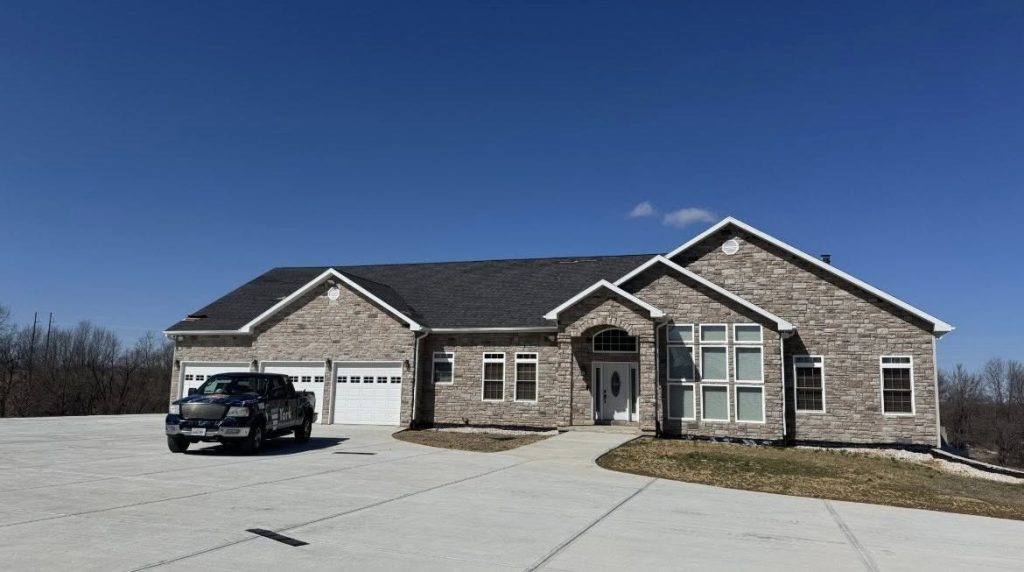
Champaign Roofing Has Two Customers
Most Central Illinois cities have one roofing market — homeowners getting their primary residence re-roofed. Champaign has two, and the difference between them shapes nearly every conversation that happens before, during, and after a roof project here.
The first market is owner-occupied homes. Faculty, university staff, professionals working in the research and tech corridor that’s grown around the University of Illinois, and the long-term residents who’ve made Champaign home regardless of any university connection. These projects look like roofing projects in any Tier 1 Central Illinois city — a homeowner with a single property, a long-term horizon, a personal stake in the outcome, and a decision-making process built around their own home.
The second market is rental property roofing. Champaign has one of the largest concentrated student-rental property markets in the state, with property owners and management companies operating portfolios that range from a single duplex to dozens of buildings. The decision-making is different. The timeline is different. The financial model is different. The conversation about materials, warranty, and scope is different. A roofing contractor that treats a rental portfolio job the same way as an owner-occupied home is making a mistake the property owner will catch quickly.
Cupples Construction handles both, but the conversation has to start with which one the home is. The main Roofing services page covers the broader scope.
Roofing Services for Owner-Occupied Homes
This is the conversation that mirrors what happens in any Central Illinois Tier 1 city. The homeowner lives in the home, plans to stay in it, and is making a decision about an asset that’s also where they sleep at night.
Roof Replacement and Re-Roofing
The single largest project category. A typical Champaign owner-occupied replacement involves an established neighborhood home — anything from a 1920s brick bungalow near the university to a 2000s subdivision two-story on the city’s edges. The decision between repair and replacement is the first conversation, and the roof repair vs replacement guide is worth reading before either path is committed to.
Targeted Repair Work
Owner-occupied homeowners are typically more willing to invest in targeted repair when replacement isn’t yet warranted, because they have a direct interest in the home performing well over a long horizon. Flashing replacement, partial shingle replacement, valley repairs, and chimney work all show up regularly. The signs you need roof repair before it starts leaking guide is the early-detection reference.
Storm Damage and Insurance Claims
Champaign-Urbana sits in the same Central Illinois weather pattern as the rest of the region — the same hail seasons, the same wind events, the same insurance claim dynamics. Owner-occupied claims tend to be more straightforward than rental claims because there’s a single decision-maker and a single insurance policy involved. The storm damage roof inspection checklist is the documentation reference and the Storm Damage Roof Repair Illinois page is the statewide framework.
GAF Master Elite Installation with Golden Pledge Warranty
Owner-occupied homes are where the long-warranty conversation matters most. A homeowner planning to stay in the home for fifteen or twenty more years is exactly the homeowner for whom Golden Pledge warranty terms make the strongest case. The GAF Master Elite Roofing Illinois page covers the certification details.
Roofing Services for Rental Property Portfolios
This is where the Champaign roofing market diverges from what happens in other Central Illinois cities. The conversation, the priorities, and the project structure are genuinely different.
Portfolio-Scale Replacement Programs
Property owners who own multiple buildings rarely think in single-roof terms. The conversation is about which roofs are due now, which are due in two to three years, and how to sequence the work so that the portfolio’s overall maintenance schedule doesn’t all hit at once. Cost-per-roof matters, but so does the multi-building scheduling, the consistent material specification across the portfolio, and the contractor relationship that handles all of it without re-bidding every job.
Scheduled Repair and Preventive Work
Rental properties have different incentive structures than owner-occupied homes. The repair-versus-replacement decision tilts toward preventive repair more often, because the math of stretching a roof’s service life by a few additional years is straightforward when the property’s financial model is built around long-term cash flow rather than personal occupancy. We handle the targeted repair work that keeps rental rooflines in service longer.
Storm Damage on Rental Buildings
Rental property storm-damage claims are more complex than owner-occupied claims. The insurance policy is held by the property owner, not the tenant. Documentation requirements may be different. Claim timelines may be longer. The contractor’s role in working with the property management company’s insurance documentation is more involved. We handle this — the rental side of the storm damage workload is a real category, not a footnote.
Material Selection for Rental Specifications
Rental property roofing typically prioritizes durability and predictable performance over the upgrade-tier material conversations that happen on owner-occupied homes. Standard architectural shingles handle the bulk of rental work. Class 4 impact-resistant options come up when the insurance discount math works for the property owner. Designer-tier shingles rarely come up. The honest conversation about why “good enough” installations fail prematurely matters here too — cutting corners on a rental roof creates the same long-term problems as cutting corners on an owner-occupied roof, just on someone else’s property.
Emergency Response and Coordination with Tenants
Active leaks in rental properties involve a third party — the tenant — who isn’t the decision-maker but is the person experiencing the problem. Coordinating emergency stabilization with property management, tenants, and insurance simultaneously is its own workflow. The Emergency Roofing Illinois page is the broader framework.
Champaign Roofing Conditions
Three conditions matter most for Champaign roofs. The list is shorter than other cities by design — Champaign’s terrain is flat prairie like Normal and Bloomington, and the conditions that genuinely differentiate Champaign from those cities are tighter in number.
The Hail and Severe Weather Window
April through June is hail season across Central Illinois, and Champaign County receives the same exposure as the broader region. The how to spot hail damage guide covers post-storm self-inspection. Class 4 impact-resistant shingles carry the same case here as elsewhere in the hail belt, with stronger insurance discount math for portfolio owners who can amortize the upgrade across multiple buildings.
Open-Prairie Wind Exposure
Champaign sits on flat agricultural prairie with limited natural wind breaks, particularly in the newer subdivisions on the city’s western and southwestern edges. Wind uplift on the windward sides of homes is more common in open-exposure neighborhoods than in tree-canopied older sections. Wind-rated installation is the appropriate baseline for these areas.
Older Housing Near the University
The neighborhoods immediately surrounding the University of Illinois campus include substantial pre-1950 housing stock — bungalows, foursquares, and the older Craftsman homes that were built for early-era faculty. Original chimneys, original ventilation, and decking that may not be modern plywood all come up on these homes. The silent roof failures that don’t leak until it’s too late guide is worth reading on this housing category.
Scheduling Considerations in a University Town
Champaign is the only city in the Cupples Construction service area where the academic calendar genuinely affects roofing project scheduling, and ignoring it creates problems for property owners and tenants both.
The university calendar shapes the rental market’s project-friendly windows. Late May through mid-August — the period between spring semester move-out and fall semester move-in — is the highest-volume window for rental property roof work. Tenants are gone, units are being turned, and major exterior work fits into the same maintenance period that handles painting, flooring, and other unit-prep work. The window is finite and the demand inside it is concentrated, which means scheduling rental property work for that window requires planning months in advance, not weeks.
December through January — the winter break window — is a secondary window for some rental work, though Central Illinois winter weather limits what can actually happen during this stretch. Roof replacements aren’t typically scheduled in mid-winter, but emergency repairs and stabilization absolutely happen in this window.
For owner-occupied homes, the academic calendar is less of a factor. The standard Central Illinois roofing seasons — spring through fall, with the heaviest workload in late summer and early fall — apply normally.
The winter-proofing your roof for Illinois snow seasons guide covers the cold-season considerations that matter for Champaign roofs regardless of which market category they fall into.
Materials and Warranty
GAF asphalt shingle systems handle nearly all Champaign installations across both market categories. Material specifications differ between owner-occupied homes (where the upgrade-tier conversation is more relevant) and rental properties (where standard architectural shingles handle most work).
The Golden Pledge warranty is available through Master Elite certification on owner-occupied homes most often, since the long-warranty horizon matches owner-occupied tenure better than rental property holding patterns. That said, larger rental portfolios with long-term hold strategies sometimes do match the Golden Pledge horizon, and the conversation is worth having.
The complete guide to roof inspections in Illinois covers what a thorough inspection includes, and applies to both owner-occupied and rental property contexts.
Recent Champaign Projects
Photo placeholder section. Project photos with neighborhood references, market category (owner-occupied or rental), project scope, and material selection will be added as the local project library is built out. Caption template: “[Material/system] installation on a [home era/style or rental building type] in [Champaign neighborhood]. Project completed [season] [year].”
Champaign Neighborhoods Served
Cupples Construction covers all of Champaign, including the campus-adjacent neighborhoods, the Old West Champaign historic area, the Bristol Park and West Side neighborhoods, the newer subdivisions on the southwest and northwest edges, the established central neighborhoods between campus and downtown, and the rental-heavy zones that fan out from the University of Illinois on multiple sides. Service extends seamlessly into Urbana — the two cities are adjacent enough that crews routinely work both within a single week.
Why Cupples for Champaign Roofing
- Workflow built for both owner-occupied homes and rental property portfolios
- GAF Master Elite certified, with Golden Pledge warranty access
- Family-owned, multi-year Central Illinois presence
- Insurance claim experience for both single-property and portfolio claim scenarios
- Academic calendar awareness for rental property scheduling
- Crews that work full-time on Cupples projects rather than subcontracted day labor
- Faith-based business culture that informs how the work happens
- Single-contractor relationship that scales from a duplex to a multi-building portfolio
The right roof depends on which kind of roof it is.
Service Area in the Champaign-Urbana Region and Beyond
Cupples Construction’s service area extends across the Champaign-Urbana metropolitan region and out into the broader Central Illinois Tier 1 city network. The closest city is Urbana, which shares Champaign’s metropolitan footprint but has its own distinct character — the Urbana roofing page covers a city that’s often confused with Champaign but has different historic stock and a different downtown identity. Forty-five miles west, the Bloomington roofing page handles a city with deeper pre-1900 housing concentration than Champaign has. Forty-five miles southwest, the Decatur roofing page covers a city with industrial-corridor and Sangamon River dynamics that Champaign doesn’t share.
For commercial buildings rather than residential homes — including the commercial rental property buildings that some Champaign owners manage — the commercial roofing services page is the right starting point.
Frequently Asked Questions — Champaign Roofing
Do you charge differently for rental property work than owner-occupied work?
The pricing model is the same — both pay for materials and labor on the actual scope of work. What differs is the conversation. Rental portfolio work often involves multi-building pricing structures where consistent specification across buildings creates efficiencies that single-job pricing doesn’t capture. Owner-occupied pricing tends to be project-by-project. Neither category is “more expensive” or “less expensive” inherently — both pay fair market rate for the work being done. What we don’t do is treat rental work as throwaway or as an opportunity to use cheaper materials than we’d use on an owner-occupied home. The materials are the same. The installation standards are the same.
Can you schedule a rental property re-roof during the summer turnover window?
Yes, with planning. The May-to-August window is the highest-demand period for Champaign rental property work, and scheduling inside that window requires booking months in advance — typically by late winter for the following summer. We work with property management companies on multi-building scheduling that fits the work into the turnover window without creating logistical conflicts with other unit-prep work. Late requests are sometimes possible but the calendar tightens fast.
How do storm damage claims work on a rental property?
The property owner files the claim, not the tenant. Documentation requirements are similar to owner-occupied claims — pre-storm condition, post-storm damage assessment, repair scope, materials specification — but the communication chain is longer. We work directly with the property owner or their management company, document the damage with photos, coordinate with the adjuster’s inspection, and handle the scope-of-work conversation. The what to do after a roof storm in Illinois guide covers the immediate-response considerations.
How long does a Champaign single-home replacement take?
One to two days for most owner-occupied homes. Single-day completion is standard for ranches and simpler two-stories with no decking-replacement contingency. Two-day completion is standard for larger homes, complex roofs, or installations where tear-off reveals decking that needs partial replacement. Weather is typically the bigger schedule variable than home size — Central Illinois spring and summer can deliver thunderstorm interruptions that push timelines.
How much does a roof replacement cost in Champaign?
Champaign pricing reflects the same Central Illinois materials-and-labor market that Normal and Bloomington pricing does, but the rental-portfolio dynamic creates an additional pricing dimension that doesn’t exist in those cities. Single-home owner-occupied pricing depends on roof size, pitch, complexity, tear-off layers, deck condition, and material selection — the same factors that drive pricing anywhere. Multi-building portfolio pricing includes additional considerations around scheduling and consistent specification. The accurate pricing answer for either category is “after we look at the property” — over-the-phone estimates aren’t reliable in either market.
Are you experienced with the older homes near the University of Illinois campus?
Yes. The campus-adjacent neighborhoods have substantial pre-1950 housing stock with original chimneys, original flashing details, and decking considerations that modern subdivision homes don’t have. The conversation about partial decking replacement during tear-off, historic-aware material selection, and ventilation interventions on older homes is a conversation we’ve had many times. The how roof ventilation mistakes shorten shingle lifespan guide covers why ventilation matters more on older homes than most homeowners realize.
Are you licensed and insured for work in Champaign?
Yes. The Illinois state roofing contractor license covers work statewide, and Cupples Construction carries general liability and workers compensation coverage. The what homeowners should know about Illinois roofing requirements guide covers what to verify before signing any contract, in either the owner-occupied or rental market.
Two Markets, One Contractor
A Champaign homeowner deciding about their primary residence and a Champaign property owner deciding about a rental portfolio are not having the same conversation. The materials may overlap. The installation standards do overlap. But the priorities, the timelines, the financial models, and the decision-making processes are genuinely different — and a contractor that handles only one of these markets well isn’t the right answer for the other.
Cupples Construction is built to handle both. Whether the project is a single home that you live in or a portfolio of buildings that other people live in, the inspection comes first, the documentation is photo-based, and the scope-of-work conversation happens with full information rather than a guess. Contact us to schedule that inspection — for one home, or for a portfolio.
Other Services
Ready to Talk About Your Home?
Give us a call - no pressure, just friendly neighbors ready to help with your home

- 309-826-4377
- brian@cupplesconstruction.com
- Normal, IL
What Makes Us Different
- Faith-Based Family Business
- Licensed & Insured
- GAF Master Elite
- Veteran Family Owned
Tennessee Friends
Some services available - just ask!
Where We Help Families
Central Illinois:
Business Hours
Days Open
Monday - Friday [ 8:00 AM - 5:00 PM ]
Saturday [ 8:00 AM - 4:00 PM ]
Sunday [ Emergency Only ]