service location
Roofing Contractor in Urbana, IL
Urbana Is Not Champaign
The two cities share a metropolitan footprint, share the University of Illinois, share a hyphen on most regional references, and share enough that out-of-area contractors often treat them as one market. They are not one market. Urbana has its own downtown, its own historic district, its own residential character, and its own roofing reality — and treating Urbana as a Champaign satellite is the most common mistake roofing contractors make in this region.
The differences matter for the work itself. Urbana’s downtown is older, denser, and more architecturally preserved than Champaign’s. Urbana’s residential neighborhoods skew toward longer-term ownership and a higher proportion of pre-1950 housing stock. The rental property concentration that defines so much of Champaign’s roofing market is present in Urbana too but at lower density and with different building types. Urbana’s central neighborhoods feel like a small Midwestern college town in ways that the more commercial-heavy stretches of Champaign no longer do.
Cupples Construction handles Urbana as its own city, with its own conversation. The crews that work in Urbana also work in Champaign next door, but the project intake on an Urbana home starts with what Urbana actually is — not with Champaign-template assumptions. The main Roofing services page is the parent reference for the broader scope.
What Working on Urbana Roofs Actually Involves
The conversation about Urbana roofing covers a tighter range than the conversation about most Tier 1 cities, and the page reflects that. The work breaks down into a single coherent service category with several sub-services woven through it.
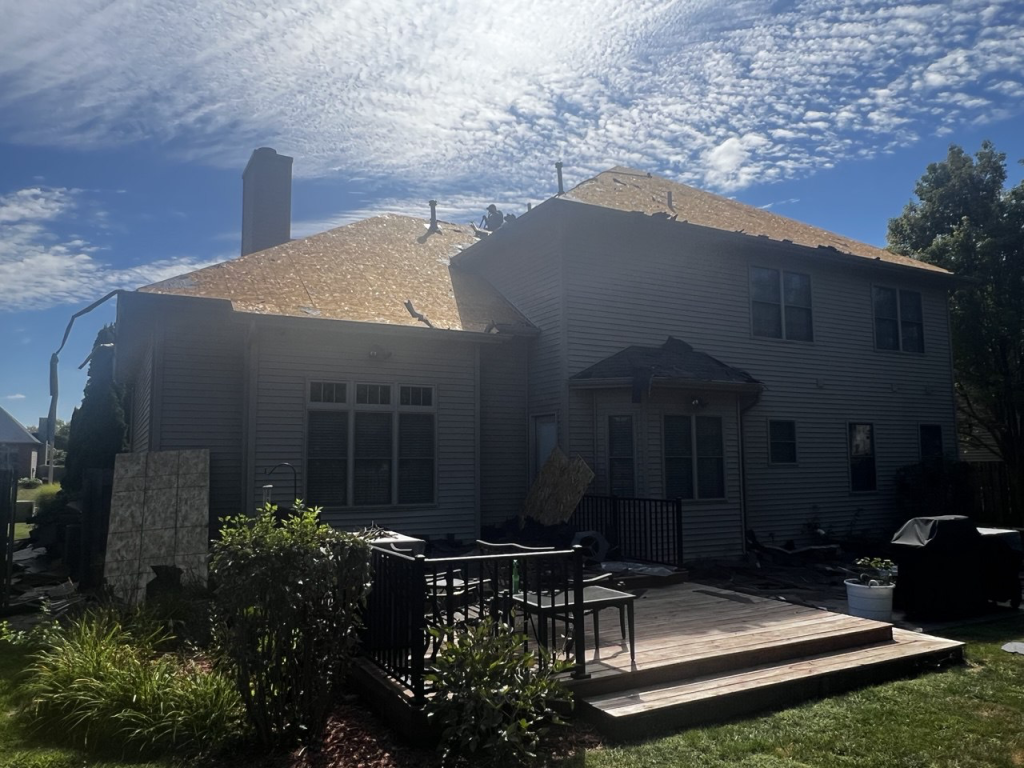
The bulk of Urbana residential work is full roof replacement on homes that have reached the end of their original or first-generation roof’s service life — typically architectural shingle systems installed twenty to twenty-five years ago that are showing the granule loss, edge deterioration, and surface bruising that signal it’s time. Targeted repair work is the second category, covering everything from a few wind-lifted shingles to the chimney flashing replacement that comes up regularly on Urbana’s older central neighborhoods. Storm damage response is the third, with hail and wind events affecting Urbana on the same Central Illinois weather pattern that affects Champaign, Bloomington, and Normal. Emergency stabilization for active leaks is part of the standard service offering, with response coordinated through the same regional crew that handles the broader Champaign-Urbana area.
Two more service categories are worth calling out specifically. GAF Master Elite installation with the Golden Pledge warranty option is available on Urbana installations, and the certification matters most on owner-occupied homes with long ownership horizons — which describes a substantial share of Urbana’s central residential neighborhoods. The certification details are on the GAF Master Elite Roofing Illinois page. Roof leak detection comes up more often on Urbana’s older homes than on newer subdivision construction, because complex roof geometry, original chimneys, and aging flashing details create the conditions where water enters at one point and surfaces somewhere else entirely. The diagnostic methodology is covered on the Roof Leak Detection Illinois page.
For homeowners weighing whether they’re in repair territory or replacement territory, the roof repair vs replacement guide walks through how the math works in practice. The signs you need roof repair before it starts leaking guide is the early-detection reference for catching problems before they become emergencies.
Urbana’s Roofing Reality
The conditions that shape Urbana roofing are best understood as part of the same conversation that defines what kind of city Urbana is. Urbana sits on the same flat agricultural prairie as Champaign, with the same general weather exposure — spring hail seasons from April through June, summer wind events, freeze-thaw winter cycles, and the occasional severe weather event that creates concentrated insurance claim activity across the metropolitan region. The hail belt math is the same here as in Champaign, and the case for Class 4 impact-resistant shingles carries similar weight.
What’s different about Urbana is the housing stock concentration in older eras. The neighborhoods immediately surrounding downtown Urbana and stretching toward the University of Illinois campus include substantial pre-1920 housing — Victorians, foursquares, Craftsman bungalows, and the early-era homes that were built when Urbana was a small town distinct from Champaign rather than the metropolitan twin it became. These older homes carry the standard older-home considerations: original chimneys with masonry that may need attention during flashing replacement, decking that may not be modern plywood, ventilation systems that were minimal by current standards, and roof geometry that’s more complex than newer subdivision construction.
The silent roof failures that don’t leak until it’s too late guide is worth reading on the older Urbana housing stock specifically — these are the homes where slow-developing problems most often hide before any visible symptoms appear. The how roof ventilation mistakes shorten shingle lifespan guide covers why ventilation interventions matter more on older homes than most homeowners expect. And the winter-proofing your roof for Illinois snow seasons guide is the ice-and-water-shield reference for the freeze-thaw cycles that affect older Urbana homes more aggressively than newer construction.
The Storm Damage Conversation in Urbana
Storm damage in Urbana follows the same Central Illinois weather pattern as the rest of the region, but the housing stock affects how damage shows up and how claims unfold. Older homes can sustain hail damage that’s harder to assess from the ground because the existing shingles already show age-related wear that an adjuster has to distinguish from storm damage. The pre-storm versus post-storm documentation is more important on older homes for exactly this reason.
The how to spot hail damage on your roof guide covers what to check after a storm event. The storm damage roof inspection checklist is the documentation reference. The what to do after a roof storm in Illinois guide covers immediate-response actions. For the broader Illinois storm damage methodology, the Storm Damage Roof Repair Illinois page is the statewide framework, and active-leak situations are covered on the Emergency Roofing Illinois page.
Materials and Warranty
Cupples Construction installs primarily GAF asphalt shingle systems on Urbana homes, with material selection scaled to the home’s era and the homeowner’s project goals. Architectural shingles in shade lines that respect the home’s character are the default starting point on older central-neighborhood homes. Designer-tier options come up on homes where curb appeal is part of the project goal. Class 4 impact-resistant options handle the hail-belt math.
The Golden Pledge warranty is the deepest factory-backed warranty in the GAF lineup and is available only through Master Elite contractors. The workmanship side is backed by the contractor’s own labor warranty. Both halves matter, and both are included on Cupples installations.
Recent Urbana Projects
Photo placeholder section. Project photos with neighborhood references, project scope, and material selection will be added as the local project library is built out. Caption template: “[Material/system] installation on a [home era/style] in [Urbana neighborhood]. Project completed [season] [year].”
Urbana Neighborhoods Served
Cupples Construction covers all of Urbana, with particular activity in the central neighborhoods that hold the city’s older housing stock — the streets surrounding downtown Urbana, the historic districts that preserve the city’s pre-1920 character, the residential blocks that fan out toward the University of Illinois campus, and the established mid-century neighborhoods that fill out the city’s residential geography. Service extends seamlessly into Champaign next door. The newer subdivisions on Urbana’s edges receive the same coverage as the historic central blocks.
Why Cupples for Urbana Roofing
- Urbana handled as its own city, not as a Champaign satellite
- GAF Master Elite certified, with Golden Pledge warranty access
- Family-owned, multi-year Central Illinois presence
- Older-home experience including original chimneys, board decking, and ventilation interventions
- Insurance claim experience for Central Illinois hail and wind events
- Crews that work full-time on Cupples projects rather than subcontracted day labor
- Faith-based business culture that informs how the work happens
- Honest assessment that respects an older home’s character rather than treating it as a generic project
Urbana is its own conversation, and we have it.
Service Area Beyond Urbana
Cupples Construction’s service area covers the full Champaign-Urbana metropolitan region and the broader Central Illinois Tier 1 city network. The closest neighbor is Champaign, where the Champaign roofing page covers a city that shares Urbana’s metropolitan footprint but has a different residential character — denser commercial development, larger rental property concentration, and a downtown that grew differently than Urbana’s. Forty-five miles west, the Bloomington roofing page covers a city with deeper pre-1900 housing concentration and a different metropolitan relationship with its sister city Normal. Forty-five miles southwest of the Champaign-Urbana region, the Decatur roofing page covers an industrial-corridor city with Sangamon River dynamics that don’t apply here.
For commercial buildings rather than residential homes, the commercial roofing services page is the right starting point.
Frequently Asked Questions — Urbana Roofing
Why do you have a separate page for Urbana when Champaign and Urbana are right next to each other?
Because they’re different cities with different residential character, different downtowns, and different roofing realities, and treating them as one market is how out-of-area contractors miss what Urbana actually needs. Champaign has higher rental property concentration and denser commercial development. Urbana has older housing stock concentration and a downtown that’s more architecturally preserved. The work itself adjusts based on which city the home is in, and the conversation should too. A single page covering both would either undersell Urbana’s distinct character or overgeneralize about both — neither is the right answer.
How much does a roof replacement cost in Urbana?
Urbana pricing reflects the same Central Illinois materials-and-labor market as Champaign, but the housing-stock concentration in older eras means a higher percentage of Urbana jobs involve older-home considerations that affect the project — chimney flashing complexity, decking-replacement contingency, and ventilation interventions that may need to be part of the scope. The honest pricing answer is “after we look at the specific home.” Older Urbana homes have a wider price range than newer subdivision homes because the work involved varies more.
Can older Urbana homes be repaired without full replacement?
Often, yes. Targeted repair work — flashing replacement, chimney work, valley repairs, and partial shingle replacement — extends the service life of older homes by years when done correctly. The repair-versus-replacement decision is project-specific, and we’d rather tell a homeowner their roof has another five years of useful life than push a replacement that isn’t needed. Honest assessment is the standard.
Are you familiar with Urbana’s downtown historic preservation considerations?
Yes. Some Urbana homes within designated historic-character neighborhoods carry preservation considerations that affect material selection or installation methods. The conversation is project-specific — most Urbana homes don’t have formal preservation restrictions, but some do, and we handle that conversation up front rather than discovering it during permitting.
Are you licensed and insured for work in Urbana?
Yes. The Illinois state roofing contractor license covers work statewide, and Cupples Construction carries general liability and workers compensation coverage. The what homeowners should know about Illinois roofing requirements guide covers what homeowners should verify before signing any roofing contract with any contractor.
Schedule an Urbana Roof Inspection
The roof on an Urbana home gets the inspection it deserves — not a Champaign-template walkthrough, not a generic assessment, and not a sales pitch dressed up as a recommendation. We come out, we look at what’s actually there, we document with photos, and we tell you what we see.
If your roof needs work, we’ll say what kind of work and explain why. If repair makes more sense than replacement, we’ll say so. If the roof has years of useful life left, we’ll tell you that too — Urbana homeowners get the same honest assessment that everyone in our service area gets, regardless of what category the home falls into. To get that inspection on the calendar, contact us here and we’ll schedule a time that works.
Other Services
Ready to Talk About Your Home?
Give us a call - no pressure, just friendly neighbors ready to help with your home

- 309-826-4377
- brian@cupplesconstruction.com
- Normal, IL
What Makes Us Different
- Faith-Based Family Business
- Licensed & Insured
- GAF Master Elite
- Veteran Family Owned
Tennessee Friends
Some services available - just ask!
Where We Help Families
Central Illinois:
Business Hours
Days Open
Monday - Friday [ 8:00 AM - 5:00 PM ]
Saturday [ 8:00 AM - 4:00 PM ]
Sunday [ Emergency Only ]