service location
Roofing Contractor in Decatur, IL
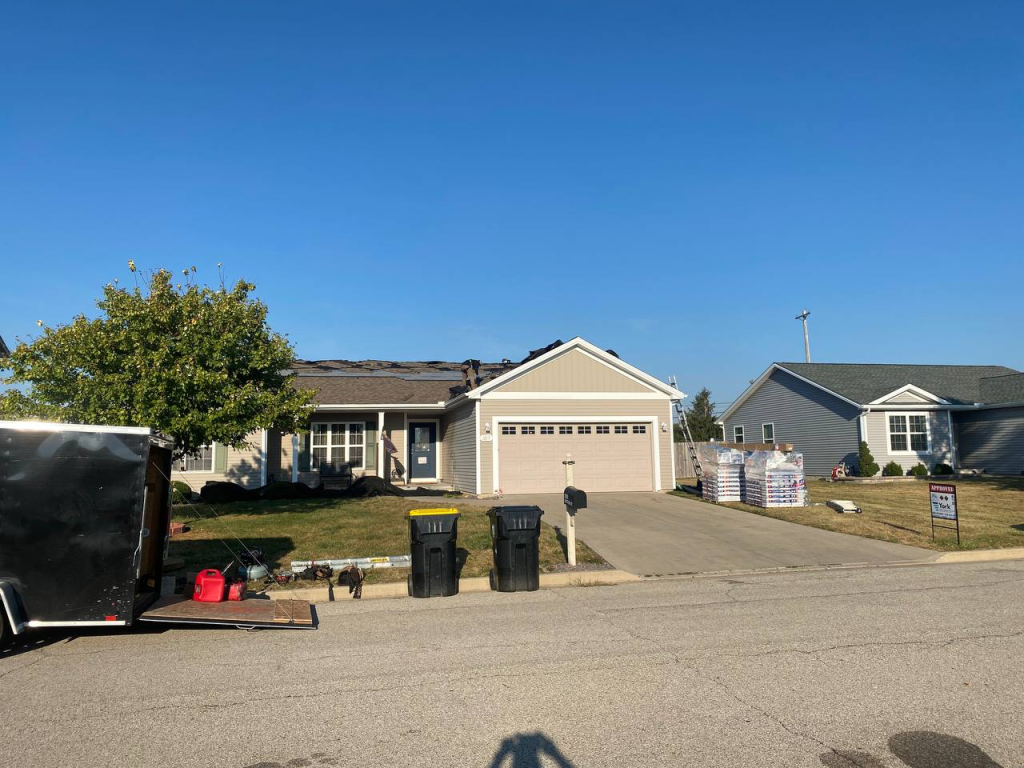
Decatur Is Built Around Its Industry
Decatur is an agricultural-processing city. ADM, Tate and Lyle, Caterpillar, and the corridor of industrial facilities that runs through the city define the local economy in a way no other Tier 1 city in Cupples Construction’s service area is defined. The grain elevators, the rail yards, the processing plants, and the trucking infrastructure that supports them all create a city where industrial activity isn’t tucked away on the edges — it runs through the middle of the residential geography.
That industrial reality affects roofing in ways that don’t apply to flat-prairie residential cities like Normal or Bloomington. Particulate accumulation from industrial activity creates surface deposits on roofs that affect granule wear patterns and gutter loading. The Sangamon River cuts through the city’s southern stretches and shapes drainage in neighborhoods that other Central Illinois cities don’t have to think about. The housing stock skews toward established working-class neighborhoods built during Decatur’s industrial growth periods — postwar ranches, mid-century split-levels, and a meaningful share of pre-1940 housing in the older central districts.
A roofing contractor working in Decatur is working on homes whose owners are often direct industry workers, retired industry workers, or people connected to the agricultural processing economy that built the city. The conversation about cost, value, and what a roof actually needs reflects that reality. The main Roofing services page is the parent reference for the broader scope.
Roofing Services in Decatur
Five service categories cover the bulk of Decatur work. The list compresses what other cities split into more categories, because Decatur’s roofing reality genuinely centers on a tighter range of priorities.
Roof Replacement and Re-Roofing
The largest workload category. Standard tear-off and full system replacement on Decatur homes covers established residential neighborhoods where original or first-generation architectural shingle systems have reached the end of their service life. The work itself is straightforward installation done correctly — material specification, deck inspection, ice and water shield in eaves and valleys, ventilation interventions where needed, and the workmanship that determines whether the new roof actually lasts the warranty horizon. The decision between repair and replacement starts with what the inspection reveals, and the roof repair vs replacement guide covers the framework. The case for why “good enough” installations fail prematurely matters here — Decatur’s price-conscious market makes the temptation to cut corners loudest, and the consequences of cutting corners are the same here as anywhere.
Targeted Repair Work
Repair work covers wind-lifted shingles, flashing replacement around chimneys and dormers, valley repairs, partial shingle replacement, and the targeted interventions that extend service life when full replacement isn’t yet warranted. Decatur’s working-neighborhood housing stock often runs roofs longer than affluent markets do, which means repair work plays a larger role in the overall service mix than in markets where homeowners replace at first sign of trouble. The signs you need roof repair before it starts leaking guide is the early-detection reference.
Storm Damage Response and Insurance Claims
Decatur sits in the same Central Illinois weather pattern as the rest of the region, with hail and wind events affecting the city across the same April-through-June primary window and the broader summer storm season. Insurance claim work is a regular part of the workload. The how to spot hail damage on your roof guide covers what to check after a storm event, and the storm damage roof inspection checklist is the documentation reference. The Storm Damage Roof Repair Illinois page is the statewide framework, and the what to do after a roof storm in Illinois guide covers immediate-response actions.
Emergency Stabilization and Leak Detection
Active leaks need water-intrusion control before any larger scope is discussed. Decatur is approximately fifty miles south-southeast of Cupples Construction’s Normal headquarters, and emergency response is part of the standard service offering with the drive time built into the workflow. Leak detection — finding where water is actually entering versus where it’s surfacing — comes up regularly on Decatur’s older central-neighborhood homes where complex roof geometry creates indirect leak paths. The Roof Leak Detection Illinois page is the framework reference, the Emergency Roofing Illinois page covers the broader emergency response approach, and the silent roof failures that don’t leak until it’s too late guide is worth reading on Decatur’s older housing stock specifically.
GAF Master Elite Installation with Golden Pledge Warranty
The certification that unlocks the Golden Pledge warranty is available on Decatur installations, and the warranty conversation matters most on owner-occupied homes where the homeowner’s tenure horizon matches the warranty term. The GAF Master Elite Roofing Illinois page covers the certification details. Class 4 impact-resistant shingles are also worth investigating for the insurance discount math, particularly on homes where the long-term cost-per-year calculation is part of the decision.
Decatur Roofing Conditions
Three conditions matter most for Decatur roofs, and each connects to the city’s specific industrial-and-river geography rather than to generic Central Illinois weather patterns.
Industrial Particulate and Air Quality Effects
Decatur’s industrial corridor produces airborne particulate that settles on roof surfaces and accumulates in gutters at higher rates than in non-industrial residential cities. The practical effects are surface deposits that interact with granule wear, accelerated organic growth in shaded roof zones where moisture and particulate combine, and gutter loading that requires more frequent cleaning than in suburban markets. None of this is catastrophic on its own — Decatur roofs perform within normal lifespan ranges when installed and maintained correctly — but it does shift the maintenance conversation. Annual inspections matter more here, gutter clearing matters more, and ventilation that keeps roof decks dry matters more because moisture combined with particulate accelerates deck and shingle issues that wouldn’t develop as quickly in cleaner-air markets. The how roof ventilation mistakes shorten shingle lifespan guide is particularly relevant here.
Sangamon River Drainage and Microclimate
The Sangamon River runs through Decatur’s southern stretches, and the lower elevations near the river create drainage patterns and microclimate effects that flat-prairie cities don’t have to address. Lower-elevation neighborhoods hold cold air longer in winter, which means freeze-thaw cycles persist longer and ice damming risk is higher. Spring and summer humidity is more pronounced in river-adjacent neighborhoods. Drainage from higher-ground neighborhoods into lower areas affects water management beyond the roof itself, but the roof system’s gutter sizing and edge-water handling are connected to the broader drainage picture. The winter-proofing your roof for Illinois snow seasons guide covers ice-and-water-shield interventions that matter more in Decatur’s river-adjacent zones than in flat-prairie cities of similar size.
Spring Hail and Severe Weather
April through June is hail season across Central Illinois, and Decatur receives the same exposure as the broader region. The hail-belt math for Class 4 impact-resistant materials is the same here as elsewhere. Wind events also affect Decatur’s open-prairie zones north of the city core, where newer subdivision construction sits in terrain with limited wind breaks. Wind-rated installation on these homes is the appropriate baseline.
Working Around Industrial Schedules
This is the section that no other city page has, because no other Tier 1 city has Decatur’s concentration of industrial-shift workers whose home schedules are shaped by twelve-hour shifts, rotating schedules, and the realities of working in an agricultural processing facility that doesn’t stop running for weekends or holidays.
A meaningful percentage of Decatur homeowners work shifts that don’t fit standard nine-to-five contractor scheduling. A homeowner working third shift at a processing plant is sleeping during the hours when most contractors want to start a tear-off. A homeowner on rotating shifts may be unavailable for the standard inspection-and-quote conversation during regular business hours.
The practical accommodations are real. Inspections can be scheduled around shift work, including early-morning slots before crews start at job sites and later-afternoon slots that fit second-shift sleep schedules. The communication preference often runs toward text and voicemail rather than business-hours phone calls. Tear-off and installation work itself has to happen during daylight, but the start time can be adjusted within reasonable bounds when a homeowner is sleeping after a night shift. We don’t promise to work around every shift schedule perfectly — installation crews still need daylight and reasonable hours — but the conversation about scheduling starts with knowing what a homeowner’s actual life looks like, not with a generic appointment block.
Materials and Warranty
GAF asphalt shingle systems handle most Decatur installations. The Timberline HDZ line covers the bulk of standard work. Class 4 impact-resistant options handle hail-belt math and may carry insurance discount benefits worth investigating for homeowners whose long-term cost-per-year calculation is part of the decision. Designer-tier materials come up less frequently than in markets like Champaign or Springfield where curb appeal carries different economic weight.
The Golden Pledge warranty is available through Master Elite certification, and the workmanship side is backed by Cupples Construction’s own labor warranty. The complete guide to roof inspections in Illinois covers what a thorough inspection includes — relevant before installation, during warranty service visits, and as part of annual maintenance.
Recent Decatur Projects
Photo placeholder section. Project photos with neighborhood references, project scope, and material selection will be added as the local project library is built out. Caption template: “[Material/system] installation on a [home era/style] in [Decatur neighborhood]. Project completed [season] [year].”
Decatur Neighborhoods Served
Cupples Construction covers all of Decatur, with workload across the city’s residential geography. The established central neighborhoods including the West End historic area and the older blocks surrounding downtown hold significant pre-1940 housing. The mid-century neighborhoods that fill out Decatur’s middle ring run on standard postwar patterns — ranches, split-levels, and the working-neighborhood housing that defines so much of the city. The newer subdivisions on Decatur’s north and east edges follow standard Central Illinois suburban patterns. The lower-elevation neighborhoods toward the Sangamon River have their own drainage and microclimate considerations covered above. Service extends out from Decatur to the surrounding Macon County and the broader Central Illinois region.
Why Cupples for Decatur Roofing
- Industrial-corridor experience including the particulate, ventilation, and maintenance considerations that affect Decatur roofs
- Shift-work scheduling accommodation built into the project intake conversation
- GAF Master Elite certified, with Golden Pledge warranty access
- Family-owned, multi-year Central Illinois presence
- Insurance claim experience for Central Illinois hail and wind events
- Crews that work full-time on Cupples projects rather than subcontracted day labor
- Faith-based business culture that informs how the work happens
- Honest pricing conversation that respects the working-neighborhood economy of the city
Decatur work, Decatur scheduling, Decatur honesty.
Service Area Beyond Decatur
Cupples Construction’s service area extends from the Normal headquarters across Central Illinois. Decatur sits roughly fifty miles south-southeast of headquarters, and the closest Tier 1 cities each cover different roofing realities. The Springfield roofing page handles the state capital — a city with deep pre-1900 historic housing concentration that Decatur has in smaller volume. The Bloomington roofing page covers a city with a more affluent residential market profile and a different metropolitan structure. The Champaign roofing page handles the university-town context with rental property dynamics that Decatur’s industrial-economy market has at much lower volume.
For commercial buildings rather than residential homes — including industrial-adjacent commercial properties — the commercial roofing services page is the right starting point.
Frequently Asked Questions — Decatur Roofing
Does the industrial-corridor air actually affect my roof?
Yes, in the sense that surface deposits accumulate faster, gutters load more frequently, and ventilation that keeps roof decks dry matters more here than in cleaner-air markets. The effects aren’t catastrophic — Decatur roofs perform within normal lifespan ranges when installed and maintained correctly — but they do shift the maintenance conversation toward more frequent inspection and gutter clearing. A homeowner who treats their Decatur roof with the same maintenance schedule that works in a non-industrial suburb is going to see issues sooner than that maintenance schedule would predict.
How much does a roof replacement cost in Decatur?
Decatur pricing reflects a working-neighborhood market where homeowners are price-conscious and want straightforward answers rather than upsell pressure. The materials-and-labor cost in Decatur runs similarly to other Central Illinois cities — roof size, pitch, complexity, tear-off layers, deck condition, and material selection are the factors that drive pricing. What’s different in Decatur is the conversation about value. We tell homeowners what the roof actually needs, what the cost is for doing it right, and what the trade-offs are if they want to consider lower-tier options. We don’t push designer-tier materials on homeowners who don’t need them, and we don’t pretend a budget installation will perform like a premium installation.
Can you schedule an inspection or estimate around my shift schedule?
Yes. Inspection and estimate appointments accommodate shift work within reasonable bounds — early morning before crews deploy to job sites, later afternoon for second-shift workers, and communication preferences that work with whatever hours a homeowner is actually awake. Tear-off and installation crews still need daylight and the work itself happens during normal hours, but the conversation that leads to scheduling the work absolutely flexes around shift schedules.
How do you handle storm damage claims on older Decatur central-neighborhood homes?
Older homes with aged shingles create the same documentation challenge in Decatur that they create in Springfield — the adjuster has to distinguish actual storm damage from pre-existing age-related wear, and the photo documentation matters more than on newer homes. We work with adjusters during inspection, document the damage we observe, and provide the supporting evidence that helps the claim resolve fairly. The Storm Damage Roof Repair Illinois page covers the broader claim methodology.
How long does a Decatur roof job take?
Single-day completion is standard for ranches and simpler two-stories with no decking-replacement contingency. Two-day completion is standard for larger or more complex homes, or installations where tear-off reveals decking that needs partial replacement. Drive time from the Normal headquarters adds about an hour of round-trip transit per day, but it doesn’t extend the on-site work timeline. Weather is typically the bigger schedule variable than home size.
Are you licensed and insured for work in Decatur?
Yes. The Illinois state roofing contractor license covers work statewide, and Cupples Construction carries general liability and workers compensation coverage that applies to all Illinois job sites. The what homeowners should know about Illinois roofing requirements guide covers what homeowners should verify before signing any roofing contract with any contractor.
Decatur Deserves Straight Answers
Decatur homeowners get pitched plenty by contractors who treat the city as a price-shopping market where the cheapest bid wins and the consequences fall on the homeowner later. We’re not that. We tell homeowners what the roof actually needs, document what we see with photos, explain the trade-offs honestly, and let the homeowner make the decision with full information.
If your roof needs work, the next step is a no-pressure inspection. We come down from Normal, look at what’s actually happening up there, and tell you what we see. If repair is the right answer, we’ll say repair. If replacement is the right answer, we’ll say replacement. To get that inspection on the calendar, contact us — we’ll find a time that works around your schedule, including a shift schedule if that’s the reality.
Other Services
Ready to Talk About Your Home?
Give us a call - no pressure, just friendly neighbors ready to help with your home

- 309-826-4377
- brian@cupplesconstruction.com
- Normal, IL
What Makes Us Different
- Faith-Based Family Business
- Licensed & Insured
- GAF Master Elite
- Veteran Family Owned
Tennessee Friends
Some services available - just ask!
Where We Help Families
Central Illinois:
Business Hours
Days Open
Monday - Friday [ 8:00 AM - 5:00 PM ]
Saturday [ 8:00 AM - 4:00 PM ]
Sunday [ Emergency Only ]