service location
Gutter Contractor in Urbana, IL
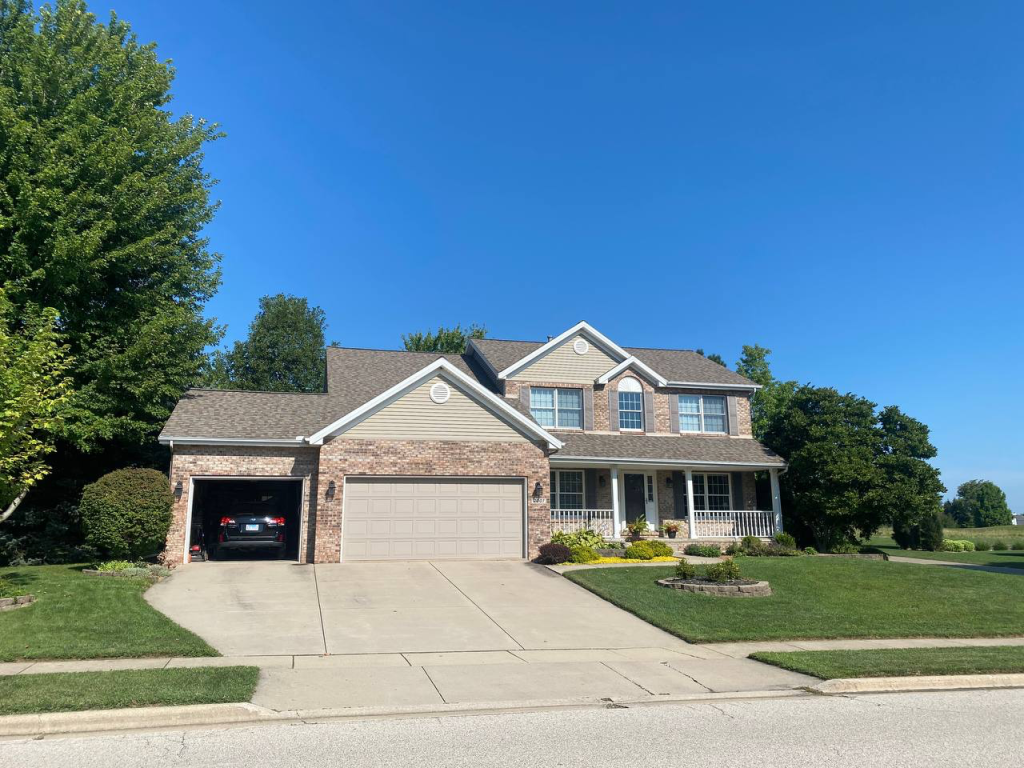
Urbana isn’t a smaller version of Champaign. It has its own character — older housing stock concentrated in the historic core, a distinct downtown that predates the modern subdivision wave, and neighborhoods around the original campus footprint that feel architecturally different from anything across the Champaign line. For gutter work specifically, that means more retrofit conversations, more period-appropriate detailing, and fewer of the open-prairie new-build situations that dominate parts of Champaign’s newer subdivisions.
Cupples Construction treats Urbana as its own market rather than as Champaign’s smaller twin. The houses are older on average. The trees are bigger. The conversations about whether to retrofit modern K-style versus restore something more period-appropriate happen more often. And because Urbana’s housing stock has shifted hands more times across more decades, we frequently inherit gutter situations where someone earlier did the easy thing rather than the right thing — and we have to decide whether to live with it or fix it properly.
Mature tree canopy across most older Urbana neighborhoods means cleaning frequency runs higher than in newer subdivisions. Rainfall exposure is similar to Champaign’s prairie pattern but buffered by tree cover in the older core. Most homes in the historic neighborhoods near campus, around Carle Park, and along the older corridors have gutters that have been replaced or repaired multiple times since the home was built — sometimes well, sometimes not. The first job on most Urbana service calls is figuring out what’s actually there before deciding what to do with it.
For Urbana gutter work, the service categories run together more than they do on a sharper-edged housing market. Seamless aluminum K-style installation is the standard for modern replacement on most Urbana homes — site-formed from a coil, sized to roof and exposure, color-matched to existing trim. Period-appropriate retrofit comes up on older homes in the historic core where K-style would read visibly wrong on the facade and half-round in aluminum or copper is the right call. Repair, rehang, and corner reseal is frequent work because of the layered history of prior installations — sometimes the gutter is fine and only specific failures need attention. Cleaning service runs on a higher cadence here than in newer subdivisions because of the canopy. Gutter guards make sense on heavily wooded lots and matter less in pockets of newer infill construction. We talk through which category fits the specific home rather than applying a default.
Sizing decisions in Urbana lean toward 5-inch K-style on smaller older homes and 6-inch on larger or steeper-pitched properties. The older home stock often has shorter linear runs broken by complex rooflines — Victorians with multiple gables, Craftsman bungalows with low pitch and wide eaves, mid-century homes with simpler geometry. Each of those shapes the install differently. We size and lay out for the actual roof rather than assuming what the previous gutter setup told us was correct, because the previous gutter setup was sometimes wrong.
For broader context on what gutters fit into across our service area, see our main gutter services page.
Materials and Detailing for Older Urbana Homes
Aluminum K-style is standard on modern replacements. Half-round in aluminum or copper is the call on Victorian, Craftsman, and other architecturally older homes where modern profile reads wrong. Copper half-round is a premium option for high-end restoration where budget supports it. Most Urbana residential gutter work uses .032-gauge aluminum on longer runs, with hanger spacing tightened on tree-canopy-heavy lots where snow-and-debris loading is higher.
Downspout placement is something we look at carefully on older homes. Original downspout locations sometimes don’t make sense for current grading or current landscaping, and prior owners may have just kept them where they were because that’s where the holes in the fascia already existed. Moving downspouts to where the water actually needs to go — and properly patching the old fascia — is often part of the conversation.
How small detailing decisions accumulate into long-term performance is what we cover in why “good enough” installations fail prematurely — and on Urbana’s older homes where the gutter has been worked on multiple times across decades, the cumulative effect of compounded shortcuts is often what we’re cleaning up.
When ice damming becomes a recurring winter problem on older Urbana homes — a common situation on uninsulated or under-insulated homes from the pre-war era — the gutter often gets blamed when the actual issue is upstream attic conditions. Our winter-proofing guide walks through how that connects.
Recent Projects in Urbana
Project photo placeholder. Caption template for when photos are added: “Half-round aluminum gutter retrofit on a [neighborhood] Urbana Craftsman — period-appropriate hangers and round downspouts, with corrected discharge routing away from the foundation.”
Neighborhoods We Serve in Urbana
We work the historic core around campus, the neighborhoods near Carle Park, the older corridors along Race Street and Lincoln Avenue, downtown Urbana’s residential pockets, and the mid-century and newer infill construction further from the campus footprint. Older residential streets near campus and in the historic core are where the period-appropriate conversations come up most. Mid-century homes south and east of the older core are typically modern K-style territory. We also handle older multi-unit rental properties in the campus-adjacent rental zones — many of these benefit from upsizing during replacement because the original gutters were often undersized for current rainfall expectations.
Why Cupples for Gutters in Urbana
- Comfortable on Urbana’s older home stock where prior installations were sometimes done badly
- Period-appropriate retrofit available on Victorian, Craftsman, and architecturally older homes
- Honest about when modern K-style is the right call on an older home and when it isn’t
- Sizing and downspout layout corrected from prior installations rather than just replicated
- Repair-first when the gutter’s failure pattern points to a fix rather than replacement
- Family-owned with experience across central Illinois older home work
Most Urbana gutters have been worked on more than once. Our job is to figure out what the previous people got wrong and decide whether to fix it now or work around it.
FAQs
My older Urbana home has gutters that look fine but don’t drain right. Is that a sizing problem?
Sometimes. Older homes were often gutter-replaced with whatever was standard at the time, and current rainfall expectations or roof modifications since then can leave the existing gutter undersized. It can also be a pitch problem — gutters that have shifted over years of seasonal cycles often don’t run the way they did when first installed. We measure pitch with a level and look at downspout count and placement before deciding what’s actually wrong.
Can I put modern K-style gutters on my Craftsman bungalow?
Sometimes that’s the right call, especially when budget is tight and the home isn’t in a strict historic zone. But Craftsman homes were originally built with half-round profiles, and modern K-style reads visibly wrong against the home’s exposed rafter tails and wide eaves. We’ll lay out both options honestly. Many Urbana homeowners choose half-round aluminum as a middle ground — period-appropriate appearance at a cost closer to K-style than copper would run.
How often do Urbana homes need gutter cleaning?
In the older neighborhoods with mature canopy, twice a year is the realistic minimum — once after spring growth and once after fall leaf drop. Pine needle exposure in some pockets pushes that higher. Newer infill construction with smaller trees can often run on annual cleaning. We can give a more specific recommendation after looking at the property.
Beyond Urbana
Champaign gutter work is right next door but operates on a different mix — more newer subdivisions, more rental portfolio scheduling, more open-prairie rainfall exposure. Bloomington gutter installations share Urbana’s historic-versus-modern decision pattern at larger scale, with built-in box gutters and more substantial Victorian restoration work as part of the conversation. Decatur gutter service addresses industrial particulate exposure and debris loading that Urbana’s residential canopy doesn’t share.
If your Urbana home needs roofing or siding alongside gutter work, our Urbana roofing page and Urbana siding page cover how those services coordinate on older home work.
Ready to Talk Gutters?
Older Urbana homes are easier to quote accurately when we can see what’s there now. If you can send a few photos showing the existing gutter from the ground — focused on corners, downspout locations, and any visible sagging — that tells us what kind of conversation we’re going to have before we walk the property. Cleaning calls and minor repairs usually move quickly. Replacement and retrofit conversations take longer because there’s more to talk through. Contact us and we’ll work out which one yours is.
Other Services
Ready to Talk About Your Home?
Give us a call - no pressure, just friendly neighbors ready to help with your home

- 309-826-4377
- brian@cupplesconstruction.com
- Normal, IL
What Makes Us Different
- Faith-Based Family Business
- Licensed & Insured
- GAF Master Elite
- Veteran Family Owned
Tennessee Friends
Some services available - just ask!
Where We Help Families
Central Illinois:
Business Hours
Days Open
Monday - Friday [ 8:00 AM - 5:00 PM ]
Saturday [ 8:00 AM - 4:00 PM ]
Sunday [ Emergency Only ]