


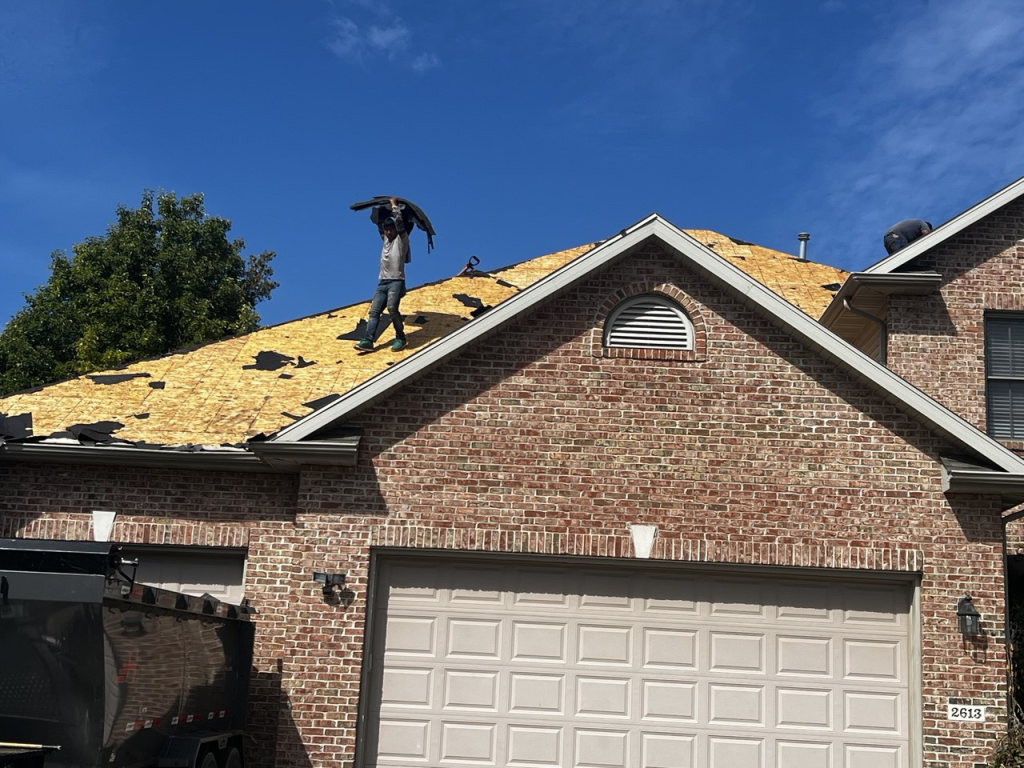
Are your shingles aging faster than they should? Is your upstairs unbearable in July? Does frost form on the underside of your roof deck in January? In most cases, the root cause is the same: your attic isn’t breathing. Poor attic ventilation in Illinois homes causes damage that happens slowly, invisibly, and from the inside out. Fresh air should flow in low through the soffits and out high through the ridge. However, when that flow gets blocked, your roof pays the price. Most homeowners never think about ventilation until a roofer points at it. By then, 25-year shingles have often failed in year 14.
At Cupples Construction, attic ventilation is one of the first things we check on every inspection across Central Illinois. In fact, it is one of the most common problems we find — and also one of the least understood. So here is how ventilation works, what our climate does to an attic that can’t breathe, and how to spot trouble before it costs you a roof.
How Attic Ventilation Is Supposed to Work
A properly ventilated attic works on a simple principle. Cool air enters low, and warm air exits high. As a result, the attic stays close to the outdoor temperature all year. Intake happens through soffit vents — the perforated panels under your eaves. Meanwhile, exhaust happens at or near the peak. A ridge vent running the length of the roofline is the most common exhaust. Older homes, however, often use box vents, gable vents, or powered attic fans instead.
Balance Is Everything
The system only works when intake and exhaust match. Unfortunately, that is the part most homes get wrong. Building code generally calls for 1 square foot of vent area per 150 square feet of attic floor. Homes with a vapor barrier and balanced high/low venting can qualify for a 1:300 ratio instead. Either way, the total splits roughly evenly between intake and exhaust.
Here is the common failure. A house gets a beautiful new ridge vent, but the soffit vents feeding it sit blocked. Blocked soffits are the single most common ventilation problem we find. The usual culprit? Insulation blown into the attic years ago, pushed right over the vent openings at the eaves.
Think of it this way: exhaust without intake is like a chimney with no air supply. Simply put, the ridge vent can’t pull air out of an attic that has no way to draw air in.
What Summer Does to an Unventilated Attic
Central Illinois summers regularly push poorly ventilated attics past 140 to 150°F. Consequently, that superheated air does damage in two directions at once.
Cooking Your Shingles From Below
Upward, the heat literally cooks your shingles. Asphalt shingles are rated for sun exposure from above, but no one designed them to bake from both sides. Sustained deck-level heat dries out the asphalt binder. The result: premature cracking, curling, and granule loss. During inspections, we see a telltale pattern. Shingles deteriorate over the main attic body while shingles over vented porch roofs stay healthy. When that happens, ventilation is the first suspect. In fact, it is one of the biggest controllable factors in how long your roof actually lasts.
Fighting Your Air Conditioner
Downward, the heat radiates through your ceiling insulation into your living space. Your air conditioner runs longer against a 140-degree ceiling than a 95-degree one. As a result, the rooms directly under the attic stay uncomfortable no matter the thermostat setting — and those rooms are usually bedrooms. Some homeowners buy bigger AC units to fight this problem. Instead, a few hundred dollars of ventilation correction would often solve it. For this reason, the U.S. Department of Energy lists proper attic airflow among the most cost-effective home efficiency measures.
What Winter Does: The Moisture Problem Nobody Sees
Summer damage is about heat. Winter damage, on the other hand, is about moisture. The winter version is more dangerous because it happens completely out of sight.
How Moisture Gets In
Everyday living pumps water vapor into your home’s air. Cooking, showers, laundry — even breathing. That warm, humid air rises and finds every gap. It slips past light fixtures, bath fans, and attic hatches into the attic. In a ventilated attic, the moisture rides the airflow out the ridge vent. In an unventilated attic, however, it hits the cold roof deck and condenses. In deep cold, it even forms frost directly on the sheathing and nail tips.
The February “Leak” That Isn’t
Then a February thaw arrives, and the frost melts. Suddenly, homeowners call us about a “roof leak” that isn’t a leak at all. We have walked into Central Illinois attics where moisture stained the sheathing dark and dampened the insulation below — on roofs with zero shingle damage. Over repeated winters, that cycle rots roof decking. Mold grows on the sheathing and framing. Meanwhile, insulation flattens and loses much of its R-value.
Seeing ceiling stains and unsure whether it’s a true leak or condensation? Our roof leak detection team can tell you definitively, because the fixes are completely different.
Poor ventilation also feeds ice dams. A warm attic melts snow on the upper roof, and that water refreezes at the cold eaves. We won’t rehash the full ice dam picture here. The short version: a cold, well-ventilated attic is your best structural defense against them.
The Warranty Problem Almost Nobody Knows About
Here is the part that surprises homeowners most. Inadequate ventilation can void your shingle warranty. Major manufacturers — GAF included — require a properly ventilated deck for full coverage. In fact, ventilation-related failure is a standard exclusion. A homeowner with a “lifetime” warranty can therefore lose a claim in year 12. All it takes is a manufacturer inspection finding the attic never met requirements.
This is one quiet reason contractor certification matters. As a GAF Master Elite® contractor, Cupples Construction assesses ventilation as part of every roof replacement scope. That is not an upsell. Rather, it is a requirement for installing the system correctly and protecting the enhanced warranty. You can read more on our GAF Master Elite roofing page. Does a contractor quote you a replacement without ever looking in your attic? Then they are quoting a shingle installation, not a roof system.
Signs Your Attic Ventilation Is Failing
You don’t need to climb on your roof to spot most ventilation problems. Instead, watch for these signs from inside and from the ground.
Comfort and Temperature Clues
Your upstairs runs dramatically hotter than your main floor in summer, even with steady AC. In winter, ice builds thick at your eaves after snowfalls while the upper roof goes bare quickly — a warm-attic signature. Similarly, shingles curl or shed granules faster on the main roof than over porches and garages.
Moisture and Airflow Clues
Frost on nail tips is a classic winter tell, and so are dark stains on the underside of the roof deck. Check your exhaust routing too. Bathroom fans or kitchen vents that discharge into the attic instead of through the roof violate code and supercharge the moisture problem. Also look at the eaves: insulation stuffed tight against the roof deck with no air gap means blocked intake. Finally, a musty smell in the attic or upstairs closets often means condensation has been feeding mold out of sight.
Any one of these deserves an inspection. Two or more, however, means your attic almost certainly isn’t breathing.
How Attic Ventilation in Illinois Gets Fixed
The right fix depends on which half of the system is failing. Sometimes, the answer is refreshingly cheap.
Fixing Blocked Intake
Blocked intake often needs nothing more than clearing the soffits. We pull insulation back from the eaves and install baffles — rigid channels that hold an air path open between the insulation and the roof deck. Does the home simply have too few soffit vents? In that case, adding them is straightforward carpentry.
Fixing Weak Exhaust
For exhaust, a continuous ridge vent is the gold standard on most roof designs. It vents the entire ridge line evenly, and it has no moving parts to fail. By contrast, we generally recommend against powered attic fans on most homes. When intake is inadequate, fans depressurize the attic. They pull conditioned air out of your living space through ceiling gaps. In other words, you pay electricity to make the problem worse.
Two Cautions Worth Knowing
First, more exhaust is not automatically better. Mixing exhaust types can short-circuit the airflow. A ridge vent plus gable vents plus box vents sounds thorough. In practice, however, air can enter one exhaust vent and exit another. As a result, the soffits and lower attic never move air at all.
Second, ventilation and insulation are partners, not competitors. The goal is a sealed, insulated ceiling plane below and a freely breathing attic above. Therefore, sealing air leaks around fixtures and the attic hatch does as much for winter moisture as the vents themselves.
The best time to correct everything is during a roof replacement, because the deck is exposed and crews can cut in ridge venting cleanly. Does your roof have years of life left? Most intake fixes and many exhaust fixes still work as standalone jobs. Either way, it starts with someone actually looking. That look is part of every inspection our roofing team performs.
Frequently Asked Questions About Attic Ventilation
How much attic ventilation does my house need?
The standard rule is 1 square foot of net free vent area per 150 square feet of attic floor, split evenly between soffit intake and ridge exhaust. Homes with a proper vapor barrier and balanced high/low venting can qualify for a 1:300 ratio instead. For example, a typical 1,500-square-foot attic needs roughly 10 square feet of total vent area at 1:150. Balance matters as much as the total, because exhaust can’t work without matching intake feeding it.
Can poor attic ventilation really void my shingle warranty?
Yes. Major shingle manufacturers, including GAF, require adequate attic ventilation as a condition of coverage. In fact, heat damage from an unventilated deck is a standard exclusion. Manufacturers can inspect the attic when you file a claim. For that reason, ventilation is worth assessing before a roof replacement, not after a problem appears.
What are the signs of poor attic ventilation in winter?
The big three: frost or condensation on the roof deck or nail tips, damp or matted insulation, and heavy ice at the eaves while the upper roof sheds snow quickly. Inside the house, watch for ceiling stains that appear during thaws rather than during rain. That pattern points to attic condensation melting, not a shingle leak. Additionally, a musty odor in upstairs rooms or closets is a common tell.
Are ridge vents better than attic fans?
For most Central Illinois homes, yes. A continuous ridge vent exhausts air evenly along the entire peak. Moreover, it works around the clock with no electricity and no moving parts. Powered attic fans move impressive air volumes. However, weak soffit intake makes them depressurize the attic and pull air-conditioned air out of your living space. In other words, you spend electricity to raise your cooling bill. Fans mainly make sense on complex roofs with limited ridge line.
Why is my upstairs so hot even with the AC running?
A poorly ventilated attic is the most common structural cause. Attic temperatures reach 140 to 150°F on summer afternoons. That heat radiates through the ceiling insulation faster than your AC can remove it. So have the attic checked before upsizing your air conditioner. Restored airflow often drops attic temperatures by 20 to 40 degrees. As a result, second-floor comfort improves noticeably.
Does attic ventilation help in winter too, or just summer?
It is arguably more important in winter. Winter ventilation controls moisture by carrying rising water vapor out of the attic before it condenses on the cold roof deck. A ventilated attic also stays cold. Consequently, roof snow melts evenly instead of feeding ice buildup at the eaves. The “seal the attic tight in winter” instinct is exactly backwards. Seal the ceiling plane below the attic tight, but let the attic itself breathe freely.
Not sure whether your attic is breathing the way it should? Have Cupples Construction take a look, because a ventilation check is part of every inspection we do. Reach us through our contact page or call 309-826-4377.