


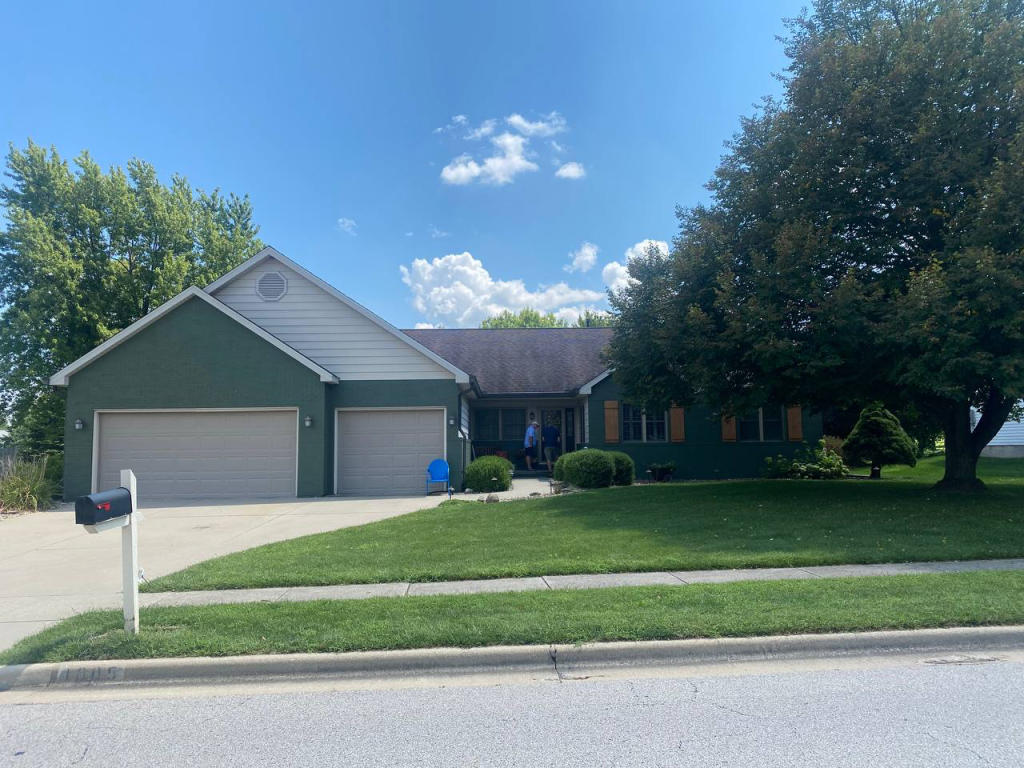
Your roof is one of the most important — and most expensive — investments in your home, and the contractor you choose matters just as much as the materials they install. A skilled, reputable roofer can give you a roof that lasts decades. The wrong one can leave you with shoddy work, voided warranties, and thousands of dollars in premature repairs.
The challenge is that roofing is one of the easiest trades for unqualified or dishonest operators to enter, especially after a big storm rolls through Central Illinois. So how do you tell a trustworthy professional from someone who’ll cut corners and disappear? In this guide, Cupples Construction walks you through exactly what to look for and the ten questions every homeowner should ask before signing a roofing contract.
Why Choosing the Right Roofing Contractor Matters So Much
A roof is a system, and its performance depends almost entirely on how well it’s installed. Even the best materials will fail early if they’re put on incorrectly — improper nailing, skipped underlayment, or poor flashing can doom a roof from day one. This is why the cheapest bid so often turns out to be the most expensive choice in the long run, a problem we explore in our article on why “good enough” roofing installations fail prematurely.
Beyond workmanship, the right contractor protects you in other ways: they carry proper insurance, pull the necessary permits, honor their warranties, and stand behind their work years down the road. The wrong one can leave you legally and financially exposed. Getting this decision right is the single best thing you can do to protect your investment.
Beware of Storm Chasers in Central Illinois
Central Illinois sees more than its share of severe storms, and in the days after a major hail or wind event, “storm chasers” descend on affected neighborhoods. These are out-of-town operators who go door to door promising fast, cheap, often “free” roofs paid for by insurance.
Some are legitimate, but many are not. They pressure homeowners into signing on the spot, do rushed low-quality work, and are long gone by the time problems surface — leaving you with no one to honor the warranty. A trustworthy local contractor doesn’t need high-pressure door-knocking tactics. If someone shows up uninvited after a storm urging you to sign immediately, that’s your cue to slow down and do your homework. For a clear-headed approach to handling post-storm damage, our guide on what to do after a roof storm in Illinois lays out the right steps.
10 Questions to Ask Before Hiring a Roofing Contractor
Use these questions to separate genuine professionals from operators who’ll cut corners. A reputable contractor will answer all of them confidently and in writing.
1. Are you licensed and insured in Illinois?
This is non-negotiable. Your contractor should carry both general liability insurance and workers’ compensation coverage. Without it, you could be held liable for injuries or damage that occur on your property. Always ask for proof, and don’t take “we’re covered” at face value — ask to see the certificates.
2. Are you local, and how long have you been in business?
A local, established contractor has a reputation to protect and will still be around to honor warranties years from now. Longevity in the community is one of the strongest signals of reliability, and it’s exactly what storm chasers lack.
3. What manufacturer certifications do you hold?
Certifications matter because they reflect training, proven quality, and access to better warranties. The gold standard is GAF Master Elite — a designation held by only the top 2% of roofers nationwide. As a GAF Master Elite contractor, Cupples Construction can offer enhanced manufacturer warranties that most contractors simply can’t provide.
4. Can you provide local references and recent project examples?
A contractor confident in their work will happily share references and examples of completed jobs in your area. Local references let you verify quality with real homeowners who’ve worked with them.
5. What does your warranty cover — and for how long?
There are two types of warranty to understand: the manufacturer’s warranty on the materials, and the contractor’s workmanship warranty on the installation. Make sure you understand the length and terms of both. A strong workmanship warranty signals a contractor who stands behind their installation.
6. Will you provide a detailed written estimate?
A trustworthy estimate is itemized and specific — it lists the materials and shingle line, tear-off and disposal, decking inspection terms, ventilation and flashing details, and a clear timeline. Vague, one-line quotes are a red flag. For perspective on what a fair, complete estimate looks like, our breakdown of roof replacement pricing in Central Illinois explains the components a real quote should include.
7. Who will be on-site, and will there be a supervisor?
Find out whether the company uses its own trained crews or subcontracts the work, and who will be supervising your project day to day. Consistent, supervised crews tend to produce more reliable results.
8. How will you handle unexpected issues like rotted decking?
Hidden damage — like rotted decking discovered after tear-off — is common and can affect the final cost. A good contractor explains upfront how they handle these situations and how any additional costs will be communicated and approved, so you’re never blindsided by the final invoice.
9. Can you help with my insurance claim?
If your roof was storm-damaged, a contractor experienced with insurance claims is invaluable. They can document the damage properly and meet with your adjuster to ensure the assessment is fair. Our guide to filing a roof insurance claim in Illinois explains how the process works and why having an experienced contractor in your corner matters.
10. What is your timeline and payment schedule?
Understand when the work will start, how long it will take, and how payment is structured. Be cautious of any contractor who demands full payment upfront — a reasonable deposit followed by payment on completion is standard.
Red Flags to Watch For
Beyond the questions above, certain warning signs should make you think twice about any roofing contractor:
- High-pressure sales tactics or “sign today” urgency
- No physical local address or local references
- Requests for full payment or large cash deposits upfront
- No written contract, or a vague one-line estimate
- No proof of license and insurance
- A bid dramatically lower than every other quote
- Showing up uninvited door-to-door after a storm
Any one of these on its own is reason to be cautious. Several together is reason to walk away.
Don’t Just Choose the Cheapest Bid
It’s tempting to go with the lowest number, but roofing is one area where the cheapest option frequently costs the most over time. A bid far below the others usually means corners are being cut somewhere — cheaper materials, untrained labor, skipped steps, or no real warranty. Those savings evaporate the moment the roof needs premature repairs or fails years early.
The better approach is to weigh value, not just price: the quality of materials, the strength of the warranty, the contractor’s reputation and certifications, and the thoroughness of their estimate. A fair price for excellent work that lasts decades beats a bargain that fails in a fraction of the time. You can see the full scope of what a professional installation involves across our roofing services in Central Illinois.
Frequently Asked Questions About Choosing a Roofing Contractor in Illinois
How do I know if a roofing contractor is legitimate in Illinois? Verify that they’re licensed and carry both liability insurance and workers’ compensation, confirm they have a local address and references, and check that they provide a detailed written estimate and warranty. Reputable contractors answer these questions readily.
What is GAF Master Elite and why does it matter? GAF Master Elite is a certification held by only the top 2% of roofing contractors in North America. It reflects proven quality, proper licensing and insurance, and gives the contractor access to enhanced manufacturer warranties that ordinary roofers can’t offer.
Should I hire a roofer who knocks on my door after a storm? Be very cautious. Many door-to-door operators after storms are “storm chasers” who use high-pressure tactics, do rushed work, and disappear before problems surface. Take your time and choose an established local contractor instead.
Is it better to choose a local roofing contractor? Yes. A local, established contractor has a reputation to maintain and will still be around to honor warranties and address any issues years down the line — unlike out-of-town operators who move on after the job.
Should I always pick the cheapest roofing quote? No. The lowest bid often reflects cheaper materials, untrained labor, or skipped steps that lead to premature failure. Weigh the overall value — quality, warranty, reputation, and certifications — rather than price alone.
What questions should I ask a roofing contractor before hiring? Ask about licensing and insurance, local experience, manufacturer certifications, references, warranty terms, written estimates, crew supervision, how they handle hidden damage, insurance claim help, and their timeline and payment schedule.
Hire a Roofing Contractor You Can Trust in Central Illinois
Choosing the right roofer doesn’t have to be intimidating — it comes down to asking the right questions and refusing to be rushed. The best contractors welcome scrutiny, answer everything in writing, and earn your confidence rather than pressuring you for it.
As a family-owned, GAF Master Elite contractor serving Normal, Bloomington, Peoria, Champaign, Springfield, Decatur, Urbana, Effingham, and the surrounding Central Illinois communities, Cupples Construction has built its reputation on honest answers, quality workmanship, and standing behind every roof we install. If you’re ready to get a detailed estimate from a contractor who’ll answer all ten of these questions and then some, reach out through our contact page for a free, no-pressure consultation.