


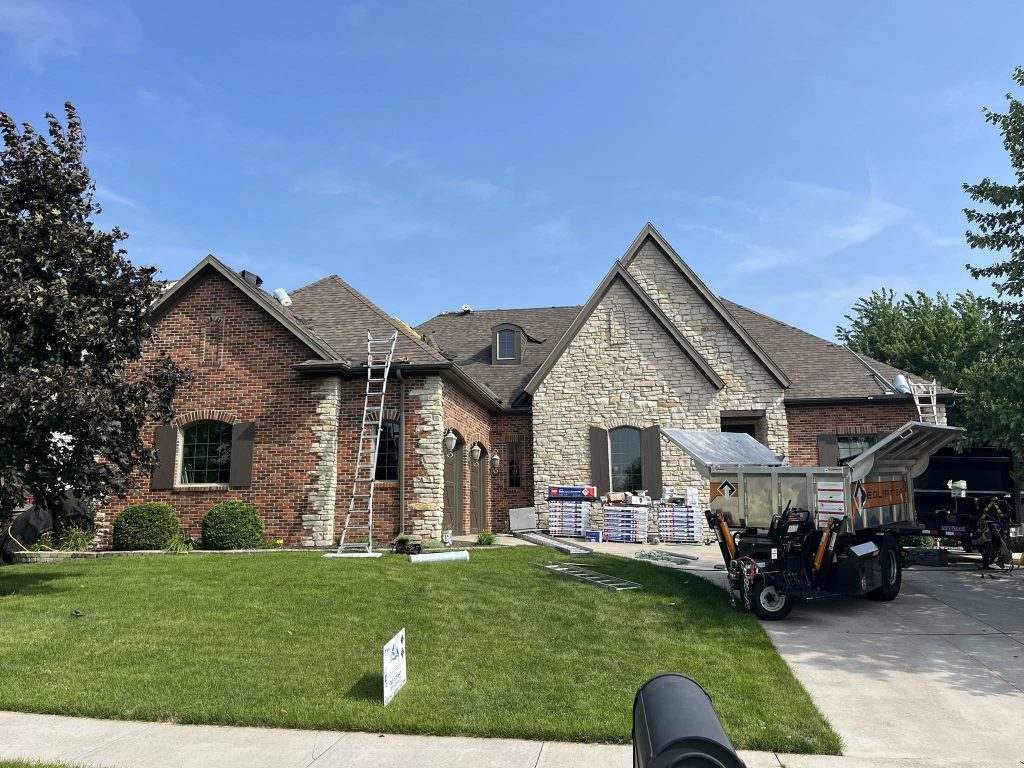
Deciding to replace your roof is a big step — and once you’ve made the call, the natural next question is: what actually happens now? For most homeowners, a roof replacement is unfamiliar territory. You know it involves noise, a crew, and a chunk of your time, but the details can feel like a mystery. That uncertainty is uncomfortable, especially when it’s one of the largest projects your home will go through.
The good news is that a well-run roof replacement follows a clear, predictable sequence. Knowing what to expect — and how to prepare — makes the whole experience far less stressful. In this guide, Cupples Construction walks you through the entire roof replacement process from start to finish, so you know exactly what’s coming at every stage.
How Long Does a Roof Replacement Take?
For most single-family homes in Central Illinois, a roof replacement takes one to three days. A smaller, simpler roof might be done in a single day, while a larger home — or one with steep pitches, multiple valleys, and complex features — can take longer. Weather also plays a role, since rain can pause work for safety and to protect your home’s interior.
Your contractor should give you a realistic timeline upfront. Keep in mind that the actual installation is just one part of a larger process that begins well before the first shingle comes off. Here’s the full sequence.
Step 1: The Inspection and Estimate
Everything starts with a thorough inspection. Before any work is scheduled, a professional should examine your roof, measure it accurately, and assess its condition — including the decking and ventilation, not just the surface. This is also when hidden problems get identified, so there are fewer surprises later. Our complete guide to roof inspections in Illinois explains what a thorough inspection should cover.
From there, you’ll receive a detailed written estimate listing materials, labor, tear-off, and timeline. If you’re still deciding between repairing and fully replacing, our comparison of roof repair vs. roof replacement for Illinois homes can help confirm you’re making the right call before the project begins.
Step 2: Choosing Materials and Scheduling
Once you’ve approved the estimate, you’ll finalize your material choices — shingle type, color, and any upgrades like impact-resistant shingles or improved ventilation. This is a good moment to think long-term, since the material you choose affects how long your roof lasts and how it performs in Central Illinois weather.
With materials selected, the project gets scheduled. Your contractor will order materials, arrange the crew, and set a start date, keeping an eye on the weather forecast to choose a window with the best conditions.
Step 3: Preparing Your Home and Property
In the day or two before the job, there are simple steps you can take to protect your belongings and make the work go smoothly:
- Move vehicles out of the driveway and away from the house so the crew has access and your cars stay clear of debris
- Cover or move items in the attic, since vibration can dislodge dust and small debris
- Take down wall hangings and fragile items on upper floors, as the work creates vibration
- Clear the area around your home of patio furniture, grills, and potted plants
- Secure or relocate pets, who can be stressed by the noise
- Let your neighbors know in advance, as a courtesy about the temporary noise
A good crew will also take protective measures of their own — laying tarps over landscaping, decks, and siding to shield them from falling debris.
Step 4: Tearing Off the Old Roof
On installation day, the crew begins by removing the old roofing material down to the decking. This is the loudest, most visible part of the process, and it’s where the project really gets underway.
As the old material comes off, the crew hauls it away — most companies bring a dumpster or trailer for debris. This is also the moment when the true condition of your roof deck is revealed, which leads directly to the next step.
Step 5: Inspecting and Repairing the Decking
With the old roof removed, the crew inspects the wooden decking underneath. If any sections are rotted, water-damaged, or structurally compromised, they need to be replaced before the new roof goes on — you can’t install a quality roof over a failing foundation.
This is the most common reason a final cost can differ from the initial estimate, since decking damage isn’t always visible until the old roof is off. A reputable contractor will show you the damage and explain any additional cost before proceeding, never simply covering over problems you can’t see. Building on a compromised deck is exactly the kind of shortcut we warn about in our article on why “good enough” roofing installations fail prematurely.
Step 6: Installing the New Roofing System
Now the new roof goes on, layer by layer — and this is where quality installation truly matters. A complete roofing system is much more than shingles:
- Underlayment is installed over the decking as a protective moisture barrier
- Drip edge and flashing are fitted around edges, valleys, chimneys, and vents to seal the most leak-prone areas
- Ventilation components are installed or upgraded to protect the roof from the inside out
- Shingles are laid and fastened according to manufacturer specifications
Proper ventilation deserves special attention here, because getting it wrong quietly shortens the life of an otherwise good roof. Our guide on how roof ventilation mistakes shorten shingle lifespan explains just how important this step is.
Step 7: Cleanup and Final Inspection
A professional crew treats cleanup as part of the job, not an afterthought. They’ll clear debris from your property, and crucially, run a magnetic sweep of your lawn and driveway to collect stray nails — an important safety step, especially if you have children or pets.
Finally, a thorough final inspection ensures the work meets quality standards and manufacturer specifications. This is your opportunity to walk the property with the contractor, confirm everything is complete, and ask any remaining questions before the job is officially done.
What Happens After Your New Roof Is Installed
Once the work is complete, you should receive your warranty documentation — both the manufacturer’s warranty on the materials and the contractor’s workmanship warranty on the installation. Keep these in a safe place, as you’ll want them for future reference.
From there, the best thing you can do is protect your investment with routine care. Annual inspections and prompt attention to any minor issues help your new roof reach the full length of its lifespan rather than failing early. Working with a GAF Master Elite contractor — a credential held by only the top 2% of roofers nationwide — also means access to enhanced manufacturer warranties and installation done to the highest standards. You can learn more about ongoing care and our full range of roofing services across Central Illinois to keep your new roof in top shape.
Frequently Asked Questions About the Roof Replacement Process
How long does it take to replace a roof? Most residential roof replacements in Central Illinois take one to three days, depending on the size and complexity of the roof and the weather. Larger or more complex roofs may take longer.
Do I need to leave my house during a roof replacement? No, you can typically stay home, though the process is noisy. Some homeowners prefer to be away during the loudest phases, especially those working from home or with small children or pets.
What should I do to prepare for a roof replacement? Move vehicles away from the house, clear the area around your home, secure fragile items and wall hangings, cover items in the attic, relocate pets, and let your neighbors know about the temporary noise.
Will replacing my roof be messy? There will be debris during the tear-off, but a professional crew protects your property with tarps and performs a thorough cleanup afterward, including a magnetic sweep for stray nails.
Why did my final cost change from the estimate? The most common reason is hidden decking damage discovered after the old roof is removed. A reputable contractor will show you the damage and explain any additional cost before proceeding.
Can a roof be replaced in winter in Illinois? Yes, roofs can be installed year-round in Illinois, though crews monitor the weather closely. Extreme cold or precipitation may affect scheduling, but quality contractors work in all seasons with proper techniques.
Ready to Replace Your Roof? Start With a Free Inspection
A roof replacement is a major project, but with the right contractor it’s a smooth, well-organized process from start to finish. Knowing what to expect at each step lets you approach it with confidence rather than uncertainty.
As a family-owned, GAF Master Elite contractor serving Normal, Bloomington, Peoria, Champaign, Springfield, Decatur, Urbana, Effingham, and the surrounding Central Illinois communities, Cupples Construction guides homeowners through every stage of the roof replacement process with honest communication and quality workmanship. If you’re ready to get started — or simply want to understand your options — reach out through our contact page for a free inspection and a clear walkthrough of what your project will involve.