


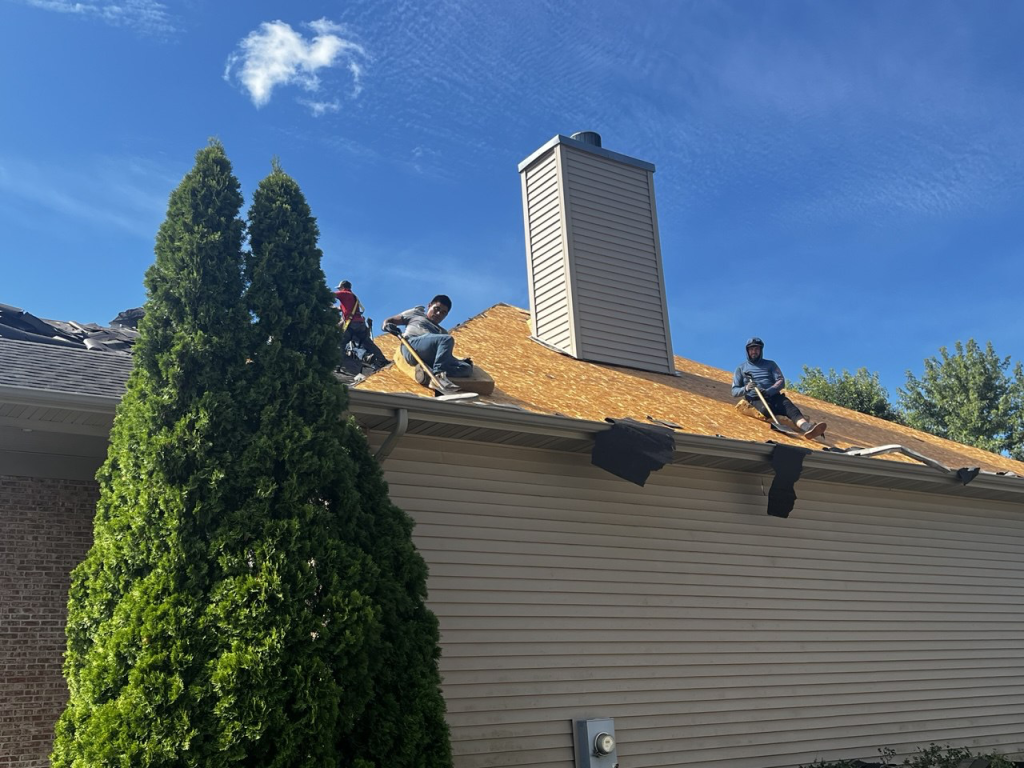
Soffit and fascia are two of the most overlooked parts of a home’s exterior, mostly because they blend into the roofline and nobody thinks about them until something goes wrong. Both sit at the edge of the roof, both take a beating from Illinois weather, and both play a bigger role in protecting your home than their size suggests.
At Cupples Construction, soffit and fascia repairs often come up as a side discussion during a roofing or gutter project, since damage to one is frequently a symptom of a problem somewhere else in the roof system, whether that’s a missing drip edge or long-term water intrusion at the roof edge.
What Is Fascia?
Fascia is the vertical board that runs along the edge of your roofline, directly behind the gutters. It’s the trim piece you actually see when you look up at the edge of a house from the ground, and it serves two main purposes: it caps off the exposed ends of the roof rafters, and it provides the surface that gutters are mounted to.
Because fascia sits directly behind the gutter system, it takes on a lot of moisture exposure. Clogged or poorly pitched gutters routinely overflow onto the fascia board behind them, which is one of the most common reasons fascia rots before other parts of the exterior show any wear at all.
What Is Soffit?
Soffit is the material that covers the underside of the roof overhang, the horizontal surface you see when you look straight up at the eaves from underneath. Unlike fascia, soffit isn’t just decorative. It’s a functional part of your home’s ventilation system.
Most soffit is vented, meaning it has small perforations or louvers built in that allow outside air to flow into the attic space. That intake air is one half of a balanced attic ventilation system, working together with ridge or roof vents that let hot, moist air escape from the top of the attic. Without functioning soffit vents, an attic can trap heat and moisture, which shortens shingle life and can contribute to ice damming in winter. We cover this relationship in more detail in our article on attic ventilation and why airflow matters for your roof.
Materials Used for Soffit and Fascia
- Vinyl: The most common modern choice for soffit specifically, since it’s low maintenance, resists rot entirely, and comes pre-vented in most profiles.
- Aluminum: Used for both soffit and fascia, often as a wrap over an existing wood fascia board. Aluminum resists moisture well and holds paint or factory finish for decades, but it can dent.
- Wood: Still common on older homes, particularly for fascia, since it was the standard material before vinyl and aluminum became widely available. Wood fascia requires ongoing paint or sealant maintenance and is the material most prone to rot.
- Fiber cement: A more durable, higher-cost option for fascia that resists moisture and pests better than wood while holding paint longer than aluminum.
Signs Your Soffit or Fascia Needs Attention
- Visible sagging or warping along the roofline, which is often the first sign of rot in wood fascia.
- Peeling paint or soft spots when pressed, particularly on wood fascia near gutter downspout corners.
- Gaps or holes in soffit panels, which are an open invitation for squirrels, birds, and wasps to get into the attic space.
- Water stains on the soffit underneath the roof edge, which usually points to a gutter or drip edge problem overflowing onto it rather than a soffit issue itself.
- Visible daylight or gaps where fascia meets the roofline, suggesting the board has pulled away from the rafters.
Because so much fascia damage traces back to gutter overflow, it’s worth having your gutters checked at the same time, especially if it’s been a while since they were cleaned or you’re not confident they’re pitched correctly.
Why This Matters for Roof Longevity, Not Just Curb Appeal
It’s easy to think of soffit and fascia as cosmetic, but functioning soffit vents are part of what keeps your attic, and by extension your shingles, performing the way they’re supposed to. Poor attic ventilation is a known contributor to premature shingle aging and ice dam formation, both of which are more expensive problems than a soffit repair. Damaged fascia also puts your gutter system at risk, since gutters need a solid, intact board to stay properly mounted and pitched.
In Central Illinois specifically, the freeze-thaw cycle that stresses roof edges and flashing does the same thing to fascia, especially where gutters aren’t managing water correctly. A fascia repair that gets put off for a few seasons often turns into a bigger job once rot spreads into the rafter tails underneath.
Frequently Asked Questions
What is soffit and fascia on a house?
Fascia is the vertical board along the roof edge that gutters are mounted to, and soffit is the material covering the underside of the roof overhang. Together they finish out the roofline and, in the case of vented soffit, help manage attic airflow.
Do I need to replace soffit and fascia when I get a new roof?
Not always, but it’s common to do so at the same time if either is already showing wear, since the roofing crew already has access to that area. If your existing soffit and fascia are in good condition, they generally don’t need to be replaced just because the roof is.
How much does soffit and fascia replacement cost?
Cost depends on the material chosen, the linear footage involved, and whether any rafter tail or structural repair is needed underneath damaged sections. Vinyl and aluminum tend to run less than wood or fiber cement replacement, and pricing is usually quoted per linear foot after an inspection confirms the extent of the damage.
Can soffit and fascia be repaired instead of fully replaced?
Often, yes, if the damage is limited to a specific section. Small areas of rot or a few damaged soffit panels can typically be patched or replaced individually. Widespread rot or long-neglected water damage usually calls for a fuller replacement to make sure the repair actually holds.
Who repairs soffit and fascia?
Most licensed roofing and exterior contractors handle soffit and fascia repair, since the work is closely tied to the roofline and gutter system. It’s worth choosing a contractor who can evaluate the roof, gutters, and ventilation together rather than treating soffit and fascia as an isolated repair, since the underlying cause is often connected to one of those other systems.
The Bottom Line
Soffit and fascia don’t get much attention until something’s visibly wrong, but they’re doing real work for your roof’s ventilation and your gutter system’s stability the whole time. If you’ve noticed sagging, staining, or gaps along your roofline, that’s worth having checked before it spreads, and it’s an easy thing for us to evaluate during a roof inspection.
If you’re ready for a closer look, Contact Us today for your free inspection.